
The Cost of Living in Frisco, Texas in 2026: A Complete Financial Breakdown
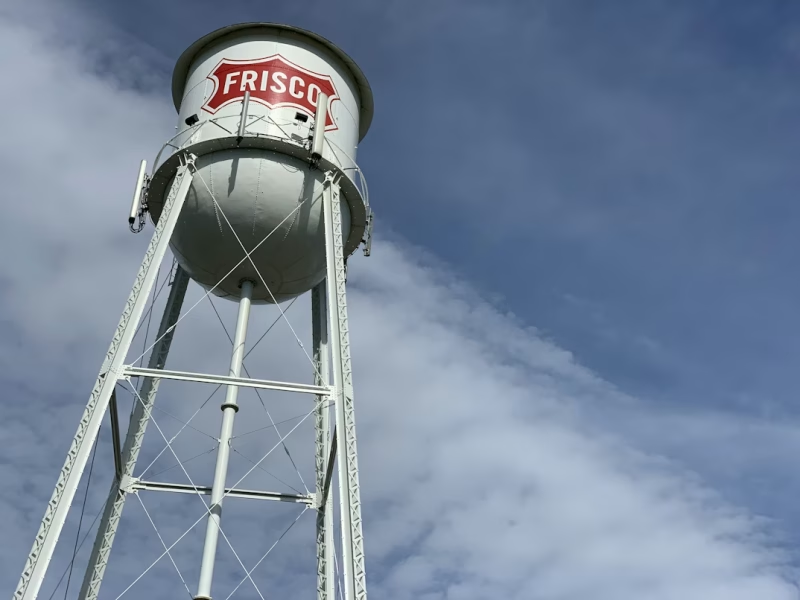
Frisco, Texas continues to attract families and professionals in 2026, but understanding the financial reality of living here requires looking beyond the appealing amenities and strong job market.
While Frisco is a fantastic city to live in, that doesn’t mean it’s for everyone. And that’s precisely what we’re going to talk about today. But first, here are the real numbers.
The average cost of living in Frisco is $2,393 per month, placing it in the top 12% of the most expensive cities globally, with a median home value of $531,400 and median household income of $141,129.
These numbers reflect a city where high earning potential meets substantial housing costs.
Your budget in Frisco will be shaped by factors ranging from property taxes and utilities to transportation and healthcare expenses. The city’s economic profile differs sharply from typical Texas metros, offering an income-to-cost ratio that rivals affluent coastal suburbs while maintaining a distinct North Texas character.
This guide breaks down each major expense category you’ll encounter in Frisco, compares costs to neighboring cities, and provides practical strategies for managing your household budget.
Whether you’re considering a move or already planning your finances here, you’ll find specific price ranges and trade-offs that define the Frisco living experience in 2026.
Ready to find out all of the costs? Let’s go!
Overview of the Cost of Living in Frisco, Texas in 2026
Frisco ranks among the more expensive cities in Texas, with housing and transportation driving costs above national averages. The city’s rapid growth has created upward pressure on prices across most categories, though specific expenses vary depending on your lifestyle and housing choices.
Key Factors Influencing Living Expenses
Housing represents your largest expense in Frisco. The median home value stands at $531,400, while median rent reaches $1,803 per month as of 2026.
Transportation costs add significantly to your monthly budget. You’ll encounter toll roads during many commutes, which create ongoing expenses beyond basic fuel and maintenance. The city’s car-dependent layout means most residents need reliable vehicles for daily errands and work.
Property taxes in Texas are notably higher than in states with income tax. You won’t pay state income tax, but this advantage often gets offset by elevated property tax rates that fund local schools and services.
Groceries and everyday goods carry moderate premiums compared to smaller Texas cities. Frisco’s rapid development attracts higher-end retailers and restaurants, which influences pricing throughout the local market.
Cost of Living Index Comparison to Other Texas Cities
Frisco ranks 6th out of 130 Texas cities for cost of living, placing it near the top of state expenses. The average monthly cost of living totals $2,393, which positions Frisco in the top tier of Texas metros.
Dallas proper offers similar but slightly lower costs in many neighborhoods. Houston and San Antonio provide more affordable alternatives with average monthly expenses $300-500 below Frisco’s levels.
Smaller Texas cities like Lubbock, Amarillo, and El Paso offer substantially lower costs, with housing prices often 40-50% below Frisco rates. Austin rivals or exceeds Frisco’s costs in central neighborhoods, though suburban Austin areas may offer comparable pricing.
Inflation Trends and Recent Cost Changes
Frisco continues experiencing price increases driven by rapid population growth. The city remains one of America’s fastest-growing communities, which creates sustained demand for housing and services.
Housing appreciation has outpaced general inflation over the past several years. New construction struggles to keep pace with incoming residents, maintaining upward pressure on both purchase prices and rents.
Recent data shows grocery costs rising faster than national averages. A typical family of four might spend $600 or more on groceries per month, reflecting both inflation and the prevalence of higher-end grocery options in the area.
Housing Costs in Frisco
Housing represents the largest expense for most Frisco residents, with median home values at $531,400 and significant variation based on neighborhood and property type. Property taxes and ongoing homeowner costs add substantial amounts to monthly budgets beyond the initial purchase or rental price.
Average Home Prices and Mortgage Rates
The average home value in Frisco is $653,858, though this figure has decreased 5.0% over the past year. You’ll find considerable price variation depending on the specific area and home age.
Different sources report different medians, with some showing $531,400 as the typical value. This spread reflects Frisco’s diverse housing stock, from older developments to new construction in premium neighborhoods.
Your monthly mortgage payment will depend on your down payment, interest rate, and loan term. With current rates and a conventional 20% down payment on a $650,000 home, you’re looking at a principal and interest payment around $4,000 to $4,500 monthly before taxes and insurance.
New construction homes in master-planned communities often command premium prices. Older homes in established neighborhoods may offer more affordable entry points.
Rental Prices for Apartments and Houses
Renting a two-bedroom apartment in Frisco costs $2,030 per month, which is 42.0% higher than the national average. The median rent across all unit types is $1,803 per month.
Studio and one-bedroom apartments typically range from $1,400 to $1,800 monthly. Three-bedroom units run $2,400 to $3,200 depending on location and amenities.
Single-family home rentals command higher prices, often starting at $2,500 for three-bedroom properties and exceeding $3,500 for larger homes in desirable school zones. Luxury apartments with premium amenities can push well above these averages.
Property Taxes and Homeowner Expenses
Property taxes in Frisco represent a significant ongoing cost that you must factor into your housing budget. Texas has no state income tax, but compensates through higher property taxes.
Your annual property tax bill will typically range from 2.0% to 2.5% of your home’s assessed value. On a $650,000 home, this translates to $13,000 to $16,250 per year, or roughly $1,100 to $1,350 monthly.
Homeowners insurance adds another $2,000 to $3,500 annually depending on coverage levels and home value. HOA fees are common in many Frisco neighborhoods, ranging from $50 to $200 monthly for basic services, with some premium communities charging $300 or more.
Maintenance and repairs typically cost 1% to 2% of your home’s value annually. You should budget $6,500 to $13,000 yearly for these expenses on a $650,000 property.
Utilities and Essential Services
Frisco households typically spend around $253 monthly on basic utilities, while internet and communication services add another layer to monthly expenses that varies based on provider and service level.
Electricity and Water Bills
Average monthly utility costs in Frisco reach approximately $253.05 for a typical household using 1,000 kWh of electricity and 5,000 gallons of water. Your electricity bill represents the largest portion of this expense, particularly during summer months when cooling demand drives usage higher.
Oncor Electric Delivery serves the Frisco area, and your actual costs will fluctuate based on your home size, insulation quality, and thermostat settings. Texas summers regularly push temperatures above 95°F, meaning air conditioning runs extensively from June through September.
Water, wastewater, and trash collection combine into your municipal services bill. The city calculates water rates on a tiered system, so households using more water pay progressively higher rates per gallon. You’ll want to factor in lawn irrigation costs if you maintain landscaping, as this can significantly increase consumption during dry periods.
Internet, Cable, and Phone Service Costs
Internet service in Frisco typically ranges from $50 to $100 monthly depending on speed tiers and provider. Major providers include AT&T Fiber, Spectrum, and Frontier, with fiber-optic options offering speeds up to 5 Gbps in many neighborhoods.
You can expect to pay $60-$80 for reliable high-speed internet suitable for remote work and streaming. Cable television packages add $70-$150 monthly, though many residents opt for streaming services instead to reduce costs. Bundling internet with phone service may lower your total bill by $10-$20 per month.
Cell phone plans vary widely, but individual lines cost $50-$90 monthly for unlimited data through major carriers. Family plans offer better per-line pricing if you’re covering multiple household members.
Transportation Expenses
Frisco’s transportation model centers heavily on personal vehicle ownership, with limited public transit infrastructure and moderate fuel costs. Most residents budget for car-related expenses including insurance, maintenance, and toll road fees that add up throughout the year.
Public Transit Options and Fares
Public transportation in Frisco remains limited compared to major metropolitan areas. The city is served by the DCTA (Denton County Transportation Authority) A-train, which connects to Dallas Area Rapid Transit (DART) for broader regional access.
A single DCTA ride costs $2.50, while a day pass runs $5.00. Monthly passes are available for $80, though most Frisco residents find limited practical use for public transit given the sparse coverage. The A-train operates primarily along a north-south corridor, leaving many residential and commercial areas without direct access.
Bus service exists but operates on restricted schedules with infrequent stops. You’ll likely need a car for daily errands, school runs, and commuting since most employment centers lack convenient transit connections. Ride-sharing services like Uber and Lyft fill gaps in the public system, with typical trips within Frisco ranging from $12 to $25 depending on distance.
Gasoline Prices and Car Ownership Costs
Car ownership is essential for most Frisco households, making fuel and maintenance significant budget items. Regular gasoline prices in the Dallas-Fort Worth area currently average $2.85 to $3.15 per gallon.
Monthly fuel costs vary based on your commute length. A typical 20-mile round-trip daily commute consumes approximately 40-50 gallons monthly, translating to $115-160 in gas expenses. Auto insurance runs higher than the Texas average, with full coverage premiums ranging from $150 to $250 monthly depending on your driving record and vehicle type.
You should also factor in toll road expenses if your commute involves the Dallas North Tollway or Sam Rayburn Tollway. Monthly toll costs easily reach $80-150 for regular users. Vehicle registration, inspection fees, and routine maintenance add another $100-200 monthly when averaged throughout the year.
Are we ready to move on to other costs? Because we’re not done yet!
Food and Grocery Prices
Frisco’s food costs run approximately 3% above the national average, with grocery shopping and restaurant meals both reflecting the city’s higher household incomes and quality-focused retail environment. Your monthly food budget will depend on whether you cook at home or dine out frequently.
Average Grocery Costs per Household
A typical family of four can expect to spend $600 or more per month on groceries in Frisco. Grocery prices in Frisco track slightly above the national baseline, with a regional price parity index of 103.
Your actual costs will vary based on dietary preferences and shopping habits. Staple items like milk, bread, and eggs cost marginally more than the U.S. average due to the metro area’s retail infrastructure tilting toward convenience and quality stores.
Common grocery items pricing:
- Milk (1 gallon): $3.50-$4.50
- Bread (loaf): $2.50-$4.00
- Eggs (dozen): $3.00-$4.50
- Chicken breast (per lb): $4.50-$6.00
Shopping at discount grocers or wholesale clubs can reduce your monthly expenses by 15-20%. Meal planning and buying seasonal produce also helps stretch your grocery budget further.
Dining Out in Frisco
Restaurant meals in Frisco reflect the city’s upscale dining scene and higher operating costs. A casual meal at a mid-range restaurant typically costs $15-$25 per person, while fine dining experiences run $40-$75 per person before drinks.
Fast food and quick-service restaurants offer more budget-friendly options at $8-$12 per meal. Coffee shops charge $4-$6 for specialty drinks, similar to other major Texas metro areas.
Typical dining costs:
- Casual restaurant dinner for two: $50-$80
- Fast food combo meal: $8-$12
- Coffee shop latte: $4-$6
- Family dinner at mid-range restaurant (four people): $80-$120
Many Frisco restaurants include automatic gratuity or suggest 20% tips on digital payment systems. Your monthly dining budget should account for these additional service charges beyond menu prices.
Healthcare and Medical Expenses
Healthcare costs in Frisco require careful budget planning, with insurance premiums varying by coverage level and out-of-pocket expenses adding significant annual costs for families and individuals.
Health Insurance Premiums
Your health insurance premiums in Frisco depend on your coverage type and provider network. Individual plans through the marketplace typically range from $400 to $700 per month for moderate coverage. Family plans generally cost between $1,200 and $2,000 monthly.
Employer-sponsored insurance reduces your direct costs significantly. You’ll usually pay $150 to $300 monthly for individual coverage and $500 to $900 for family plans through your employer. High-deductible health plans with HSA options cost less upfront but shift more expenses to you when you need care.
Medicare-eligible residents pay standard Part B premiums of $174.70 monthly in 2026, plus supplemental coverage costs ranging from $100 to $300 depending on the plan tier you select.
Out-of-Pocket Medical Costs
Your medical expenses beyond insurance premiums add up quickly in Frisco. Primary care visits typically cost $150 to $200 without insurance, while specialist appointments range from $200 to $400. Urgent care visits run $100 to $200 for minor issues.
Prescription medications vary widely based on your insurance formulary. Generic drugs usually cost $10 to $30 per month, while brand-name medications can reach $100 to $500 monthly. You’ll find major pharmacy chains throughout Frisco offering competitive pricing and discount programs.
Dental care requires separate insurance or direct payment. Routine cleanings cost $100 to $150, while fillings range from $150 to $300 per tooth. Vision exams typically run $75 to $150, with glasses or contacts adding $200 to $500 annually depending on your prescription needs.
Education and Childcare Costs
Families in Frisco face significant education and childcare expenses, with private schooling options available at premium prices and daycare costs averaging over $10,000 annually for young children. The city’s highly-rated public schools provide a cost-effective alternative, though extracurricular activities and supplies still require budget consideration.
Public and Private School Expenses
Frisco Independent School District operates the public schools in the area, and you won’t pay tuition for K-12 education through this system. However, you should budget for school supplies, activity fees, and optional programs that typically range from $200 to $500 per student annually.
Private school tuition in Frisco varies considerably based on the institution and grade level. Elementary private schools generally charge between $8,000 and $15,000 per year, while secondary private schools can cost $15,000 to $25,000 annually. Some prestigious private institutions in the Dallas-Frisco area exceed $30,000 per year for high school students.
You’ll also need to account for extracurricular activities, sports programs, and enrichment classes. These additional expenses typically add $500 to $2,000 per child each year, depending on your child’s interests and involvement level.
Childcare and Preschool Pricing
Center-based childcare for a 4-year-old in Texas costs approximately $10,225 annually, or about $852 per month. Frisco’s rates align with or slightly exceed this state average due to the city’s higher cost of living and strong demand for quality childcare services.
Infant care costs more than preschool-age care, with full-time infant daycare in Frisco ranging from $1,000 to $1,400 per month. Toddler care typically costs $900 to $1,200 monthly, while preschool programs for 3-5 year-olds range from $800 to $1,100 per month.
In-home daycare providers generally offer lower rates, charging $600 to $900 per month for full-time care. Private nannies represent the most expensive option, with costs ranging from $2,500 to $4,000 monthly for full-time services, though nanny shares can reduce individual family expenses.
Lifestyle and Recreation in Frisco
Frisco provides extensive fitness facilities and entertainment venues that align with its affluent demographic, with membership costs and activity prices reflecting the city’s above-average income levels.
Fitness and Sports Membership Fees
Gym memberships in Frisco typically range from $30 to $80 per month for standard facilities. Premium fitness centers with extensive amenities charge $100 to $200 monthly.
Boutique fitness studios command higher rates. Specialized classes like spin, barre, or CrossFit cost $150 to $250 per month for unlimited access. Drop-in rates average $20 to $35 per session.
Common Membership Options:
- Budget gyms: $10-30/month
- Mid-tier facilities: $40-80/month
- Premium clubs: $100-200/month
- Boutique studios: $150-250/month
Youth sports programs represent a significant expense for families. Competitive leagues and travel teams cost $1,500 to $5,000 annually per child, including uniforms, tournament fees, and travel expenses. Recreational leagues offer more affordable options at $200 to $600 per season.
Entertainment and Leisure Activities
Movie tickets in Frisco cost $12 to $18 for standard showings, with premium formats reaching $20 to $25. Dining out varies considerably based on establishment type.
Casual dining averages $15 to $25 per person, while mid-range restaurants run $30 to $50 per person. Upscale dining experiences cost $75 to $150 per person before drinks.
Typical Entertainment Costs:
- Movie tickets: $12-18
- Bowling: $25-40 per hour per lane
- Mini golf: $10-15 per person
- Sporting events: $25-200+ per ticket
Professional sports events, particularly Dallas Cowboys and Dallas Stars games at nearby venues, range from $50 to $300+ for standard seating. Family entertainment centers charge $30 to $60 per person for all-day access to activities.
Taxes in Frisco, Texas
Texas residents benefit from no state income tax, while Frisco maintains a combined sales tax rate of 8.25% on most purchases.
Income and Sales Tax Rates
You won’t pay any state income tax if you live in Frisco. Texas has no state income tax, which means your paycheck only faces federal income tax withholding. This tax structure allows you to keep more of your earnings compared to states with income taxes.
The sales tax rate in Frisco is 8.25% total. This breaks down into 6.25% for the state of Texas, 1% for the city of Frisco, and 1% for local transit authorities. You’ll pay this rate on most retail goods, restaurant meals, and taxable services.
Property taxes represent your largest local tax burden. Frisco’s property tax rate stands at approximately $0.4466 per $100 of assessed value, which is relatively moderate for the Dallas-Fort Worth area.
Comparison to State and National Averages
Frisco’s 8.25% sales tax matches the typical rate across most Texas cities. The state average hovers at this same level since local jurisdictions frequently add 2% to the state’s base rate of 6.25%.
Compared to the national landscape, you gain significant savings through the absence of state income tax. The average combined state and local sales tax nationwide is approximately 7%, making Frisco’s rate about 1.25 percentage points higher. However, this difference often proves worthwhile given the income tax savings on your annual earnings.
Your property tax obligations in Frisco may exceed those in other states despite the lower rate, primarily due to higher home values.
Comparing Frisco to Neighboring Cities
Frisco sits at the higher end of the cost spectrum among its North Texas neighbors, with housing costs being the primary differentiator. While Frisco is 11.5% more expensive than Dallas, the gap narrows or widens depending on which suburb you compare.
Prosper
Prosper shares many similarities with Frisco in terms of demographics and school quality, but you’ll find slightly lower housing costs in this neighboring community. The town attracts the same affluent families seeking top-rated schools and newer construction, yet median home prices typically run 5-8% below Frisco’s averages.
Your daily expenses for groceries, dining, and entertainment remain nearly identical between the two cities. Both communities rely heavily on personal vehicles, so transportation costs don’t vary significantly.
The trade-off comes down to amenities and employment proximity. Frisco offers more immediate access to major employers, entertainment venues, and shopping centers. Prosper maintains a more residential feel with fewer commercial developments, which means you’ll likely drive to Frisco or other nearby cities for work and activities.
Plano
Plano represents a more established alternative to Frisco with greater housing diversity. You can find older neighborhoods with prices 20-30% below Frisco’s median, though newer sections of west Plano approach similar price points.
Your cost of living comparison between Dallas and Frisco shows the same pattern applies to Plano, where housing age and location create more price variance. The city’s mature infrastructure means better-established public transit options and shorter commutes to central Dallas employment hubs.
Daily expenses run roughly 8-12% lower in Plano overall. The city has more competitive grocery options, a wider range of restaurant price points, and established retail centers that create more pricing competition.
McKinney
McKinney offers the most affordable housing among Frisco’s immediate neighbors, with median home prices running 15-25% below Frisco depending on the neighborhood. You’ll find a mix of historic properties near downtown and newer subdivisions on the outskirts.
Your grocery and dining costs decrease modestly compared to Frisco, particularly in older parts of McKinney where local businesses compete with chain retailers. The city’s historic downtown provides unique shopping and entertainment at varied price points.
Commute times to major employment centers tend to run 10-15 minutes longer from McKinney than from Frisco. This distance factor influences your transportation budget and daily time investment, though many residents accept the trade-off for lower housing entry costs.
Tips for Managing the Cost of Living in Frisco
Managing expenses in Frisco requires strategic planning around housing and transportation, which are typically your largest budget items. Consider neighborhoods slightly outside the city center where rental prices may be lower while still offering access to quality schools and amenities.
Transportation costs can be reduced through several approaches:
- Carpooling with coworkers to split fuel and toll expenses
- Using public transit options when available for your commute
- Planning errands efficiently to minimize driving distance
- Comparing gas prices across different stations in the area
You should track your grocery spending carefully, as food costs for a family of four can add up quickly. Shopping at multiple stores to take advantage of weekly sales and using store loyalty programs helps reduce your monthly food budget.
Utility bills in Frisco fluctuate with seasonal cooling demands. Setting your thermostat a few degrees higher in summer and maintaining your HVAC system regularly can lower your electricity costs significantly.
If you’re renting, negotiate lease terms during off-peak seasons when landlords may be more flexible with pricing. For homeowners, appeal your property tax assessment if you believe your home valuation is too high.
Taking advantage of Frisco’s free community events and parks provides entertainment without straining your budget. The city offers numerous activities that don’t require spending money while still enjoying what the area has to offer.
Building an emergency fund of three to six months of expenses gives you a financial cushion against unexpected costs. This buffer becomes especially important given that Frisco’s overall cost of living runs higher than the national average.


