
Best SUVs for Families With High Safety Ratings in 2026: Top Picks for Protection and Comfort
Choosing a family SUV requires balancing space, comfort, and most importantly, protection for your loved ones.
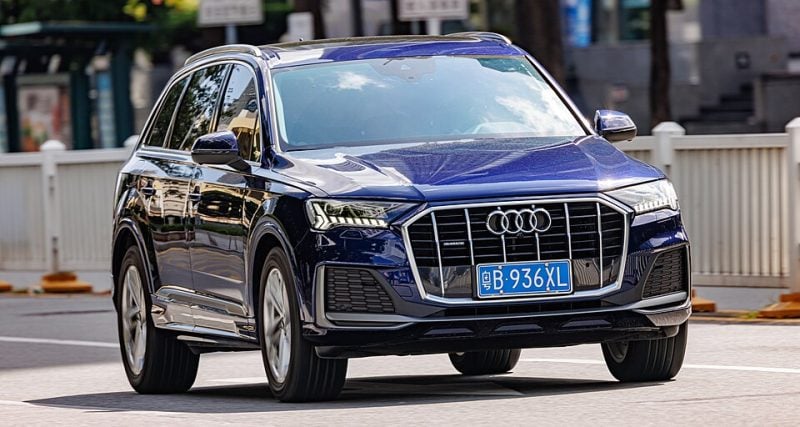
The Audi Q7 ranks as the safest SUV for families in 2026, earning IIHS Top Safety Pick+ with top scores in every crash test category and seating seven passengers with standard all-wheel drive.
Several other models have also achieved top safety designations, giving you multiple options depending on your budget and needs.
Safety technology has advanced significantly, with modern SUVs offering comprehensive protection through crash avoidance systems, reinforced structures, and airbag arrays. You don’t need to spend a fortune to access these features, as safe options exist across various price points and size categories.
This guide examines the top-rated family SUVs with the best safety credentials, helping you understand what makes certain models stand out.
You’ll learn how to interpret crash test ratings, identify essential safety features, and determine which SUV offers the best value for protecting your family.
Key Safety Features Modern SUVs Must Offer
Modern family SUVs need comprehensive safety systems that protect occupants before, during, and after collisions. The most effective vehicles combine predictive driver assistance, proven crash protection, specialized child safety features, and rapid emergency response capabilities.
Advanced Driver Assistance Systems
Advanced Driver Assistance Systems (ADAS) help you avoid accidents before they happen. These technologies use cameras, radar, and sensors to monitor your surroundings and intervene when necessary.
Essential ADAS Features Include:
- Automatic Emergency Braking – Detects pedestrians and vehicles, applying brakes when you don’t react in time
- Adaptive Cruise Control – Maintains safe following distance by adjusting speed automatically
- Lane Departure Warning and Lane Keep Assist – Alerts you when drifting and provides steering correction
- Blind Spot Monitoring – Warns of vehicles in adjacent lanes you can’t see
- Rear Cross-Traffic Alert – Detects approaching traffic when backing out of parking spaces
Many SUVs with best safety ratings now include these systems as standard equipment rather than optional upgrades. You should verify that your chosen SUV includes front pedestrian detection, as this technology has proven particularly effective at preventing injuries.
Crash Test Ratings Explained
Two organizations evaluate vehicle crashworthiness through different testing methods. The National Highway Traffic Safety Administration (NHTSA) uses a five-star rating system, while the Insurance Institute for Highway Safety (IIHS) awards Top Safety Pick designations.
NHTSA conducts frontal crash, side crash, and rollover resistance tests. The agency combines these results into an overall safety score that helps you compare vehicles quickly.
IIHS performs more rigorous evaluations including small overlap front crashes, moderate overlap front crashes, side impacts, roof strength, and head restraint tests. The 13 safest midsize SUVs recognized by IIHS demonstrate superior protection across all crash scenarios. You should look for vehicles earning Good ratings in all six crash tests plus Superior or Advanced ratings for front crash prevention.
Child Passenger Protection
Your SUV needs proper equipment to secure children safely from infancy through adolescence. Lower Anchors and Tethers for Children (LATCH) systems must be easily accessible in second-row seats, with clear markings showing anchor locations.
You should check for sufficient space to install rear-facing infant seats, convertible car seats, and booster seats without compromising front passenger legroom. Many safest midsize SUVs provide LATCH anchors in all three second-row positions plus the third row.
Important Child Safety Considerations:
- Width between LATCH anchors accommodates wider car seat bases
- Rear door opening angle allows easy installation and child loading
- Rear climate controls maintain comfortable temperatures for children
- Rear door child locks prevent accidental opening while driving
Emergency Response Technologies
Modern SUVs include systems that activate immediately after crashes to protect you and summon help. Automatic crash notification detects severe impacts and contacts emergency services with your GPS location, even if you’re unconscious.
Post-collision braking automatically applies brakes after initial impact to prevent secondary collisions. Your airbag system should include front, side, curtain, and knee airbags with sensors that adjust deployment force based on occupant size and position.
Additional emergency features include automatic door unlocking after crashes, interior lighting activation, and fuel pump shutoff to reduce fire risk. Some manufacturers offer subscription services providing live operator assistance during emergencies, though basic automatic crash notification typically functions without ongoing fees.
Comparison of Top-Rated Family SUVs for 2026
Several standout models lead the 2026 family SUV market with exceptional safety credentials and practical features. The Kia Sorento earned both a 5-star NHTSA rating and IIHS Top Safety Pick+ designation, while the Audi Q7 ranks as the safest option based on comprehensive crash testing.
Best Overall Safety Picks
The 2026 Kia Sorento starts at $32,390 and combines affordability with top-tier safety. It achieved a 5-star NHTSA safety rating and earned the IIHS Top Safety Pick+ award, making it one of the most comprehensively tested SUVs in its price range.
The Audi Q7 holds the number one position for family SUV safety according to IIHS crash tests and real-world death rate data. While it costs more than budget-friendly options, it delivers advanced safety engineering across all seating positions.
The IIHS designated 13 midsize SUVs as Top Safety Picks for 2026, with many starting under $40,000. This expanded list gives you multiple options that meet the highest independent safety standards without exceeding typical family budgets.
SUVs With Highest Crash Safety Scores
According to data from 53 SUVs under $60,000 with published NHTSA safety ratings, several models achieved perfect 5-star overall scores. These ratings evaluate frontal crash, side crash, and rollover protection through controlled testing.
The IIHS crash test methodology differs from NHTSA by including small overlap front tests, side impact evaluations, and roof strength measurements. Models earning Top Safety Pick+ status excel in all categories plus offer superior headlight performance and front crash prevention systems.
Key crash test categories:
- Frontal impact protection
- Side collision safety
- Rollover resistance
- Roof strength
- Head restraint effectiveness
You should prioritize SUVs with both 5-star NHTSA ratings and IIHS Top Safety Pick designations for the most comprehensive protection.
Noteworthy Innovations in New Models
The 2026 family SUV lineup emphasizes advanced driver-assistance systems as standard equipment rather than optional upgrades. Automatic emergency braking, lane-keeping assist, and blind-spot monitoring now appear on most mainstream models.
Three-row SUVs have improved third-row access with wider door openings and power-folding second-row seats. This practical enhancement matters when you install child safety seats or help older passengers enter the back.
The Toyota RAV4 Hybrid demonstrates how efficiency innovations benefit families. Starting at $33,700 with standard AWD and 40 mpg combined, it delivers 219 horsepower while matching the fuel economy of much smaller vehicles. This combination reduces your fuel costs without sacrificing the space and capability you need.
Choosing the Right SUV for Families
Family SUVs need to balance multiple priorities, from fitting car seats and strollers to keeping everyone entertained on long drives. Your choice depends on daily passenger count, typical cargo loads, and whether you prioritize fuel savings or towing capability.
Seating and Cargo Considerations
Three-row SUVs provide seating for seven or eight passengers, but third-row space varies significantly between models. Some vehicles offer adult-friendly third rows with adequate legroom, while others relegate the back seats to children only.
Check the cargo space behind the third row if you plan to use all seats regularly. Many SUVs offer less than 20 cubic feet with all rows up, which barely fits a week’s groceries. Captain’s chairs in the second row provide easier third-row access but reduce seating capacity to seven.
Consider these practical factors:
- Car seat compatibility: Width between wheel wells affects three-across installations
- Second-row sliding capability: Makes reaching rear-facing car seats easier
- Flat-folding seats: Increases maximum cargo capacity for large items
- Rear door opening angle: Impacts loading ease in tight parking spaces
Infotainment and Connectivity Options
Modern family SUVs include touchscreens ranging from 8 to 15 inches, with larger displays improving visibility for navigation and backup cameras. Apple CarPlay and Android Auto now come standard on most 2026 models, letting you mirror smartphone apps directly.
Rear-seat entertainment systems with dual screens keep children occupied on longer trips. Built-in Wi-Fi hotspots allow passengers to stream content without draining phone data, though subscription fees typically apply after trial periods.
Multiple USB ports throughout the cabin prevent charging disputes. Look for USB-C ports in newer models, which charge devices faster than older USB-A connections.
Fuel Efficiency vs. Performance
Traditional gasoline SUVs typically achieve 20-26 mpg combined, while hybrid variants push that to 30-35 mpg. You’ll spend roughly $500-700 more annually on fuel with a conventional engine compared to a hybrid, assuming 15,000 miles of driving.
Turbocharged four-cylinder engines provide adequate power for most families while delivering better efficiency than V6 options. If you tow boats or trailers regularly, prioritize models with V6 or turbocharged six-cylinder engines offering 3,500+ pound towing capacity.
Plug-in hybrid SUVs offer 20-40 miles of electric-only range, suitable for daily commutes before the gas engine activates. Three-row electric SUVs remain limited in 2026, with most options seating five passengers maximum.
Brands Setting the Standard for Safety
Several automakers have distinguished themselves through consistent crashworthiness testing, advanced collision prevention systems, and multi-generational safety improvements that directly benefit families choosing SUVs in 2026.
Volvo’s Approach to Family Vehicle Safety
Volvo has built its reputation on prioritizing occupant protection across every vehicle class. The brand pioneered three-point seatbelts in 1959 and continues advancing safety through modern technologies like City Safety collision avoidance and Run-off Road Mitigation.
Your family benefits from Volvo’s integrated child seat design in models like the XC90, which accommodates booster seats and LATCH installations more effectively than most competitors. The Swedish automaker tests beyond regulatory requirements, conducting internal crash simulations that examine real-world accident scenarios families encounter daily.
Volvo’s recent SUV lineup features standard Pilot Assist semi-autonomous driving, blind spot information systems with steering support, and cross-traffic alert with autobrake. These systems work together to prevent accidents rather than simply protecting occupants after impact occurs.
The brand maintains one of the lowest driver death rates in the industry, demonstrating that its engineering philosophy translates into measurable safety outcomes for your passengers.
Toyota’s Commitment to Passenger Protection
Toyota equips nearly every 2026 SUV with Toyota Safety Sense 3.0 as standard equipment. This suite includes pre-collision warning with pedestrian detection, dynamic radar cruise control, lane departure alert with steering assist, and automatic high beams.
The Highlander and 4Runner consistently achieve strong ratings from both IIHS and NHTSA testing programs. Toyota’s body construction uses high-tensile steel in critical areas, creating protective zones around passenger compartments while managing crash energy efficiently.
Your vehicle receives over-the-air updates for safety systems, ensuring your SUV benefits from the latest collision avoidance algorithms throughout ownership. Toyota’s Star Safety System combines vehicle stability control, traction control, brake assist, and smart stop technology into one integrated platform.
Hyundai’s Advances in Active Safety Technology
Hyundai has rapidly advanced its safety credentials through SmartSense technology in SUVs like the Palisade and Santa Fe. The IIHS named 13 midsize SUVs as Top Safety Picks for 2026, with several Hyundai models earning recognition.
Your Hyundai SUV includes forward collision-avoidance assist with junction turning, which detects oncoming traffic when making left turns at intersections. Blind-spot collision-avoidance assist actively steers your vehicle away from adjacent vehicles during lane changes, going beyond simple warning systems.
The brand’s multi-collision braking system automatically applies brakes after an initial impact to prevent secondary collisions. Hyundai also offers rear occupant alert, reminding you to check rear seats before exiting and potentially preventing hot car tragedies involving children or pets.
How to Interpret Safety Ratings in 2026
Two organizations provide crash test ratings in the United States: the National Highway Traffic Safety Administration (NHTSA) uses a five-star system, while the Insurance Institute for Highway Safety (IIHS) awards Top Safety Pick designations based on multiple crash test categories.
Understanding NHTSA and IIHS Reports
NHTSA rates vehicles from one to five stars across three categories: frontal crash, side crash, and rollover resistance. You’ll see an overall rating that combines these scores, but you should examine each category separately since your SUV might excel in one area while performing poorly in another.
The five-star scale works as follows: five stars means 10% or less chance of injury, four stars indicates 11-20% chance, three stars represents 21-35% chance, two stars shows 36-45% chance, and one star signals 46% or greater chance of injury during a crash.
IIHS testing evaluates six crash scenarios: small overlap front (driver and passenger sides), moderate overlap front, side impact, roof strength, and head restraints. The safest SUVs earn Top Safety Pick awards when they receive Good ratings in all crashworthiness tests plus Good or Acceptable headlight ratings and advanced front crash prevention systems.
Key IIHS Rating Tiers:
- Good – Highest performance level
- Acceptable – Adequate protection with some room for improvement
- Marginal – Subpar performance requiring significant upgrades
- Poor – Minimal protection during crashes
The Impact of New Testing Protocols
IIHS introduced updated side crash testing in 2026 that uses a heavier barrier traveling at higher speeds to simulate modern SUV-to-SUV collisions. This means vehicles that earned top ratings in previous years may not automatically qualify under the stricter standards.
The new protocols particularly affect how IIHS evaluates large SUVs, with only five models qualifying for Top Safety Pick designations under the revised criteria. You should prioritize 2026 ratings over older test results when comparing vehicles, as the updated assessments better reflect real-world crash scenarios you might encounter.
NHTSA also enhanced its evaluation methods by adding pedestrian crash prevention tests to the overall safety score calculation. Your SUV now needs advanced automatic emergency braking systems that detect both vehicles and pedestrians to achieve the highest ratings.
Cost Considerations and Value for Families
Safe SUVs don’t require unlimited budgets, as many of the safest midsize SUVs start under $40,000. Beyond the purchase price, you need to evaluate long-term expenses and how safety features impact your vehicle’s future worth.
Total Ownership Costs
Your SUV’s true cost extends well beyond the sticker price. Rankings that include 5-year ownership costs reveal that fuel efficiency, insurance premiums, and maintenance expenses significantly affect your budget.
Insurance companies often reward vehicles with advanced safety features. SUVs equipped with automatic emergency braking, lane-keeping assist, and blind-spot monitoring typically qualify for lower premiums. You can save 5-15% annually on insurance by choosing a model with comprehensive driver-assistance systems.
Fuel costs vary dramatically across SUV classes. Compact crossovers average 28-32 mpg combined, while three-row models typically deliver 22-26 mpg. Hybrid variants add $3,000-$5,000 to the purchase price but can reduce fuel expenses by $600-$900 yearly.
Maintenance reliability differs between manufacturers. You should budget $400-$600 annually for routine maintenance on most mainstream SUVs, while luxury brands may require $800-$1,200.
Resale Value Linked to Safety Features
Top-rated safety features directly boost your SUV’s resale value. Vehicles earning IIHS Top Safety Pick+ awards retain 5-8% more value after three years compared to similar models without these distinctions.
Advanced driver-assistance systems have become essential selling points in the used market. SUVs with adaptive cruise control, pedestrian detection, and rear cross-traffic alert command premiums of $1,500-$3,000 over comparable models lacking these technologies.
Three-row SUVs with strong safety ratings maintain particularly robust resale values. Family buyers prioritize crash test performance when shopping used, making your investment in a well-rated model financially sound long-term.
Upcoming Trends in SUV Safety for Families
Automakers are integrating artificial intelligence into collision prevention systems while simultaneously developing safety features that complement electric and hybrid powertrains designed for family transportation.
Integration of Artificial Intelligence
AI-powered safety systems are becoming standard features in family SUVs for 2026. These systems use machine learning algorithms to predict potential collisions by analyzing driving patterns, road conditions, and surrounding traffic in real time.
Advanced driver-assistance systems now incorporate AI to distinguish between different types of obstacles. Your SUV can identify whether an object is a pedestrian, cyclist, or another vehicle, adjusting braking force and steering assistance accordingly.
Key AI Safety Features:
- Predictive collision avoidance that anticipates driver behavior
- Adaptive cruise control that learns your driving style
- Enhanced night vision systems with pedestrian detection
- Real-time road hazard identification and warning
Camera systems powered by AI continuously monitor driver attention levels. If your system detects drowsiness or distraction, it provides progressive alerts ranging from visual warnings to seat vibrations.
Sustainability and Safety Synergy
Electric and hybrid SUVs present unique safety considerations for families. Battery placement in these vehicles lowers the center of gravity, reducing rollover risk compared to traditional SUVs.
Manufacturers are engineering battery enclosures with reinforced structures that protect occupants during side-impact collisions. Your electric SUV’s battery pack acts as a structural element, distributing crash forces more effectively throughout the vehicle frame.
Regenerative braking systems in electrified SUVs provide smoother deceleration control. This technology reduces wear on traditional brake components while giving you more predictable stopping performance in emergency situations.
Electric SUV Safety Advantages:
- Lower rollover probability due to battery weight distribution
- Instant torque for quicker collision avoidance maneuvers
- Quieter cabins that allow better detection of external warning signals
Maintaining Your SUV’s Safety Over Time
Your SUV’s safety features require regular attention to function properly when you need them most. Modern vehicles equipped with advanced safety technology depend on properly maintained components to protect your family.
Essential Maintenance Tasks:
- Tire care – Check pressure monthly and rotate every 5,000-7,000 miles to ensure optimal braking and stability control performance
- Brake inspections – Have your brakes checked at least annually, as worn pads or rotors compromise stopping distance
- Camera and sensor cleaning – Wipe down backup cameras, blind spot sensors, and front collision sensors weekly to maintain clear detection
- Software updates – Schedule dealership visits for safety system updates that improve performance and fix bugs
- Windshield condition – Replace cracked or pitted windshields promptly, as they affect airbag deployment and driver visibility
Your vehicle’s LATCH system and seat belt mechanisms need periodic inspection. Check that seat belt buckles click firmly and retract smoothly. Vacuum around LATCH anchors to remove debris that could prevent secure car seat installation.
Replace your wiper blades every six months. Clear visibility during rain or snow is fundamental to accident prevention, regardless of how many electronic safety features your SUV includes.
Battery health affects more than just starting your engine. A weak battery can cause safety system malfunctions or warnings. Have your battery tested during oil changes and replace it every 3-5 years.
Keep detailed maintenance records. This documentation helps you track when services are due and provides valuable information if you experience safety system issues covered under warranty.


.jpg)