Is the Yamaha Tenere 700 Reliable for Long-Distance Touring? Durability and Performance
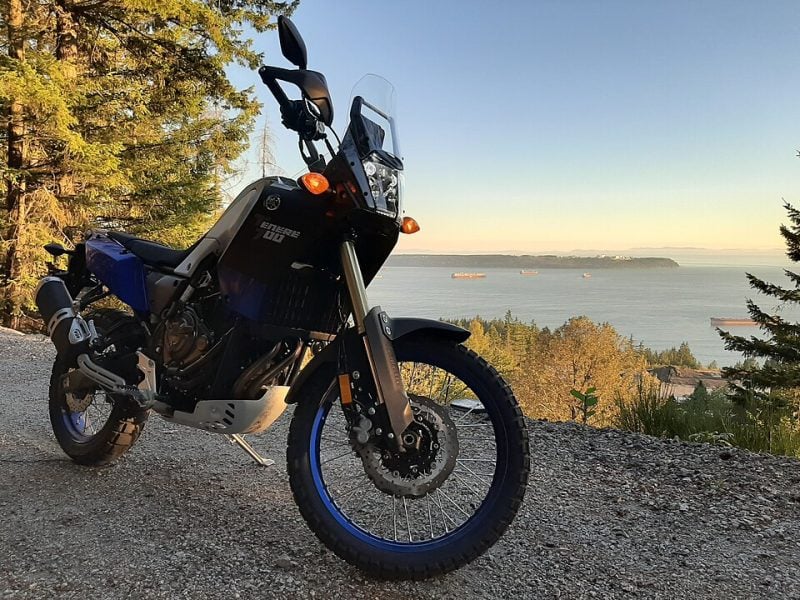
The Yamaha Tenere 700 has earned a reputation as a capable adventure motorcycle, but its suitability for extended road trips deserves careful examination. If you think you’re just going to ride into the sunset, think again.
While the Tenere 700 proves to be a reliable choice for long-distance touring, with owners reporting the bike performing dependably over journeys exceeding 60,000 kilometers and reliable performance for over 75,000 miles with proper maintenance, there are things you still need to know.
The motorcycle’s rugged CP2 parallel-twin engine and straightforward design contribute to its dependability on extended trips.
If you’re considering the Tenere 700 for your next multi-day adventure, you need to understand how it handles the demands of sustained highway riding, varying weather conditions, and diverse terrain.
This article examines the practical aspects that matter most when covering serious distances, from service requirements and comfort factors to fuel range and real-world performance.
You’ll discover how the T7 stacks up for touring through an analysis of its maintenance needs, ergonomic design, available technology, and feedback from riders who have completed long-distance journeys across multiple continents.
We’ll also compare it against competing adventure bikes to help you determine if this Yamaha fits your touring requirements.
Let’s get on our road trip to reliability.
Overview of the Yamaha Tenere 700
The Yamaha Tenere 700 features a proven 689cc parallel-twin engine borrowed from the MT-07, wrapped in an adventure-focused chassis designed for versatility across pavement and dirt. This middleweight adventure bike emphasizes mechanical simplicity and off-road capability over electronic complexity.
Engine and Performance
The Tenere 700 uses a liquid-cooled 689cc CP2 parallel-twin engine that produces approximately 72 horsepower and 50 lb-ft of torque. This engine platform has established a reputation for reliable performance across adventure riding conditions.
The crossplane-inspired crankshaft design delivers linear power delivery throughout the rev range. You get predictable throttle response rather than aggressive power spikes, which proves beneficial when navigating technical terrain or maintaining highway speeds.
The six-speed transmission provides adequate gearing for both off-road crawling and sustained highway cruising. Fuel economy typically ranges between 50-60 miles per gallon depending on riding conditions and throttle use.
The 4.2-gallon fuel tank gives you a practical range of 200-250 miles between fill-ups. This capacity strikes a balance between extended touring range and maintaining reasonable weight distribution.
Design and Build Quality
The tubular steel frame uses a straightforward design that prioritizes durability and serviceability. Yamaha built the chassis to withstand the impacts and stresses of off-road riding while maintaining stability at highway speeds.
The 8.7 inches of ground clearance and 21-inch front wheel with 18-inch rear provide off-road capability without compromising road manners. Suspension travel measures 8.3 inches front and rear, allowing the bike to absorb rough terrain effectively.
The seat height sits at 34.8 inches, which may challenge shorter riders but provides adequate legroom for taller riders. Total wet weight comes in at approximately 452 pounds, making it manageable for most riders during low-speed maneuvering.
Build quality emphasizes function over form with exposed steel frame tubes and minimal bodywork. This approach reduces weight and simplifies repairs when riding in remote areas.
Intended Use and Target Audience
Yamaha designed the Tenere 700 for riders who prioritize off-road capability without sacrificing on-road practicality. The bike targets adventure riders seeking a capable touring platform that handles dirt roads and trails confidently.
The 2025 model received updates including ride modes and traction control, addressing previous criticisms about minimal electronics. These additions make the bike more accessible to less experienced adventure riders while maintaining its mechanical simplicity.
You’ll find this motorcycle suits riders who value reliability and low maintenance requirements over cutting-edge technology. The straightforward design appeals to those who perform their own maintenance or ride in areas where complex electronics become liabilities rather than assets.
Reliability for Long-Distance Touring
The Yamaha Tenere 700 demonstrates exceptional reliability across thousands of miles, with owners reporting consistent performance through demanding conditions and minimal mechanical issues when properly maintained.
Proven Track Record
The Tenere 700 has established itself through real-world testing by riders who have covered substantial distances. Long-term owners with 66,000km of experience confirm the motorcycle’s reliability through challenging terrains and extended journeys.
Adventure riders completing 14,000-mile journeys have validated the bike’s capability for serious touring applications. You can expect the Tenere 700 to handle diverse conditions without leaving you stranded.
The motorcycle’s design draws from Yamaha’s Dakar rally heritage, bringing proven off-road capability into a street-legal package suitable for long-distance travel. This racing pedigree translates directly into durability you can trust on extended tours.
Mechanical Durability
The Tenere 700 features one of the most reliable engines in the adventure bike class. With proper attention to maintenance intervals, including regular fluid changes, valve adjustments, filter replacements, and clutch disk monitoring, you can expect reliable performance for over 75,000 miles.
The bike’s minimalist design reduces potential failure points during long trips. You won’t find complex electronic systems that can malfunction in remote locations.
Key maintenance areas:
- Engine oil and filter changes
- Valve clearance inspections
- Air filter cleaning
- Clutch disk wear monitoring
The CP2 parallel-twin engine delivers consistent power without the complexity that often leads to mechanical issues on extended tours.
Consistency Over Extended Rides
The Tenere 700 maintains predictable performance characteristics throughout long riding days. Riders covering 2,000 miles in varied conditions report stable handling and reliable operation without unexpected issues.
Your bike will perform the same on day ten of a tour as it did on day one. The straightforward mechanical systems don’t require constant adjustment or troubleshooting during multi-day trips.
The 2025 model refinements to suspension and electronics enhance an already dependable platform while maintaining the simplicity that contributes to reliability. You get modern improvements without sacrificing the bulletproof nature that makes the Tenere 700 suitable for remote touring.
Service Intervals and Maintenance Requirements
The Yamaha Tenere 700 features straightforward and rider-friendly upkeep designed for mixed-use and long-distance riding. Service intervals vary by region, with some markets recommending maintenance every 4,000 miles while others specify 6,000-mile intervals.
Routine Maintenance Tasks
Your maintenance schedule will depend on where you purchased your bike. US models typically require service intervals every 4,000 miles, though some owner’s manuals specify 6,000-mile intervals. The periodic maintenance charts outline specific tasks at each interval.
Basic maintenance includes:
- Oil and filter changes at regular intervals
- Air filter inspection and cleaning
- Valve clearance checks at specified mileage
- Clutch disk inspection
- Chain adjustment and lubrication
- Brake fluid replacement
You’ll need to pay attention to fluids, valves, filters, and clutch disks to keep your bike running properly. Items marked with an asterisk in your owner’s manual should be performed by a Yamaha dealer. Some tasks are distance-based rather than time-based, so you can skip them if you haven’t accumulated mileage.
Access to Spare Parts
Yamaha’s widespread dealer network makes finding parts relatively straightforward in most regions. The Tenere 700 shares components with other Yamaha models, which helps with parts availability.
You can source common maintenance items like oil filters, air filters, and brake pads through Yamaha dealers or aftermarket suppliers. The bike’s popularity in the adventure motorcycle segment means most parts remain readily available.
For international touring, you should research parts availability in your destination regions beforehand. Some remote areas may have limited access to specific Yamaha parts, so carrying critical spares becomes more important for extended trips.
Ease of DIY Repairs
The Tenere 700’s simple design makes many maintenance tasks accessible to riders with basic mechanical skills. You can perform oil changes, air filter cleaning, and chain maintenance without specialized tools.
Tasks like valve adjustments require more mechanical knowledge but remain manageable compared to more complex adventure bikes. The bike’s minimalist design means fewer electronic components that could complicate repairs.
You’ll find that the simplicity of the bike adds to its overall reliability, making roadside repairs more feasible during long-distance tours. The parallel-twin engine design is straightforward and well-understood by mechanics worldwide.
However, some procedures still require dealer attention, particularly those involving emission control systems or complex diagnostics. You should familiarize yourself with your bike’s maintenance requirements before embarking on extended tours.
Comfort and Ergonomics on Long Journeys
The Tenere 700’s comfort on extended rides depends heavily on rider size, preferred modifications, and daily mileage expectations. Stock ergonomics work well for many riders, though the seat requires attention for multi-day touring.
Seat Comfort
The stock seat is the most commonly criticized comfort feature of the Tenere 700. Many riders report discomfort after 2-3 hours of continuous riding without modifications.
For long-distance touring on the Tenere 700, you’ll likely need to address seat comfort through aftermarket options or cushions. Riders frequently add detachable comfort cushions to extend their riding range.
Daily distances of 400-500km are manageable with the stock setup, but pushing to 600-700km requires significant effort. The seat’s firmness affects different riders based on individual body composition and weight distribution. Adding an aftermarket seat or cushion typically transforms the bike’s touring capability for extended multi-day trips.
Rider Position and Adjustability
The Tenere 700 offers upright ergonomics that suit a wide range of rider heights. At 5’9″ and 150 pounds, some riders find the ergonomics superior to other adventure bikes in the same class.
Your body dimensions significantly impact comfort levels. Taller and heavier riders can complete 10,000km on the stock setup, though individual adjustments may be necessary. The upright riding position reduces strain on your wrists and back during highway stretches.
The bike’s simplicity means fewer electronic adjustments, but the handlebar position and footpeg placement work well for most riders without modification. You maintain good control whether navigating trails or covering highway miles.
Wind Protection
Wind protection on the stock Tenere 700 is adequate but not exceptional for long highway stints. The windscreen provides basic deflection, though buffeting occurs at higher speeds.
Many riders consider upgrading to a larger windshield for extended highway touring. Quality earplugs become essential equipment for long days in the saddle due to wind noise. The 21-inch front wheel and upright position create more wind resistance than road-focused adventure bikes, affecting both comfort and fuel efficiency at sustained highway speeds.
Electronics and Features for Touring
The Tenere 700’s electronics package prioritizes simplicity and reliability over high-tech features, with the 2025 model introducing modest updates like ride modes and traction control. Your touring experience depends on basic but functional instrumentation and dependable lighting systems.
Instrumentation and Connectivity
The Tenere 700 comes equipped with a simple LCD instrument cluster that displays essential information including speed, fuel level, trip meters, and odometer. You won’t find GPS navigation, Bluetooth connectivity, or smartphone integration as standard features on this motorcycle.
The 2025 model introduced ride modes and traction control to modernize the electronics package slightly. These additions give you Rain, Road, and Off-Road modes to adjust power delivery and traction control intervention. The ride-by-wire system on newer models has been a topic of discussion among adventure riders who traditionally prefer mechanical simplicity.
For long-distance touring, you’ll likely need to add aftermarket GPS units and phone mounts. The minimalist approach means fewer electronic components that could fail during extended journeys, which aligns with Yamaha’s reliability-focused design philosophy.
Lighting and Visibility
Your Tenere 700 features LED headlights as standard equipment, providing bright illumination for night riding and improving your visibility to other drivers. The LED technology consumes less power than traditional bulbs and typically lasts longer, reducing maintenance concerns during long tours.
The headlight design offers adequate beam pattern for highway speeds and nighttime navigation. You’ll find the lighting setup functional rather than exceptional, with some riders choosing to add auxiliary lights for extremely remote touring or technical off-road riding at night.
Fuel Efficiency and Tank Range
The Yamaha Tenere 700 delivers competitive fuel economy for an adventure motorcycle, typically achieving 20-25 km/l depending on riding conditions. The standard 16-liter fuel tank provides adequate range for most touring scenarios, though some riders opt for auxiliary tanks on extended trips.
Average Fuel Consumption
You can expect the Tenere 700 to achieve approximately 20-25 km/l in mixed riding conditions. Your actual consumption will vary based on terrain, riding style, and load.
Highway riding tends to yield better efficiency, while aggressive off-road use or technical terrain increases fuel consumption. The 689cc parallel-twin engine balances power delivery with reasonable fuel usage for its displacement class.
The bike’s fuel efficiency allows for up to 28 km/l in optimal conditions. This typically occurs during steady highway cruising at moderate speeds. Most riders report real-world figures in the lower end of this range during typical adventure touring.
Tank Capacity and Mileage Between Stops
The standard Tenere 700 comes with a 16-liter (4.2-gallon) fuel tank. This provides you with a range of 215-250 miles between fill-ups under normal touring conditions.
Real-world testing shows you can achieve 351 km before running dry, with the fuel light typically activating around 300 km. This gives you a comfortable buffer to locate the next fuel station.
For riders requiring extended range, Yamaha offers the World Raid variant with dual 23-liter tanks. Aftermarket tank options are also available if you plan remote backcountry touring where fuel stations are scarce.
Suspension and Handling on Varied Terrain
The Tenere 700 delivers capable performance across different riding environments, with long-travel suspension designed for off-road stability that also functions well on paved roads. The 2025 model received targeted suspension upgrades that enhance its versatility for adventure touring.
Performance on Highways
The Tenere 700’s suspension setup provides adequate comfort for highway touring, though it leans toward off-road capability rather than pure road refinement. You’ll experience a firm ride on pavement that reflects the bike’s adventure-oriented suspension tuning.
The long-travel fork and rear shock absorb road imperfections effectively at touring speeds. Wind protection remains minimal with the stock windscreen, which can create rider fatigue on extended highway stretches. The upright seating position gives you good visibility but exposes you to more wind blast above 70 mph.
Highway stability is solid even when loaded with luggage, thanks to the bike’s relatively low center of gravity and 43mm front fork. The suspension doesn’t wallow or feel vague during lane changes or when encountering pavement irregularities.
Adaptability to Off-Road Conditions
The Tenere 700 excels on unpaved roads and trails with its intelligent traction control system that adjusts to various terrain types. You get 210mm of ground clearance and suspension travel that handles rocky trails, gravel roads, and dirt paths confidently.
The bike’s lightweight design at approximately 450 pounds makes it manageable on challenging terrain. Its 21-inch front wheel rolls over obstacles more easily than smaller adventure bike wheels. The 2025 suspension updates improved performance on loose gravel and wet dirt, particularly on coastal routes.
You can adjust the rear preload to accommodate luggage weight, though the fork lacks adjustment on base models. The suspension absorbs repeated impacts well during extended off-road sections without becoming harsh or bottoming out frequently.
Common Issues Reported by Riders
While the Tenere 700 has earned recognition for reliability, riders have documented several recurring problems ranging from minor annoyances to mechanical concerns that warrant attention before embarking on extended tours.
Known Reliability Problems
The most commonly reported issues with the Tenere 700 include rattling noises, windshield noise at highway speeds, and concerns with the stock headlight performance. Some riders experience problems with the gear positioning sensor, which can affect shift quality and electronic display accuracy.
Power loss has been reported by some owners, though this often relates to fuel quality or air filter maintenance rather than fundamental engine problems. The suspension system occasionally shows premature wear, particularly for riders who frequently tackle aggressive off-road terrain with heavy loads.
Clutch cable tension issues appear in some units, requiring periodic adjustment to maintain proper engagement. Fuel tank concerns primarily involve the relatively small 4.2-gallon capacity rather than leaks or structural defects. Transmission failures remain rare, with most reported cases linked to improper maintenance or extreme riding conditions.
Despite these documented problems, reviewers note difficulty finding serious known issues with the platform. Most concerns affect comfort or convenience rather than core mechanical reliability.
Warranty and Manufacturer Support
Yamaha provides a standard limited warranty for the Tenere 700, covering defects in materials and workmanship. The coverage period varies by region, with most markets receiving one to two years of protection from the original purchase date.
Extended warranty options exist through Yamaha and third-party providers, offering additional protection for long-distance riders planning significant mileage. These plans typically cover major powertrain components and electrical systems, though terms vary considerably between providers.
Dealer support quality depends heavily on your location and the specific dealership’s experience with adventure motorcycles. Parts availability has improved since the model’s introduction, though some specialty components may require ordering. Your ability to perform basic maintenance yourself reduces dependence on dealer networks during extended tours.
Comparisons With Other Adventure Touring Motorcycles
The Tenere 700 competes against several established adventure motorcycles, each offering different strengths in power, features, and pricing. Understanding where it stands against competitors like the KTM 790 Adventure and Honda Africa Twin helps you determine if it matches your touring priorities.
Yamaha Tenere 700 vs Competitors
The KTM 790 Adventure delivers more power and electronics compared to the Tenere 700, but it comes with increased complexity and weight. The KTM features advanced rider aids including traction control and multiple riding modes, while the Tenere keeps things simpler with fewer electronic systems.
When comparing the Honda Africa Twin versus Yamaha Tenere 700, you’ll find the Africa Twin offers a larger displacement engine, more advanced technology, and greater wind protection for highway miles. However, the Tenere weighs significantly less at around 450 pounds wet versus the Africa Twin’s 500+ pounds, making it more manageable off-road.
The Tenere’s parallel-twin engine produces less horsepower than both competitors but provides unerring reliability and punchy performance that many riders prefer for simplicity. Your choice depends on whether you prioritize electronic features and highway comfort or lighter weight and mechanical straightforwardness.
Value for Money in the Segment
The Tenere 700 strikes a good balance between price, features, and capability compared to premium adventure bikes. Its lower initial cost puts it thousands of dollars below the Africa Twin and KTM 790 Adventure, making it accessible for riders entering the adventure touring segment.
Maintenance costs remain lower due to the simpler design with fewer electronic components that can fail. The reliable CP2 engine requires standard service intervals without the complexity of additional systems found on more expensive competitors.
You get proven mechanical components, decent suspension, and sufficient power for both on-road touring and off-road exploration without paying for premium features you may not need. The bike delivers practical capability rather than cutting-edge technology, which translates to better long-term value for riders focused on actual touring rather than maximum specifications.
Conclusion
The Yamaha Tenere 700 proves itself as a dependable choice for long-distance touring when you understand both its strengths and limitations. The bike’s engine stands out as one of the most reliable in the adventure bike class, giving you confidence for extended journeys.
You’ll find the parallel-twin engine delivers consistent performance across thousands of miles. With proper maintenance of fluids, valves, filters, and clutch disks, your Tenere 700 can perform reliably for over 75,000 miles.
Key touring advantages include:
- Simple, proven mechanical design that reduces breakdown risk
- Comfortable ergonomics for extended saddle time
- Adequate wind management for highway riding
- Capability across varied terrain types
The bike handles long days in the saddle quite comfortably, though it’s not a dedicated touring machine. You may want to add accessories like luggage systems or windscreen modifications to enhance your touring experience.
Your success with long-distance touring on the Tenere 700 depends on realistic expectations. It excels as a versatile adventure motorcycle that balances off-road ability with on-road performance. If you value reliability and simplicity over luxury touring features, the Tenere 700 serves as a capable partner for your adventures.