Pros and Cons of Living in Greenville, South Carolina
Greenville, South Carolina has transformed into one of the Southeast’s most desirable cities, attracting young professionals, families, and retirees seeking a blend of Southern charm and modern amenities.
Located in the foothills of the Blue Ridge Mountains, this expanding city in upstate South Carolina offers a revitalized downtown, growing job market, and abundant outdoor recreation.
Understanding both the advantages and challenges of living in Greenville will help you determine if this city aligns with your lifestyle, career goals, and budget.
The area combines relatively affordable housing compared to major metropolitan areas with access to cultural attractions, dining, and entertainment options that rival larger cities.
This comprehensive guide examines the key factors that impact daily life in Greenville, from economic opportunities and education to climate considerations and transportation infrastructure.
You’ll discover what makes this city appealing to new residents and what potential limitations you should consider before making your move.
Overview of Greenville, South Carolina
Greenville sits in the upstate region of South Carolina at the foothills of the Blue Ridge Mountains, approximately three hours from the state’s coastal beaches. The city has grown into a vibrant destination that combines modern amenities with southern charm and outdoor recreation opportunities.
Population and Demographics
Greenville’s population has experienced steady growth over recent years as young professionals, families, and retirees relocate to the area. The city proper contains approximately 70,000 residents, while the greater metropolitan area exceeds 900,000 people.
The demographic composition reflects a diverse community with a median age around 37 years. You’ll find a mix of long-time residents and newcomers drawn by employment opportunities and quality of life. The area attracts young families and retirees looking to establish roots in a growing city.
Educational attainment levels are relatively high, with many residents holding bachelor’s degrees or higher. This educated workforce supports the city’s growing technology, healthcare, and manufacturing sectors.
Geography and Location
Greenville occupies a strategic position in upstate South Carolina’s upper region, placing you within reach of multiple major cities and natural attractions. The city sits about 100 miles from Charlotte, North Carolina, and roughly 140 miles from Atlanta, Georgia.
The terrain features rolling hills and proximity to the Blue Ridge Mountains, which begin just northwest of the city. This location provides easy access to mountain recreation while maintaining the conveniences of urban living. You can reach the Atlantic coast beaches in approximately three hours by car.
The climate features four distinct seasons with mild winters and warm, humid summers. Average temperatures range from the low 40s in January to the upper 80s in July.
Brief History
Greenville began as a trading post and became officially established in 1831. The city’s name honors Revolutionary War general Nathanael Greene. Early growth centered on textile manufacturing, which dominated the local economy for over a century.
The textile industry’s decline in the late 20th century prompted economic diversification efforts. City leaders invested heavily in downtown revitalization beginning in the 1970s and continuing through the 2000s.
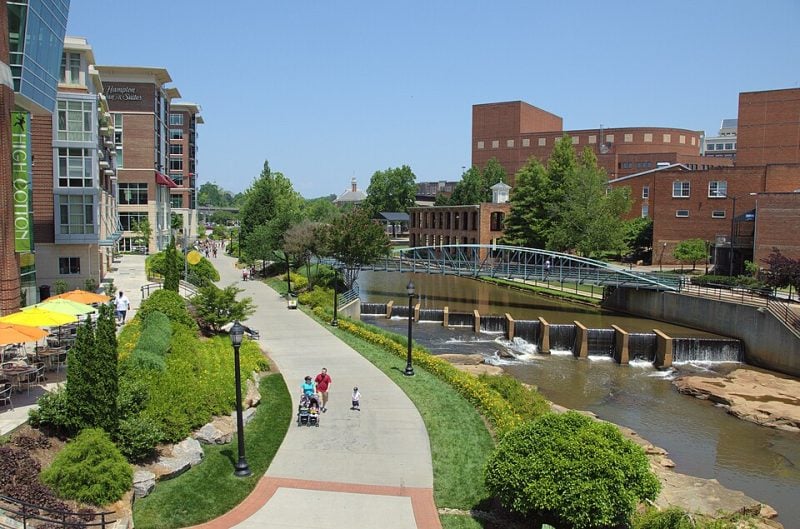
These revitalization efforts transformed Greenville from a struggling post-industrial city into a thriving cultural and economic center. The development of Falls Park on the Reedy and Main Street created a walkable downtown core that attracts both residents and tourists. Today, the city has evolved into a hub for advanced manufacturing, technology companies, and healthcare services.
Cost of Living Evaluation
Greenville offers below-average living costs compared to the national average, with housing being the most significant factor in your budget. Your monthly expenses for utilities, groceries, and transportation will typically run lower than major metropolitan areas.
Housing Affordability
Your housing costs in Greenville remain competitive compared to other growing Southern cities. The median home price sits around $280,000 to $320,000, though this varies significantly by neighborhood. Downtown lofts and historic district properties command premium prices, while suburban areas like Simpsonville and Mauldin offer more affordable options.
Rental prices range from $1,200 to $1,800 for a two-bedroom apartment in desirable areas. You’ll find cheaper rentals in outlying neighborhoods, with some one-bedroom units available for $900 to $1,100 monthly. The rental market has tightened as more people relocate to the area, particularly young professionals and retirees.
Property taxes in Greenville County average 0.55% of your home’s assessed value, which is relatively low compared to national standards. This translates to roughly $1,500 to $2,000 annually for a median-priced home.
Taxes and Utilities
South Carolina’s income tax ranges from 0% to 6.5% based on your earnings bracket. You’ll pay 6% sales tax on most purchases, with some localities adding up to 1% for a combined rate of 7%.
Your monthly utility bills typically run $150 to $200 for a standard home, covering electricity, water, and gas. Summer cooling costs can push electric bills higher during June through August. Internet service averages $60 to $80 monthly for standard high-speed connections.
Everyday Expenses
Your grocery costs in Greenville run approximately 5-8% below the national average. A week’s worth of groceries for two people typically costs $120 to $160, depending on your shopping habits and store choices. Local farmers markets offer competitive prices on fresh produce during growing seasons.
Dining out ranges from $12 to $18 for casual meals and $25 to $45 per person at upscale downtown restaurants. Gas prices generally track slightly below national averages. Healthcare costs remain moderate, though you’ll want comprehensive insurance as medical facilities in the area primarily serve a regional population.
Quality of Life Factors
Greenville offers a blend of accessible medical facilities, moderate four-season weather, and evolving safety concerns that directly impact daily living. These elements shape your experience whether you’re raising a family, retiring, or starting a career in the upstate region.
Healthcare Access
Greenville provides strong healthcare infrastructure with multiple major hospital systems serving the region. Prisma Health Greenville Memorial Hospital operates as one of the largest medical centers in South Carolina, offering comprehensive services including specialized care and emergency treatment.
The city also houses St. Francis Hospital Downtown, providing additional options for medical care. You’ll find numerous specialist practices, urgent care facilities, and outpatient centers distributed throughout the metro area.
Key Healthcare Features:
- Multiple Level 1 trauma centers
- Extensive network of primary care physicians
- Specialized cancer treatment facilities
- Growing telehealth services
Wait times for appointments typically remain reasonable compared to larger metropolitan areas. However, you may experience longer waits for highly specialized services that require referrals to larger cities like Charlotte or Atlanta.
The concentration of medical facilities also makes Greenville a regional healthcare hub, attracting patients from surrounding counties and neighboring states.
Climate and Weather
Greenville sits at the foothills of the Blue Ridge Mountains, giving it a humid subtropical climate with four distinct seasons. Summer temperatures regularly reach the upper 80s and low 90s with high humidity levels that can make outdoor activities uncomfortable.
Winters remain relatively mild with average temperatures in the 40s and 50s. You’ll see occasional snow, but significant accumulation occurs rarely, typically just a few inches per year.
Spring and fall offer the most pleasant weather conditions with moderate temperatures and lower humidity. These seasons attract visitors and make outdoor recreation particularly enjoyable.
Annual Weather Patterns:
- Average annual rainfall: 47 inches
- Summer humidity: 70-80%
- Days below freezing: 60-70 per year
- Growing season: approximately 220 days
The area experiences occasional severe thunderstorms during spring and summer months. While hurricanes rarely make direct hits this far inland, you may encounter tropical storm remnants bringing heavy rainfall.
Safety and Crime Rates
Greenville’s crime statistics show variation across different neighborhoods and districts. The city experiences higher property crime rates than the national average, with vehicle break-ins and theft being common concerns in certain areas.
Violent crime rates fall closer to national averages but remain a consideration depending on your chosen neighborhood. Downtown areas and established residential communities generally maintain better safety records than some outlying sections.
The Greenville Police Department actively works on community policing initiatives and crime prevention programs. Response times for emergency calls typically meet acceptable standards for a city of this size.
Crime Considerations:
- Property crime exceeds national average by approximately 20%
- Violent crime near national median
- Neighborhood-specific safety varies significantly
- Well-lit downtown areas have increased security presence
You should research specific neighborhoods thoroughly before choosing where to live. Areas like downtown Greenville, Greenville Country Club, and parts of Simpsonville typically report lower crime rates than other sections of the metro area.
Economic Opportunities
Greenville has developed a diverse economy with strong opportunities in healthcare, technology, and manufacturing, supported by major employers and a business-friendly environment. The city’s economic growth continues to attract professionals and entrepreneurs seeking career advancement and business development.
Job Market Overview
The Greenville economy offers positions across manufacturing, healthcare, education, and technology sectors. Major employers include Michelin North America, GE Power, BMW Manufacturing, and Prisma Health.
Healthcare remains one of the largest employment sectors, with multiple hospital systems and medical facilities expanding their operations. The technology sector has grown significantly, with both established companies and startups establishing offices in the area.
Manufacturing continues to be a cornerstone of the local economy, particularly in automotive and aerospace industries. You’ll find competitive salaries across these sectors, though wages vary depending on your experience and specialization.
The unemployment rate typically remains below the national average, indicating a relatively stable job market. However, competition for positions can be intense in certain fields, particularly for entry-level roles in popular industries.
Business Climate
South Carolina provides tax incentives and business-friendly policies that make Greenville attractive for entrepreneurs and corporations. The state’s lower corporate tax rates and reduced regulatory burden compared to neighboring states have drawn numerous companies to establish operations here.
Small businesses benefit from local support networks, including chambers of commerce and entrepreneurial resources. The city has invested in infrastructure improvements and workforce development programs to support business growth.
Real estate costs for commercial properties remain reasonable compared to larger metropolitan areas, allowing businesses to maintain competitive operational expenses. This affordability extends to office space, industrial facilities, and retail locations throughout the metro area.
Education and Schools
Greenville offers a well-rounded education system with top-rated public and private schools focused on college preparation. The city also serves as a hub for higher education with multiple universities and technical colleges.
Public School System
Greenville County Schools operates as one of the largest school districts in South Carolina, serving over 76,000 students across more than 100 schools. The district includes highly rated elementary, middle, and high schools that consistently perform above state averages on standardized testing.
You’ll find notable magnet programs and specialized academies within the public school system, including programs for STEM, fine arts, and International Baccalaureate curricula. Many schools emphasize college and career readiness through advanced placement courses and dual enrollment opportunities.
The district’s student-to-teacher ratio varies by school but generally remains competitive compared to other metropolitan areas in the Southeast. Parent involvement is typically strong, with active PTAs and volunteer programs supporting educational initiatives.
Private school options are abundant throughout Greenville, ranging from religious-affiliated institutions to independent preparatory academies. These schools often offer smaller class sizes and specialized educational approaches.
Higher Education Options
Greenville hosts several prominent universities, including Furman University, Bob Jones University, and Greenville Technical College. Furman University ranks as a top liberal arts institution in the region, offering rigorous undergraduate and graduate programs.
Bob Jones University provides a Christian-focused education with programs spanning liberal arts, business, and theology. Greenville Technical College serves as the area’s primary technical and vocational training center, offering associate degrees, certifications, and continuing education courses.
The educational opportunities extend to technical training and workforce development programs that align with the region’s growing industries. You can access everything from healthcare certifications to advanced manufacturing training without leaving the metro area.
The presence of these institutions contributes to a vibrant college-town atmosphere in certain neighborhoods while providing local residents with accessible pathways to higher education and career advancement.
Transportation and Commute
Greenville’s transportation network centers on personal vehicles, with well-maintained highways connecting the city to major regional destinations. The public transportation options are limited compared to larger metropolitan areas.
Road Infrastructure
Greenville offers excellent highway access through Interstate 85, which runs through the city and connects you to Atlanta, Charlotte, and other major Southeast cities. Interstate 385 provides a direct route to Columbia, the state capital.
The road infrastructure throughout Greenville is generally well-maintained, with ongoing improvements to accommodate the city’s rapid growth. Traffic congestion exists during peak hours, particularly along major corridors like Woodruff Road and Pleasantburg Drive, but remains manageable compared to larger cities.
You’ll find ample parking in most areas, including downtown Greenville where both street parking and parking garages are available. The city’s layout favors car owners, with most suburban neighborhoods, shopping centers, and business districts designed with vehicle access in mind.
Commute times in Greenville average around 20 minutes, making daily travel relatively convenient. The city’s location at the foothills of the Blue Ridge Mountains puts you approximately three hours from coastal beaches and close to mountain recreational areas.
Public Transportation
Greenville Transit Authority operates the city’s bus system with limited routes covering primarily the urban core and major employment centers. Service frequency is lower than what you’d find in major metropolitan areas, with most routes running only during weekday business hours.
The lack of comprehensive public transport infrastructure means you’ll likely need a personal vehicle for daily activities. This represents a significant consideration if you’re relocating from a city with robust transit systems.
Ride-sharing services like Uber and Lyft operate in Greenville and provide alternatives for occasional transportation needs. However, relying solely on these services for regular commuting can become expensive over time.
Recreation and Lifestyle Benefits
Greenville offers an active lifestyle with access to mountain trails, a growing cultural scene, and an expanding food and entertainment district. The city’s location near the Blue Ridge Mountains and its revitalized downtown create opportunities for both outdoor recreation and urban experiences.
Outdoor Activities
Greenville sits at the foothills of the Blue Ridge Mountains, placing you within minutes of hiking trails, waterfalls, and mountain scenery. Falls Park on the Reedy, located in downtown, features walking paths, gardens, and a suspension bridge overlooking Reedy River Falls.
The Swamp Rabbit Trail extends 22 miles from Greenville to Travelers Rest, providing a paved path for cycling, running, and walking. You can access state parks like Paris Mountain and Table Rock within a short drive for camping, fishing, and additional trail systems.
The city’s location gives you both mountain and beach access. Coastal beaches are approximately three hours away, while mountain recreation areas are accessible within 30 to 60 minutes.
Arts and Culture
Downtown Greenville has developed into a hub for performing arts and cultural events. The Peace Center hosts Broadway shows, concerts, and ballet performances throughout the year. The city maintains several theaters and performance venues that feature local and touring productions.
You’ll find art galleries, museums, and public art installations concentrated in the downtown area. First Fridays on Main Street showcases local artists and galleries with extended hours and special exhibitions. The Greenville County Museum of Art offers free admission and features a collection of American art.
Annual festivals include Artisphere, Fall for Greenville, and Euphoria food and music festival. These events draw regional attendance and contribute to the city’s active event calendar.
Dining and Nightlife
Greenville’s downtown has experienced significant restaurant growth over the past decade. You’ll find options ranging from upscale dining establishments to casual eateries, breweries, and coffee shops concentrated along Main Street and surrounding blocks.
The city has developed a craft brewery scene with multiple local operations offering tasting rooms and regular events. Main Street provides the primary nightlife corridor with bars, live music venues, and late-night dining options.
Restaurant diversity includes Southern cuisine, international options, and farm-to-table concepts. Weekend evenings see considerable foot traffic in the downtown entertainment district, particularly during warmer months when outdoor seating expands capacity.
Community and Social Scene
Greenville fosters a welcoming atmosphere that attracts young families and retirees alike, while the city continues to evolve in its cultural makeup and social dynamics. The community and lifestyle in Greenville reflects both southern hospitality and modern urban living.
Sense of Community
You’ll find that Greenville residents take pride in their city and actively participate in community events. The revitalized downtown serves as a central gathering place where neighbors connect at farmers markets, festivals, and outdoor concerts throughout the year.
Local neighborhoods often organize block parties and social gatherings, creating opportunities for you to build meaningful relationships with those around you. The city’s parks, particularly along the Reedy River, function as natural meeting spots where families and individuals come together.
Churches and faith-based organizations play a significant role in community bonding, reflecting the region’s southern roots. You’ll also discover numerous volunteer opportunities and civic groups that allow you to contribute to local causes.
The smaller city size compared to major metropolitan areas means you’re more likely to run into familiar faces at restaurants, shops, and community events. This creates a neighborly atmosphere that many find appealing when considering Greenville as a place to live.
Diversity and Inclusivity
Greenville has been working to expand its cultural diversity, though it still lags behind larger metropolitan areas. The city’s demographic makeup remains predominantly homogeneous, which may be a consideration depending on your background and preferences.
You’ll notice that the arts scene and downtown development have attracted more diverse populations in recent years. International companies establishing operations in the area have brought professionals from various backgrounds, contributing to gradual cultural shifts.
The city hosts cultural festivals and events that celebrate different communities, though these opportunities are more limited than what you’d find in larger southern cities. Some neighborhoods and areas show more diversity than others, particularly around the university and newer residential developments.
If you’re seeking a highly multicultural environment with extensive representation from various ethnic and cultural groups, Greenville may not meet those expectations. However, the city continues to grow and evolve in this regard as more people relocate to the area.
Potential Drawbacks of Living in Greenville
While Greenville offers many benefits, residents face challenges with seasonal allergies from pollen, limited access to major metropolitan amenities, and increasing traffic issues as the city grows.
Seasonal Allergies
Greenville’s location in the upstate region means you’ll experience significant pollen levels throughout much of the year. The area’s abundant trees, grasses, and flowering plants create extended allergy seasons that affect many residents.
Spring brings particularly high pollen counts from oak, pine, and other trees. You may find yourself dealing with allergy symptoms from March through May as trees release pollen. Grass pollen follows in late spring and early summer, extending the challenging period for allergy sufferers.
Fall introduces ragweed and other weed pollens that can trigger symptoms well into October. If you’re sensitive to allergens, you should budget for allergy medications, air purifiers, or potential medical consultations. Many newcomers who never experienced allergies before find themselves affected after moving to the area.
Limited Big City Amenities
Greenville lacks the extensive public transportation systems found in larger cities. You’ll need a personal vehicle for most activities since bus routes are limited and there’s no subway or light rail system.
The city offers fewer professional sports teams, major concert venues, and international dining options compared to metropolitan areas. While downtown Greenville provides cultural attractions, you won’t find the same variety of museums, theaters, or entertainment venues available in cities like Charlotte or Atlanta.
Shopping options are more limited, with fewer high-end retailers and specialty stores. International flights require driving to larger airports in Charlotte or Atlanta. If you’re accustomed to big city conveniences, you’ll notice the reduced selection in various services and entertainment options.
Traffic Congestion
Rapid development has created growing traffic challenges throughout Greenville. Major corridors like Woodruff Road and Interstate 385 experience significant congestion during rush hours.
You’ll encounter delays on Laurens Road, Pleasantburg Drive, and other primary routes, especially between 7-9 AM and 4-6 PM. The infrastructure hasn’t kept pace with population growth, creating bottlenecks at key intersections. Road construction projects aimed at improving traffic flow can add temporary delays.
Commute times have increased as more people move to the area. What once took 15 minutes may now require 30 minutes during peak hours.
Who Should Consider Moving to Greenville
Young families often find Greenville appealing due to its family-friendly atmosphere and growing educational opportunities. The city offers a balance between urban amenities and outdoor recreation that works well for raising children.
Professionals seeking career growth should consider Greenville’s strong economy and expanding job market. The city has attracted numerous businesses in recent years, creating diverse employment opportunities across multiple sectors.
Ideal candidates for moving to Greenville include:
- Retirees looking for moderate climate and lower cost of living compared to other Southeastern cities
- Outdoor enthusiasts who want access to the Blue Ridge Mountains and coastal beaches within a few hours
- Culture seekers drawn to a vibrant downtown with restaurants, arts venues, and entertainment options
- Remote workers who value affordable housing and quality of life over proximity to major metro areas
You should think twice about moving to Greenville if you rely heavily on public transportation, as the city has limited transit options. Those who prefer slower-paced growth might find the rapid development challenging.
People who thrive in Greenville typically appreciate Southern culture and don’t mind hot, humid summers. You’ll also benefit from valuing community engagement, as the city has an active civic culture. If you’re comfortable with a mid-sized city that’s experiencing significant growth while maintaining its charm, Greenville could be your next home.
Conclusion
Greenville presents a compelling option for those considering relocation to the Southeast. The city combines affordable living costs, a revitalized downtown, and proximity to both mountains and beaches within a few hours’ drive.
You’ll find that Greenville offers a blend of southern charm and modern amenities that attracts young families and retirees alike. The growing job market and lower cost of living compared to many other metropolitan areas make it financially practical for various income levels.
Key considerations for your decision:
- Climate: Hot, humid summers with mild winters
- Traffic: Growing congestion as population increases
- Culture: Traditional Southern values mixed with increasing diversity
- Recreation: Easy access to outdoor activities year-round
- Economy: Expanding job opportunities in multiple sectors
The city’s rapid growth brings both benefits and challenges. You’ll experience improved amenities and services, but also face increasing traffic and higher housing demand. Your lifestyle preferences will determine whether these tradeoffs align with your priorities.
Greenville’s location in the upstate region provides geographic advantages for those who enjoy outdoor recreation. The proximity to the Blue Ridge Mountains and Atlantic beaches offers weekend getaway options without requiring extensive travel.
Your experience in Greenville will largely depend on what you value most in a community. The city provides strong fundamentals in affordability, amenities, and natural beauty while maintaining room for continued development and improvement.