The Annual Maintenance Cost of a $4 Million Luxury Home
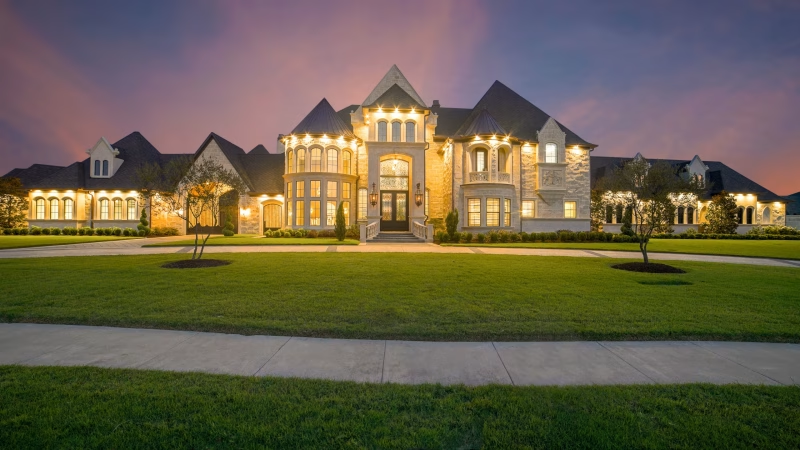
Are you ready to own your dream home? What if your budget is $4 million? Assuming you’ve got that kind of money, owning a $4 million luxury home brings prestige and comfort, but it also comes with substantial ongoing expenses that extend far beyond the mortgage payment.
The annual maintenance cost for a luxury home in this price range typically falls between $100,000 and $200,000, or roughly 2.5% to 5% of the property’s total value.
These costs encompass everything from routine upkeep to specialized care for high-end amenities. Your exact expenses will depend on factors like square footage, the number and type of luxury features, property age, and local labor costs.
Annual maintenance costs for a 5,000-square-foot luxury home can range from $50,000 to $150,000 or more, and a $4 million property often includes significantly more space and amenities.
Understanding these costs before purchase helps you budget appropriately and avoid financial surprises.
The expenses go well beyond basic repairs and utilities. You’ll need to account for specialized systems maintenance, extensive grounds care, high-end appliance servicing, and potentially household staff.
This guide breaks down each major cost category and provides strategies for managing these expenses while preserving your property’s long-term value.
Ready to see how much the house of your dreams costs to run? Let’s go!
Understanding the Major Cost Drivers
A $4 million luxury home comes with three primary recurring expenses that significantly impact your annual budget: property taxes based on assessed value, specialized insurance coverage for high-value properties, and substantial utility costs driven by larger square footage and premium systems.
Property Taxes and Assessment Fees
Your property tax burden on a $4 million home varies dramatically based on location. In states like Texas and New Jersey, you might pay 2% to 2.5% of assessed value annually, resulting in $80,000 to $100,000 in property taxes. California’s Proposition 13 caps increases at 2% annually, though your initial assessment still reflects the purchase price.
Many municipalities reassess luxury properties every 1-3 years. You should expect additional assessment fees for special districts, including water management, fire protection, and community improvement districts. These typically add $2,000 to $8,000 annually depending on your location.
Gated communities and planned developments often levy separate assessment fees beyond standard property taxes. These cover community amenities, security, and shared infrastructure maintenance.
Homeowners Insurance for High-Value Estates
Standard homeowners policies cap coverage at $1-2 million, making them inadequate for your property. You need a high-value or luxury home insurance policy, which costs 0.5% to 1.5% of your home’s value annually between $20,000 and $60,000 for a $4 million property.
Your premium depends on construction quality, location-specific risks, and replacement cost estimates. Homes in hurricane zones, wildfire areas, or coastal regions face significantly higher rates. Insurance carriers also consider your security systems, building materials, and distance to fire stations.
Many insurers require annual inspections and specific risk mitigation measures. You may need separate flood insurance ($3,000-$8,000 annually) and earthquake coverage ($2,000-$10,000 annually) depending on your region.
Utilities and Energy Consumption
Luxury homes typically span 5,000 to 10,000 square feet, driving substantial utility expenses. Your monthly electric bill alone can range from $800 to $2,000, particularly if you operate multiple HVAC zones, heated pools, or extensive outdoor lighting.
Natural gas for heating, cooking, and pool heating adds $200 to $600 monthly in colder climates. Water and sewer services cost $150 to $400 monthly when maintaining landscaping, pools, and multiple bathrooms.
Typical Monthly Utility Breakdown:
- Electricity: $800-$2,000
- Natural gas: $200-$600
- Water/sewer: $150-$400
- Internet/cable/phone: $200-$400
Smart home systems and energy-efficient appliances can reduce these costs by 15-25%. However, understanding the factors that influence costs requires analyzing your specific usage patterns and implementing targeted efficiency measures.
Maintenance of Structural and Exterior Elements
A $4 million luxury home demands significant investment in protecting its structural integrity and exterior appearance. Foundation work, roofing systems, and exterior finishes require regular attention to prevent deterioration that escalates into expensive emergency repairs.
Roof and Gutter Maintenance
Your roof represents one of the most critical protective barriers for your luxury home. Professional inspections should occur twice annually, with costs ranging from $200 to $500 per inspection depending on roof complexity and square footage.
High-end roofing materials like slate, copper, or premium architectural shingles require specialized maintenance. You should budget $1,500 to $4,000 annually for minor repairs, flashing adjustments, and preventive treatments. Complete roof replacements for luxury homes typically cost $40,000 to $100,000 or more, with premium materials lasting 30 to 50 years.
Gutter systems on larger homes need cleaning at least three times yearly. Professional gutter cleaning costs $200 to $600 per service. Seamless copper or custom gutters may require additional maintenance investment of $500 to $1,200 annually for repairs and resealing.
Exterior Painting and Siding
Exterior painting for a $4 million home involves substantial surface area and premium materials. Full exterior repainting occurs every 7 to 12 years depending on climate and materials, costing $15,000 to $40,000 for quality application.
Annual touch-ups and prep work typically run $2,000 to $5,000 to address weather damage and maintain curb appeal. Luxury materials like fiber cement, stucco, or natural wood siding require specific maintenance protocols. Wood siding needs annual inspections and sealing at $1,500 to $3,500, while stucco may require periodic crack repairs costing $800 to $2,000.
You should also budget for pressure washing exterior surfaces annually at $500 to $1,200 to prevent mold, mildew, and staining.
Driveway and Hardscape Upkeep
Driveways, walkways, patios, and retaining walls endure constant exposure to weather and traffic. Asphalt driveways require seal coating every 2 to 3 years at $1,000 to $2,500, while concrete surfaces need sealing every 3 to 5 years at similar costs.
Pavers and natural stone hardscaping demand more frequent attention. Annual re-sanding and sealing costs $1,500 to $4,000 depending on total square footage. You’ll face occasional repairs for settling, cracking, or individual paver replacement averaging $800 to $2,500 yearly.
Retaining walls and decorative stone features need inspection annually, with repair budgets of $1,000 to $3,000 for minor structural adjustments and drainage improvements.
Landscaping and Grounds Management
A luxury home valued at $4 million typically sits on substantial property requiring professional landscaping services that run between $15,000 and $35,000 annually. Your grounds maintenance costs will depend on property size, landscape complexity, and the level of service you require to maintain your outdoor spaces.
Lawn Care and Irrigation Systems
Your lawn maintenance involves regular mowing, fertilization, aeration, and seasonal treatments to keep grass healthy and pristine. Professional lawn care services charge between $50 and $100 per hour for crew labor, with basic landscaping services costing $4 to $12 per square foot.
Most luxury properties have automated irrigation systems that need quarterly inspections and winterization services. You should budget $800 to $1,500 annually for irrigation system maintenance and repairs.
Fertilization programs typically run four to six applications per year at $60 to $150 per treatment depending on lawn size. Weed control, pest management, and seasonal lawn treatments add another $500 to $1,200 annually to your maintenance costs.
Tree and Garden Maintenance
Your property’s trees require annual pruning, disease prevention treatments, and monitoring for pest infestations. Professional arborists charge $200 to $1,000 per tree for trimming and maintenance depending on size and accessibility.
Garden beds need regular mulching, weeding, deadheading, and seasonal plant replacement to maintain their appearance. Monthly landscaping maintenance typically ranges from $100 to $370, though luxury properties often exceed this range.
Seasonal plantings for perennial beds and annual flower displays cost $1,500 to $4,000 per year. You’ll also need to account for mulch replacement at $300 to $800 annually and specialized care for ornamental shrubs and specimen plants.
Pool and Water Feature Servicing
Your pool requires weekly chemical balancing, cleaning, and equipment inspections costing $100 to $200 per month during operating season. Annual pool opening and closing services add $300 to $600 to your maintenance budget.
Decorative fountains, ponds, and water features need regular cleaning, pump maintenance, and algae control. These systems typically cost $75 to $150 monthly to maintain depending on complexity and size.
Equipment replacement for pool pumps, filters, and heaters represents a significant expense, with annual reserve costs of $500 to $1,500 recommended for unexpected repairs.
Interior Systems and Appliance Care
A $4 million luxury home contains sophisticated mechanical systems and premium appliances that demand regular professional attention and strategic upgrades. These interior components represent substantial investments that require proactive maintenance to avoid costly failures and preserve your property value.
HVAC Servicing and Upgrades
Your luxury home likely features multiple HVAC zones, each requiring independent maintenance and monitoring. Professional servicing should occur twice annually, once before cooling season and once before heating season at approximately $200 to $400 per zone per visit.
High-end systems with advanced filtration, humidity control, and air purification components need more frequent filter replacements. HEPA filters and specialized media filters cost $100 to $300 per replacement, with changes needed every three to six months depending on usage and air quality.
Ductwork cleaning becomes essential every three to five years in luxury properties with extensive square footage. This service ranges from $800 to $1,500 for comprehensive cleaning of multiple zones.
Major component replacements include:
- Compressors: $1,500 to $3,000 per unit
- Air handlers: $2,000 to $4,000 each
- Smart thermostats: $300 to $600 per zone
Most luxury HVAC systems last 15 to 20 years with proper maintenance, but you should budget $2,000 to $4,000 annually for servicing and minor repairs across multiple zones.
Smart Home Technology Maintenance
Smart home systems in luxury properties integrate lighting, security, climate, entertainment, and automation through centralized control platforms. Annual software updates and system diagnostics from specialized technicians cost $500 to $1,200 per visit.
Network infrastructure requires professional monitoring to maintain connectivity across dozens of devices. Your system likely needs enterprise-grade networking equipment with regular firmware updates and security patches.
Battery replacements for smart locks, sensors, and backup systems add $200 to $500 annually. Integration issues between different manufacturers’ products often require troubleshooting visits at $150 to $300 per hour.
Common maintenance expenses include:
- Control panel updates: $300 to $600
- Camera system servicing: $400 to $800
- Audio system calibration: $500 to $1,000
You should budget $1,500 to $3,000 annually for technology maintenance to prevent system failures and security vulnerabilities.
Plumbing and Electrical Systems
Luxury homes feature complex plumbing networks with multiple water heaters, pressure systems, and filtration units. Annual inspections by licensed plumbers cost $300 to $600 and identify potential issues before they become emergencies.
Water heater maintenance varies by system type. Tankless units need descaling annually at $150 to $300 per unit, while traditional tanks require flushing and anode rod inspection. Many luxury properties have multiple water heaters serving different zones.
Your electrical panel requires inspection every three to five years at $200 to $400 per visit. Luxury homes often need panel upgrades to support additional circuits for wine cellars, home theaters, and expanded kitchen appliances.
Whole-house surge protection systems need replacement every five to ten years at $400 to $800. Generator systems require quarterly maintenance at $200 to $400 per service to ensure reliability during power outages.
Emergency reserves should cover:
- Pipe repairs or replacements: $500 to $2,000
- Circuit breaker replacements: $200 to $600
- Fixture upgrades: $300 to $1,500
Annual plumbing and electrical maintenance typically costs $2,000 to $4,000 for routine care in a $4 million home.
Luxury Amenities and Specialty Features
High-end amenities demand specialized maintenance protocols and trained professionals to preserve their functionality and value. These systems typically require annual budgets ranging from $8,000 to $15,000 depending on complexity and usage patterns.
Home Theater and Entertainment Room Upkeep
Your home theater system requires professional calibration and equipment servicing at least twice annually. Audio-visual components, including projectors, screens, and surround sound systems, need software updates, lamp replacements, and acoustic panel cleaning.
Professional calibration services cost between $500 and $1,200 per visit. Projector lamp replacements range from $300 to $800 depending on the model, while premium speakers may need reconing or component replacement every 5-7 years at $1,000 to $3,000 per unit.
Climate control systems in entertainment rooms require quarterly HVAC filter changes and annual duct cleaning to protect sensitive electronics. Automated lighting and motorized seating systems need lubrication and electrical inspections, typically costing $400 to $700 annually. Theater seating upholstery maintenance adds another $300 to $600 per year for leather conditioning and fabric protection.
Annual theater maintenance costs:
- Professional calibration: $1,000-$2,400
- Equipment servicing: $800-$1,500
- Climate control: $600-$900
- Seating and automation: $700-$1,300
Wine Cellar and Humidor Maintenance
Your wine cellar’s climate control system operates 24/7 and requires quarterly inspections to maintain precise temperature and humidity levels. Refrigeration unit failures can destroy collections worth hundreds of thousands of dollars within hours.
Professional wine cellar cooling system maintenance costs $800 to $1,500 annually, including refrigerant checks, compressor servicing, and sensor calibration. Humidity control systems need monthly monitoring and annual replacement of filters and water reservoirs at $300 to $500.
Racking systems require inspection for stability and moisture damage, with wood restoration or replacement costing $500 to $1,200 every few years. Your cellar’s insulation and vapor barriers need assessment during maintenance visits to prevent condensation issues.
Humidor maintenance for cigar storage demands similar precision. Cedar lining replacement or refinishing costs $400 to $900 every 3-5 years, while humidification systems require quarterly servicing at $200 to $400 annually.
Private Gym and Spa Systems
Your fitness equipment needs professional servicing every 6-12 months to prevent breakdowns and ensure safety. Treadmills, ellipticals, and weight machines require belt adjustments, lubrication, and electronic diagnostics.
Commercial-grade equipment maintenance contracts cost $1,200 to $2,500 annually for a fully equipped private gym. Individual machine repairs average $150 to $400 per service call, with belt replacements running $200 to $500 and electronic console repairs at $300 to $800.
Spa systems including saunas, steam rooms, and hot tubs demand intensive maintenance schedules. Steam generators need monthly descaling and annual element inspections at $600 to $1,000 yearly. Sauna heaters and controls require annual safety checks costing $300 to $600.
Hot tub maintenance involves weekly water testing, monthly deep cleaning, and quarterly equipment inspections. Chemical treatments cost $50 to $100 monthly, while professional servicing adds $800 to $1,500 annually. Jet pump replacements every 5-7 years cost $500 to $1,200, and cover replacements run $400 to $800 every 3-4 years.
Spa ventilation systems need quarterly filter changes and annual duct sanitization to prevent mold growth, adding $700 to $1,200 to your maintenance budget.
Staffing and Concierge Services
Professional staffing represents one of the most significant ongoing expenses for a $4 million luxury home, with costs varying based on your property size, location, and service expectations. These personnel ensure your home operates smoothly while maintaining the high standards expected of luxury properties.
Housekeeping and Cleaning Staff
Your housekeeping needs for a luxury home typically require either full-time or part-time dedicated staff. A full-time housekeeper costs between $40,000 and $70,000 annually, depending on your location and the staff member’s experience level.
For larger properties, you may need multiple housekeepers or a rotating team. Part-time cleaning services range from $200 to $500 per visit for thorough cleaning of high-end homes, with most luxury homeowners scheduling weekly or bi-weekly services.
Additional specialized services include window cleaning ($300-$800 quarterly), carpet and upholstery deep cleaning ($500-$1,500 semi-annually), and chandelier cleaning ($200-$600 annually). Your total housekeeping budget typically falls between $25,000 and $75,000 per year.
Security Personnel and Systems
Security for your luxury property involves both technological systems and potentially on-site personnel. A comprehensive security system with cameras, motion sensors, and monitoring costs $3,000 to $10,000 for installation, plus $50 to $200 monthly for professional monitoring services.
Full-time security personnel represent a substantial investment, with salaries ranging from $45,000 to $80,000 per person annually. Many luxury homeowners opt for part-time security during events or extended absences rather than 24/7 coverage.
Your security budget should also include system maintenance, software updates, and periodic equipment upgrades totaling $1,000 to $3,000 yearly.
Annual Maintenance Cost Breakdown
A $4 million luxury home typically requires $40,000 to $80,000 in annual maintenance expenses, though costs vary based on property age, location, and amenities. Understanding how these expenses distribute across seasons and planning for unexpected repairs helps you budget effectively.
Average Annual Spending Ranges
Your annual maintenance budget should account for approximately 1% to 2% of your home’s purchase price. A good rule of thumb is to set aside 1% of your home’s purchase price for routine maintenance, which translates to $40,000 for a $4 million property.
Homes with extensive grounds, pools, or advanced smart home systems push costs toward the higher end of this range. Properties in harsh climates face increased expenses from weathering and seasonal damage.
Your specific costs depend on factors including:
- Property age and construction quality
- Square footage and architectural complexity
- Climate and environmental conditions
- Number of specialized systems (pools, elevators, security)
- Landscape size and maintenance requirements
Newer homes generally stay closer to the 1% mark, while older luxury properties often require 1.5% to 2% annually.
Seasonal Versus Year-Round Expenses
You’ll encounter maintenance costs throughout the year, with certain expenses concentrated in specific seasons. Spring and fall demand the most attention as you prepare your property for temperature extremes.
Seasonal expenses include HVAC servicing before summer and winter, gutter cleaning in fall, pool opening and closing, irrigation system winterization, and exterior painting during dry months. These tasks cluster around weather transitions.
Year-round expenses cover landscaping, housekeeping, security system monitoring, pest control, and utility management. These costs remain relatively constant across all twelve months.
Your location significantly impacts seasonal spending patterns. Properties in snow-prone regions require winter-specific services like snow removal and ice dam prevention, while homes in tropical climates face year-round pool maintenance and increased pest control needs.
Unexpected and Emergency Repairs
You should maintain a separate emergency fund of $10,000 to $25,000 beyond your regular maintenance budget. Unexpected repairs don’t follow schedules and can strain finances without proper preparation.
Common emergency expenses include roof leaks, foundation cracks, HVAC system failures, plumbing emergencies, and electrical problems. Water heaters, sump pumps, and septic systems can fail suddenly and require immediate attention.
Major systems in luxury homes cost more to repair than standard residential equipment. Your custom appliances, high-end finishes, and specialized systems require expert technicians who charge premium rates.
Insurance covers certain catastrophic events, but you’ll pay deductibles and handle numerous repairs that fall below claim thresholds. Setting aside emergency funds protects you from financing unexpected repairs or delaying critical maintenance that could cause additional damage.
Factors Affecting the Annual Maintenance Cost
A $4 million luxury home’s maintenance expenses depend heavily on its age, geographic setting, and the extent of custom features you’ve installed. These three elements create significant cost variations that can shift your annual budget by tens of thousands of dollars.
Home Age and Construction Quality
Newer luxury homes typically cost less to maintain during their first decade. You’ll spend around 1% of your home’s value annually on a property less than five years old, which translates to $40,000 for your $4 million home.
As your home ages beyond 15 years, maintenance costs increase substantially. You should budget closer to 2-3% annually, reaching $80,000 to $120,000. Major systems like HVAC units, roofing, and water heaters begin requiring replacement rather than simple repairs.
Construction quality determines how well your home withstands time. Premium materials and expert craftsmanship reduce long-term expenses, while cheaper alternatives increase repair frequency. High-end appliances and finishes in luxury homes often require specialized technicians, which adds to service costs even when the products are well-made.
Location and Climate Considerations
Your geographic location directly impacts what you’ll pay for maintenance. Coastal properties face salt air corrosion, requiring more frequent exterior painting and metal component replacement. Hurricane-prone regions demand storm shutter maintenance and additional roof inspections.
Cold climates with freeze-thaw cycles stress foundations, driveways, and plumbing systems. You’ll need to budget for snow removal services, heating system maintenance, and potential pipe repairs. Desert environments require different considerations, including HVAC systems that work harder and landscaping that demands specialized irrigation.
External factors beyond your control include local labor rates and material availability. Metropolitan areas typically charge premium prices for skilled tradespeople compared to rural locations.
Personalization and Customization
Custom features significantly elevate your maintenance expenses. Wine cellars require climate control system servicing, smart home technology needs software updates and troubleshooting, and home theaters demand specialized equipment maintenance.
Pools and spas alone can cost $3,000 to $8,000 annually for chemicals, cleaning, and equipment upkeep. Tennis courts need resurfacing every 4-8 years at $4,000 to $8,000 per project. Elevators require monthly inspections and annual certifications by licensed technicians.
Your landscape complexity matters too. Elaborate gardens with rare plants, water features, and extensive hardscaping require professional services that basic lawns don’t need. Automated systems for lighting, irrigation, and security add layers of technical maintenance requiring specialized expertise.
Strategies for Managing and Reducing Costs
Effective cost management requires a structured approach combining scheduled maintenance, strategic vendor relationships, and modern technology solutions that can potentially save luxury homeowners tens of thousands of dollars annually.
Preventive Maintenance Planning
A preventive maintenance schedule protects your $4 million investment by addressing issues before they become expensive emergencies. You should establish quarterly inspections for critical systems including HVAC, roofing, plumbing, and electrical infrastructure.
Routine inspections and employee training extend the lifespan of critical assets while minimizing unexpected breakdowns. Document all maintenance activities in a centralized log to track service intervals and identify recurring issues.
Your preventive plan should include:
- Seasonal tasks: Gutter cleaning, HVAC filter changes, irrigation system winterization
- Annual inspections: Roof assessment, chimney cleaning, septic system evaluation
- Multi-year planning: Exterior painting cycles, appliance replacement timelines, landscape renovation
This proactive approach helps you avoid the premium costs associated with emergency repairs, which typically run 2-3 times higher than scheduled maintenance.
Vendor Selection and Contract Negotiation
Establishing relationships with qualified vendors delivers better pricing and priority service for your luxury property. You should vet contractors thoroughly by checking licenses, insurance coverage, and references from comparable properties.
Negotiate annual service contracts that bundle multiple visits or services at discounted rates. Many HVAC companies, pool service providers, and landscaping firms offer 10-15% savings for year-long commitments versus individual service calls.
Request itemized quotes from at least three vendors for major projects to ensure competitive pricing. Build a preferred vendor list of 8-10 reliable contractors across different specialties who understand your property’s unique requirements and systems.
Utilizing Home Maintenance Technologies
Smart home systems and maintenance software provide real-time monitoring that prevents costly system failures. Install water leak detectors, temperature sensors, and energy monitoring devices that alert you to abnormalities before damage occurs.
Modern HVAC systems with predictive diagnostics can identify potential failures weeks in advance, allowing you to schedule repairs during off-peak seasons when rates are lower. Energy-efficient upgrades like smart thermostats and LED lighting systems reduce monthly operating costs by 20-30%.
Consider property management software that tracks maintenance schedules, vendor contracts, and expense history in one centralized platform. These tools help you identify cost trends and optimize your maintenance budget allocation across different property systems.
Long-Term Value Preservation
Maintaining a $4 million luxury home requires strategic planning that extends beyond addressing immediate repairs. Protecting your investment means implementing systematic evaluation processes and understanding when to upgrade rather than simply patch existing systems.
Regular Inspections and Assessments
You should schedule professional inspections at least annually to identify potential issues before they become costly problems. These assessments typically cover structural integrity, roofing conditions, HVAC systems, plumbing, electrical systems, and foundation stability.
Thermal imaging scans can detect hidden moisture intrusion or insulation failures that standard visual inspections miss. You’ll want to budget $2,000 to $5,000 annually for comprehensive property assessments depending on your home’s size and complexity.
Creating a detailed maintenance log helps you track inspection findings and establish patterns over time. This documentation proves invaluable when planning your maintenance budget and can increase resale value by demonstrating diligent property care. You should prioritize addressing issues identified as high-risk immediately, while medium and low-priority items can be scheduled into your annual maintenance calendar.
Capital Improvements Versus Routine Maintenance
Capital improvements add value or extend your property’s useful life, while routine maintenance simply keeps existing systems operational. Replacing a 20-year-old HVAC system with a modern high-efficiency unit qualifies as a capital improvement, whereas changing air filters remains routine maintenance.
You can expect capital improvements to cost significantly more upfront but reduce your annual operating expenses. A new roof installation might cost $40,000 to $100,000 but eliminates leak repairs and extends protection for 25 to 50 years.
Key distinctions include:
- Routine maintenance: Painting, filter changes, seasonal servicing, minor repairs
- Capital improvements: System replacements, structural upgrades, major renovations, additions
Budget separately for these categories since capital improvements often require evaluation of present and future costs to determine optimal timing. Tax treatment differs as well, with capital improvements potentially offering depreciation benefits while routine maintenance expenses are typically deductible in the year incurred.