The Marvels of Mauritius
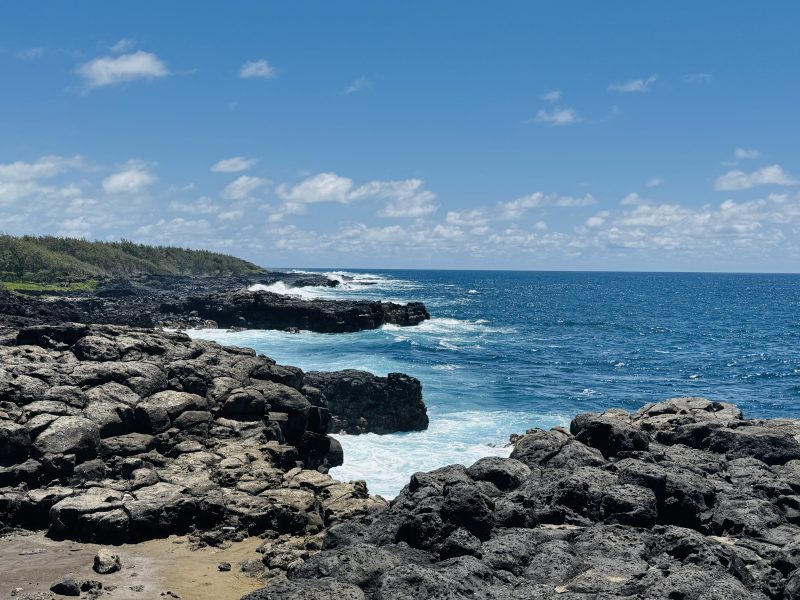
If you have traveled to the “usual” tropical islands of Hawaii, the Caribbean, and French Polynesia, and are seeking to experience a lovely island with a fairly unusual ethnic, cultural, and political history, then you will want to head to Mauritius.
Part of the Mascarene Islands, Mauritius is located about 1,000 miles off the Southeast coast of East Africa. It’s known as the most peaceful African nation, is lush and tropical, and boasts a delightful melange of ethnicities, faiths, and languages. It also serves as the perfect locale to recover from a long flight from Europe, or an even longer one from North America, before journeying onward, whether to the African continent, other islands in the region, such as Reunion, the Seychelles, or as in my case, onward by ship to South Asia.
Once a French colony, then a British colony, Mauritius became an independent republic in 1968. Vestiges of the past naturally remain. Mauritians speak French, English, and their local, native Creole, and drive on the left, while their currency is the Mauritian Rupee. Since independence, the country has in effect been governed by two families, the Ramgoolam family, and the Jugnauth family, and their direct descendants.

While Mauritius is a small African nation physically – its total land area is only about 790 square miles – it has the added benefit of being ranked one of the world’s top five countries for its purest air. If that is not enough to love, it’s an African nation where its multi-ethnicity and multi-religious beliefs are celebrated. It’s also the only African country where Hinduism is the most practiced religion, comprising about 48-percent of its 1.2 million population, followed by 32-percent Christian adherents, most of whom are Catholic, and 18-percent mainly Sunni Muslims. A smattering of Jews, Buddhists, Taoists, and Bahais wrap up Mauritius’ melting pot.
The Bed

Opened in September 2019, the Anantara Iko Mauritius Resort & Villas has 170 rooms, suites, and villas on 32-acres and is situated on the island’s less developed southeast coast yet is only 10-minutes from Sir Seewoosagur Ramgoolam International Airport, diminutively referred to as SSR, and named after Mauritius’ first prime minister.
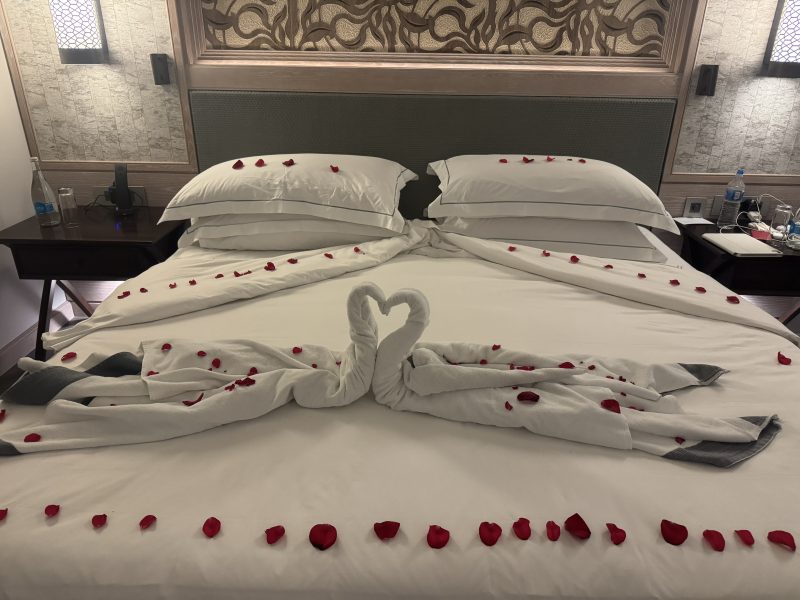
My accommodations had a comfortable king-sized bed with high-count cotton sheets, a 60-inch flat screen, a working desk, seating area, mini refrigerator, waist level mini-safe, plenty of closet space, and thankfully for me, a Lavazza coffee machine, and tea pot. Most important, the lovely, Indian Ocean facing veranda had a comfortable double daybed, and a separate seating area.
The dual-vanity bathroom boasted an extra large deep-soaking tub, a separate walk-in shower with both European and rain shower heads, thick cotton towels and bathrobes, and a separate water closet.

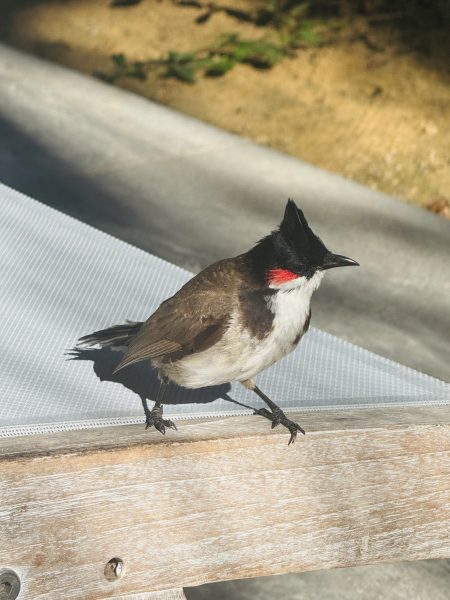
There are two pools, an ocean-facing infinity pool, and a separate Aqua pool and bar near the spacious gym with TechnoGym treadmills, stairmasters, ellipticals, free weights, machines, and yoga equipment. There are also scheduled yoga classes. The Anantara Spa with three single and two double treatment rooms is an oasis of calm. Here a fabulous deep tissue massage had me nearly forget my name. Enjoying a spot of tea afterwards, a red-whiskered bulbul with a hilarious Mohawk coif decided to join me in the Zen atmosphere and comically shared my post-massage raisins. If staying calm is healthy, laughing with nature’s comedians is even better.
The Meals
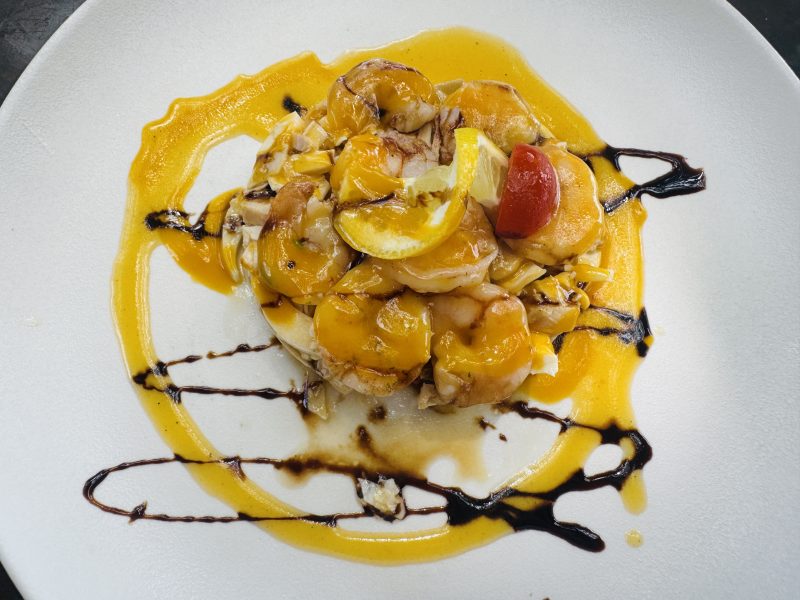
Eating in Mauritius will be difficult because the food is very good. At Le Chamarel with breathtaking views of Le Benetier island, we dined on delectable shrimp salads. Another lunch was enjoyed at Zen-Wei, Anantara’s Asian pop-up restaurant for pad Thai, nasi goreng, sushi, and other Asian delights.
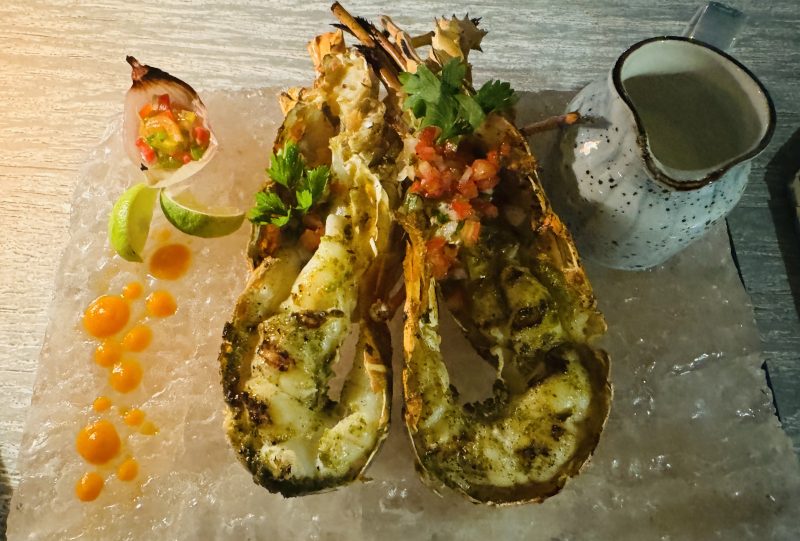
For fine Northern Indian cuisine, outstanding lamb and chicken curries were prepared at Anantara’s Zafran in an intimate atmosphere. At Sea Fire Salt, both the lamb lollipops and the beautifully presented rock salt lobster atop a slab of pink Himalayan salt were delicious.
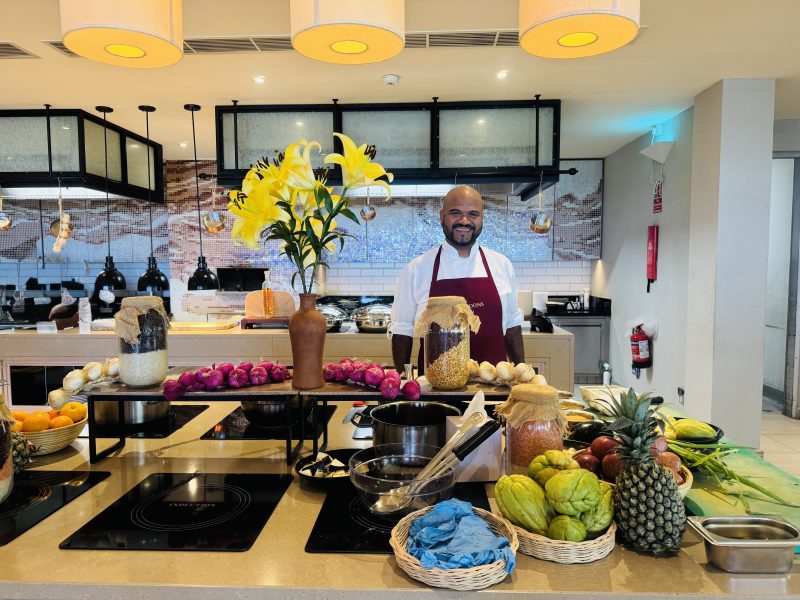
Another day I took a cooking class with Anantara’s affable Sous Chef James Vert. We made an eggplant chutney with vegetables he microscopically chopped that was so divine it nearly made me weep with joy. Accompanied by sautéed julienne chayote, and coconut curried shrimp, and I seriously contemplated tout de suite moving to Mauritius.
The culinary pièce de résistance was a very untraditional Thanksgiving meal at 1884 Wine Cellar prepared by Sous Chef Jeyen Sooprayen for whom I give absolute thanks. The meal started with the sommelier pouring Mauritian-made Taka Maka rosé and white wines produced from lychee. Chef Sooprayen prepared a heart of palm salad with thinly sliced mouth-watering smoked marlin followed by perfectly cooked mixed grill of filet, lamb, and chicken, ending with decadent lava cake. The wonderful meal was paired with a Hungarian furmint and South African Sauvignon blanc and pinotage wines. Frankly, the pilgrims have no idea what they missed.
The Finds
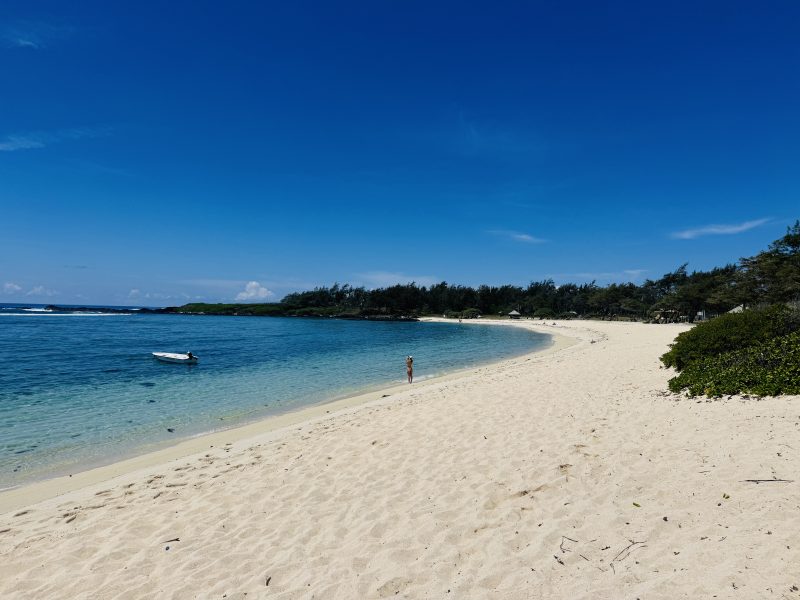
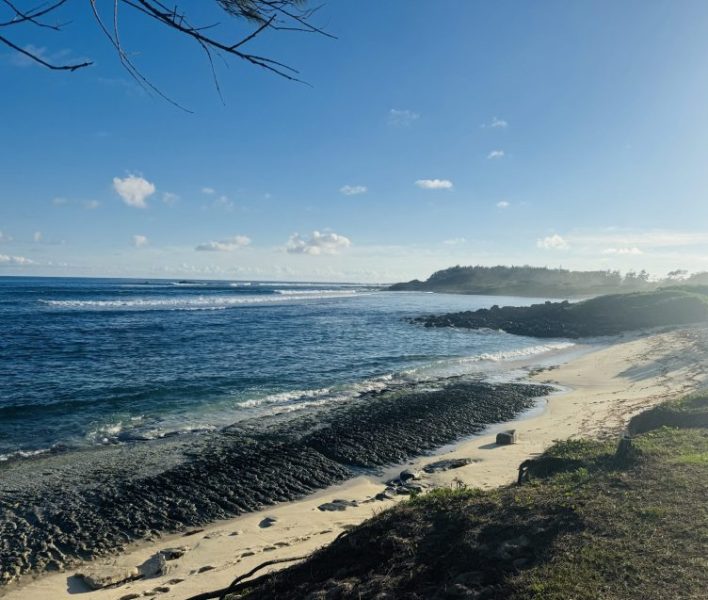
Directly in front of the Anantara is a beautiful, white sand beach with clear, turquoise waters. Single and double kayaks are available as well as paddle boats. Right next door is La Cambeuse, a lovely beach park with casuarina trees where one can enjoy watching local families revel in nature’s bounty. Continuing on by foot, there’s a nice walking path where one can view dramatic black lava rock formations as they meet the sea. Later joining an Anantara nature walk, we traversed to the Royal Palm Forest with endemic trees and plenty of ornithological marvels, including the African Golden-weaver, notorious for its unusual ability to tie knots, and straw-colored fruit bats, some with stunning three-foot wingspans.
If you wish to go further afield and don’t feel like driving on the “wrong” side, the Anantara can arrange a half or full day guide and driver to see the island’s sights, or you can hire one directly to collect you at the airport then have two or three days of touring after the jet lag has resolved. I used Mr. Ashvin Aumary (WhatsApp 23 052 564 0080).

One day en route to Ganga Talao Hindu Temple with a towering Madurga on the left and Shiva on the right, and lovely nearby lake, we stopped on the side of the road for confi, a Mauritian snack of mango, pineapple, olives, or cucumber, succulently marinated with tamarind laced sugar water, then topped with chili powder.
In Curepipe, Mauritius’ second largest city, is stone-facade St. Joseph church. Nearby is Trou aux Cerfs, a dormant cinder cone volcano nearly 2,000 feet high with a crater about 1,000 feet in diameter.

Boat aficionados will want to pop into Violers de l’ocean where local skilled artisans craft all manner of replicas. At Black Gorges National Park, a biosphere reserve, one can hike or take in the stellar views.

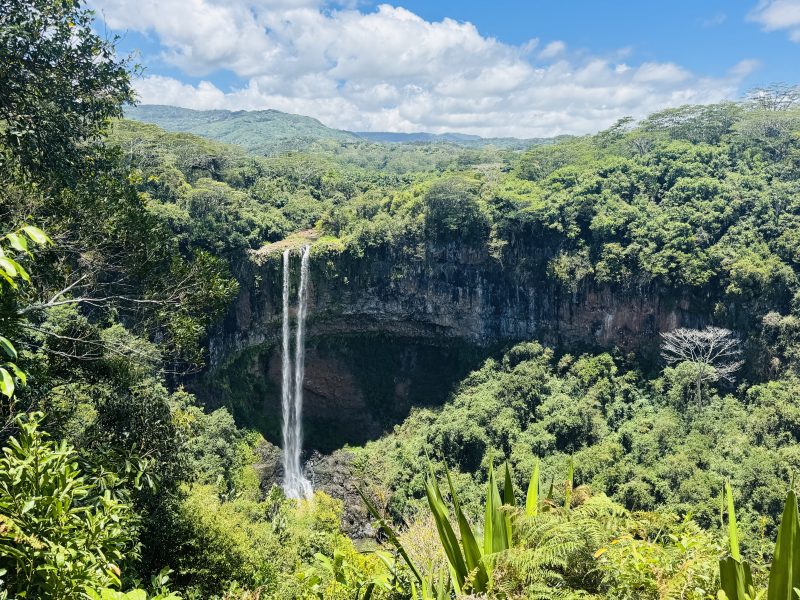
At the Valley of Colors, complete with a 300-foot waterfall, a 156-acre natural stretch of land containing various minerals boasts seven different colors. Here are walking paths, a coffee plantation, Aldabra tortoises, and other fauna in this forest around Chamarel. For one more breathtaking view, we visited Maconde at Baie du Cap.

Another day Ashvin and I went to La Maison du Eureka in Moka, an architecturally significant home depicting the island’s colonial past set with a backdrop of Mount Ory amid verdant gardens complete with a foot path to a babbling brook and waterfall. The main house has intricately carved furnishings, old photographs, portrait paintings, Chinese porcelains, and a grand piano. If you go around lunchtime and wish to dine, call ahead for reservations.
Onward we popped into the lovely, air-conditioned Bagatelle Mall, for some retail therapy taking advantage of Black Friday sales. There are over 150 speciality shops and several international brands, including Tommy Hilfiger, Ralph Lauren, and Sketchers, and an excellent food court. Sufficiently therapied, both of our wallets however were a bit lighter.

In the capital of Port Louis, is Le Caudan Waterfront, a stone’s throw from the main pier terminal houses boutiques, cafés, restaurants, and colorful produce, fish, meat and crafts markets – you’ll want to buy some flavorful, rich dark Muscovado sugar to take home. Here too the Blue Penny Museum provides an entree into Mauritian colonial history, navigation, postal adventures, and the mythical love story of Paul and Virginie associated with Mauritius and made famous by French writer Jacques-Henri Bernardin de Saint-Pierre’s 18th-century novel.

Driving 787 feet above sea level we arrived at the Citadel/Fort Adelaide. Started by the French in 1830 to prevent invasions, it was completed in 1840 by the British symbolizing the end of slavery and commencement of Indian immigration. From this sweeping vantage point, all of Port Louie comes into view, including what is today the world’s second largest still-in-use horserace track, Champs de Mars. Dropping down the hill is the Place d’Armes with several important bronze statues, including Queen Victoria’s.
The Lessons Learned
Getting to Mauritius takes time. However, once you arrive there, you will feel so fortunate you chose to make the journey. This is true whether you are seeking a lush, verdant island to explore, a culturally diverse population to experience, or simply to enjoy great food and to relax, all while giving thanks for your good fortune to experience marvelous Mauritius. In fact, spending Thanksgiving here dining deliciously without cooking was a gift. After spending a sojourn here, next thing you know, you’ll be sending kisses to Mauritius. Happy travels!