The Role That AI Plays in Prop Trading
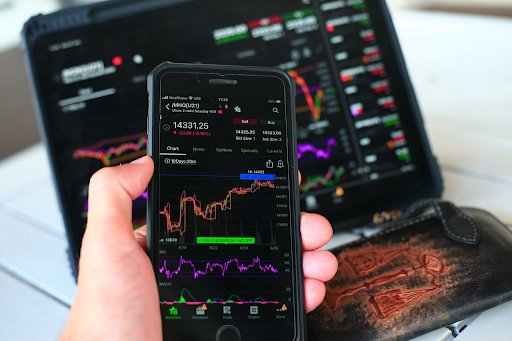
Artificial intelligence is becoming part of the technology used across prop trading. Prop firms deal with large amounts of trading and customer data, giving AI systems plenty of information to process.
AI can also automate tasks that would otherwise require manual work. Firms can use it to identify unusual trading activity, analyse performance data, answer common customer questions, and support risk teams. The technology does not replace the trading rules or systems, but it can add another layer of analysis and automation.
Keep reading to see how AI is being used across prop trading.
1. Market Data Analysis
AI can process price, volume, volatility, and historical market data to identify patterns across large datasets.
Machine learning models can classify market conditions, while natural language processing (NLP) can process news, economic reports, and other text-based information.
The quality of the output depends heavily on the data used to train and run the model.
2. Automated Trading Systems
Machine learning can be incorporated into algorithmic trading systems to generate signals from historical or real-time data. Models can use technical indicators, price behavior, volatility, and other variables when producing predictions.
AI does not remove normal trading constraints, though. Execution speed, liquidity, transaction costs, data quality, and model errors can all affect the results of an automated strategy.
3. Risk Management
AI can monitor trader accounts using data such as drawdown, position size, exposure, trade frequency, and account performance.
Anomaly detection models can flag activity that differs from normal trading behavior, while predictive analytics can identify changes in risk.
Real-time monitoring is particularly useful when a prop firm is managing a large number of active accounts.
4. Detecting Suspicious Trading Activity
Behavioral analysis can help identify patterns linked to prohibited or unusual trading activity. AI systems can compare trade timing, position behavior, account correlations, and other characteristics across multiple accounts.
Some specialist systems now monitor patterns associated with copy trading, coordinated activity, HFT, martingale strategies, grid trading, and news trading.
5. Trader Performance Analysis
AI can process trade histories to examine metrics such as win rate, average trade duration, position size, drawdown, risk-to-reward ratio, and trading frequency.
Machine learning can then identify recurring patterns across trader groups. These models can also track changes in behavior over time.
6. Customer Support
Generative AI and NLP can handle repetitive customer questions about account rules, verification, payments, trading platforms, and account access. When connected to a CRM or helpdesk, AI can classify tickets, retrieve relevant customer information, and route complex cases to support staff.
7. Fraud and Account Monitoring
AI can compare customer, payment, and account data to detect unusual patterns during registration and account activity.
This can include repeated registrations, unusual account connections, abnormal payment behavior, or other indicators that require further investigation.
AI can also support KYC processes by analysing identity documents and customer information before cases are sent for manual review.
8. AI Within the Prop Trading Ecosystem
AI is becoming part of the wider prop trading ecosystem, working alongside the technology that firms already use. This can include trading platforms, CRM systems, payment providers, KYC tools, risk engines, and other trading technology.
Through APIs, AI models can access data from these different systems, analyse it, and provide outputs such as alerts, risk scores, trader classifications, and reports.
9. AI for Operational Automation
AI can automate administrative processes such as customer enquiries, account updates, ticket classification, reporting, and email responses.
However, effective automation also depends on having the right technology infrastructure in place. Prop firms may work with specialist technology partners such as Trade Tech Solutions to develop and integrate the systems needed to support more automated operations.
Workflow systems can then trigger actions based on specific events, such as a completed KYC check or a change in account status. This reduces repetitive data handling and gives staff more time for tasks that require manual decisions.
10. AI and the Future of Prop Trading
AI use in prop trading is likely to expand as firms gain access to better data, faster processing, and more specialised models. However, AI systems can still produce incorrect outputs, rely on poor data, or behave differently when market conditions change.
Model validation, monitoring, data controls, and human oversight remain necessary, particularly when AI is used for trading, risk decisions, or account enforcement.
AI and the Future of Prop Trading Technology
AI already has several uses in prop trading, covering market data, risk management, account monitoring, customer support, fraud detection, and operational workflows. Its main value comes from processing large amounts of information and handling repetitive tasks at scale.
The technology works alongside existing trading platforms, CRM systems, payment tools, and risk management software. This allows firms to use AI without replacing every part of their existing technology stack.
The way AI is used will depend on the firm’s data, systems, trading model, and operational needs. Strong data connections, reliable models, and human oversight remain important when AI is used in trading environments.