How Much House Can You Afford on a $120,000 Salary in South Carolina: A Complete 2026 Breakdown
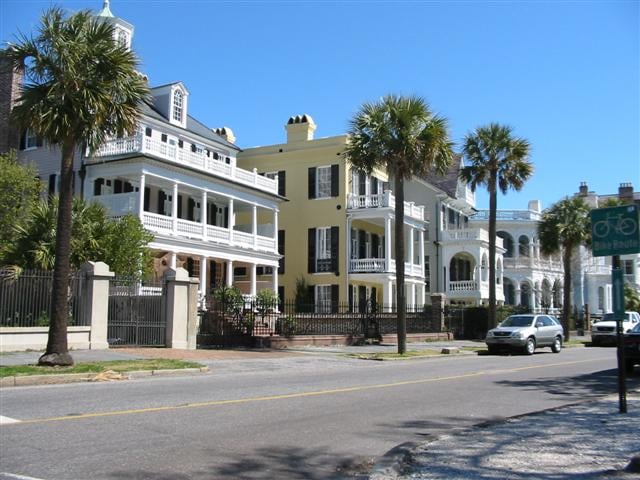
Thinking of moving to South Carolina but aren’t sure whether or not your salary cuts it? With a $120,000 annual salary in South Carolina, you can typically afford a home priced between $360,000 and $480,000, depending on your debts, down payment, and other financial factors.
This income positions you well above the state’s median household income, giving you considerable options in the local real estate market.
Your purchasing power will depend on several key factors including your monthly debt obligations, credit score, down payment size, and the specific mortgage loan types available to you.
Understanding these elements helps you set a realistic budget and avoid overextending yourself financially. This guide walks you through the calculations, regional market conditions, and strategic approaches that will help you determine your actual home buying budget.
You’ll learn how to account for South Carolina’s tax rates, insurance costs, and current real estate trends while maximizing your $120,000 salary to find the right home for your situation.
Let’s find out how it all works!
Understanding Your $120,000 Salary in South Carolina
A $120,000 annual salary in South Carolina provides substantial purchasing power due to the state’s below-average cost of living and favorable tax structure. Your actual take-home pay will be influenced by state income taxes, federal withholdings, and regional living expenses that vary across different parts of the state.
Cost of Living Overview
South Carolina offers a cost of living approximately 6-8% below the national average, making your $120,000 salary stretch further than it would in many other states. Housing costs represent the most significant advantage, with median home prices ranging from $250,000 to $350,000 in most markets.
Major metropolitan areas like Charleston and Greenville command higher prices, while smaller cities and rural areas offer more affordable options. Utilities in South Carolina tend to run slightly higher than the national average due to air conditioning demands during hot summers.
Grocery costs align closely with national averages, while transportation expenses remain moderate. Healthcare costs in the state fall below the national median, contributing to overall affordability. Your $120,000 income places you well above the state’s median household income of approximately $58,000, providing comfortable financial flexibility.
State Taxes and Deductions
South Carolina implements a progressive income tax structure with rates ranging from 0% to 6.5%. Your $120,000 salary falls into the top bracket, meaning you’ll pay 6.5% on income exceeding $15,400.
The state offers a standard deduction of $12,760 for married filers or $6,380 for single filers as of 2026. You can reduce your taxable income through retirement contributions, mortgage interest deductions, and other eligible expenses.
Property taxes in South Carolina remain relatively low compared to national standards, with an average effective rate of 0.55%. Sales tax varies by county but generally ranges from 6% to 9%. The state does not tax Social Security benefits, though this won’t impact your current earned income calculation.
Typical Take-Home Pay
Your monthly take-home pay on a $120,000 salary will be approximately $7,000 to $7,500 after federal taxes, state taxes, and FICA contributions. Federal income tax represents your largest deduction, followed by Social Security and Medicare taxes totaling 7.65%.
Monthly Breakdown:
- Gross monthly income: $10,000
- Federal income tax: ~$1,500-$1,800
- State income tax: ~$480
- FICA taxes: ~$765
- Estimated net pay: ~$7,000-$7,500
Your actual take-home amount varies based on filing status, dependents, pre-tax deductions like health insurance and 401(k) contributions, and other withholdings. Using a home affordability calculator helps you understand how your net income translates into purchasing power.
Key Factors That Influence Home Affordability
Your ability to purchase a home on a $120,000 salary depends on several financial metrics that lenders evaluate. These factors determine not only whether you qualify for a mortgage but also the loan amount and interest rate you’ll receive.
Debt-to-Income Ratio Explained
Your debt-to-income ratio (DTI) compares your monthly debt payments to your gross monthly income. Lenders use this metric to assess whether you can handle additional debt from a mortgage payment.
Most lenders prefer a DTI of 43% or lower, though some programs accept ratios up to 50%. With a $120,000 annual salary, your gross monthly income is $10,000. If you have $2,000 in monthly debt payments (car loans, student loans, credit cards), your DTI would be 20%.
Understanding your DTI helps you determine how much of your income can go toward a mortgage payment. To calculate your front-end DTI, divide your proposed housing payment by your gross monthly income. Your back-end DTI includes all monthly debts plus the proposed mortgage payment.
Paying down existing debts before applying for a mortgage improves your DTI and increases your purchasing power. Even reducing your monthly obligations by $200-300 can make a significant difference in the loan amount you qualify for.
Down Payment Considerations
Your down payment amount directly affects your monthly mortgage payment and total loan cost. A larger down payment reduces the amount you need to borrow and can help you avoid private mortgage insurance (PMI).
Conventional loans typically require 3-20% down, while FHA loans accept as little as 3.5%. On a $300,000 home, a 20% down payment would be $60,000, while a 5% down payment would be $15,000.
Common down payment options:
- 3-5%: Lower upfront cost but higher monthly payments and PMI required
- 10-15%: Moderate upfront investment with reduced monthly costs
- 20%+ Eliminates PMI and secures better interest rates
If you put down less than 20%, you’ll pay PMI, which typically costs 0.5-1% of the loan amount annually. This adds $125-250 monthly on a $300,000 loan.
Credit Score Impact
Your credit score determines the interest rate lenders offer you. Higher scores qualify for lower rates, which significantly reduces your total mortgage cost over time.
A score of 760 or above typically secures the best rates. Scores between 620-759 still qualify for conventional loans but at higher rates. For every 20-point decrease in your credit score, you might pay an additional 0.25-0.5% in interest.
On a $300,000 30-year mortgage, the difference between a 6.5% and 7% interest rate is approximately $95 per month or $34,000 over the loan term. Your credit score affects both approval odds and costs, making it a critical factor in affordability.
Check your credit report for errors before applying and pay down credit card balances to improve your score. Keeping credit utilization below 30% and making all payments on time for at least six months before applying can boost your score by 20-50 points.
Estimating How Much House You Can Afford
Lenders use specific formulas to determine your borrowing capacity, with the most common approaches examining your income relative to housing costs and total debt obligations. Your actual home price limit depends on applying these calculations to your $120,000 salary along with other financial factors.
Common Affordability Rules and Formulas
The 28/36 rule serves as the primary guideline lenders use when evaluating mortgage applications. Under this standard, your monthly housing expenses should not exceed 28% of your gross monthly income, while your total debt payments should stay below 36%.
With a $120,000 annual salary, your gross monthly income is $10,000. The 28% threshold means you should limit housing costs to $2,800 per month. This figure includes your mortgage principal, interest, property taxes, homeowners insurance, and HOA fees if applicable.
The 36% rule caps your total monthly debt at $3,600. This includes your housing payment plus car loans, student loans, credit card minimums, and other recurring obligations. If you currently pay $500 monthly toward other debts, you would have $3,100 available for housing costs.
Some affordability calculators factor in additional elements like down payment size, credit score, and current interest rates. These tools provide personalized estimates based on your complete financial picture.
Calculating Your Maximum Home Price
Your maximum purchase price depends on combining your income limits with your down payment savings. Using the 28% rule with a $2,800 monthly payment capacity, you can determine your affordable loan amount based on current mortgage rates.
At a 7% interest rate with a 30-year term, a $2,800 monthly payment (including estimated taxes and insurance of $400) supports approximately a $360,000 loan. With a 10% down payment of $40,000, your total home price reaches $400,000. A 20% down payment of $90,000 would increase your buying power to $450,000.
You can examine different scenarios by adjusting variables like loan terms and down payment percentages. South Carolina’s lower property tax rates compared to national averages mean more of your monthly payment goes toward principal and interest rather than taxes.
Your debt-to-income ratio ultimately determines approval. Lenders verify that your proposed mortgage payment plus existing debts fall within acceptable limits for your income level.
Home Prices and Real Estate Trends in South Carolina
South Carolina’s housing market shows mixed signals with median home values varying significantly across major cities, while recent price trends indicate slight declines from the previous year across most reporting sources.
Median Home Values by Major Cities
Home prices in South Carolina differ considerably depending on location. The median home price statewide stands at $329,607.50, representing a 3.24% increase compared to last year according to recent data.
However, other sources report different figures. Zillow lists the average home value at $300,562, down 0.2% over the past year. Redfin reports a median price of $376,000 as of February 2026, down 0.7% compared to the previous year.
These variations reflect differences in data collection methods and the specific cities included in each analysis. Major metropolitan areas typically command higher prices than rural regions, with coastal cities often exceeding the statewide median.
Recent Price Trends and Market Dynamics
The South Carolina housing market experienced downward price pressure in early 2026. Most reporting sources indicate year-over-year declines ranging from 0.2% to 0.7%, suggesting a cooling market after previous growth periods.
The market faced challenges throughout 2025, including elevated mortgage rates and rising home prices that limited affordability for many buyers. Demand for affordable housing significantly outpaced available supply, though fewer buyers could keep up with rising costs.
Tight inventory continues to drive prices despite the slight recent declines. Limited housing stock creates ongoing competition among buyers, even as economic uncertainty affects overall market conditions.
Monthly Costs Beyond the Mortgage
South Carolina homeowners with a $120,000 salary need to budget for property taxes averaging 0.55% of home value annually, insurance premiums between $1,200-$2,000 per year, and monthly maintenance expenses totaling 1% of the home’s purchase price annually.
Property Taxes in South Carolina
South Carolina offers some of the lowest property tax rates in the nation, with an average effective rate of approximately 0.55% of your home’s assessed value. This means on a $300,000 home, you would pay around $1,650 annually or about $138 per month in property taxes.
Your actual tax bill depends on your county and whether you qualify for exemptions. Counties like Charleston and Beaufort tend to have slightly higher rates, while rural counties often feature lower assessments. If you claim South Carolina as your primary residence, you can benefit from the homestead exemption, which exempts the first $50,000 of your home’s value from property taxes for school operating costs.
Owner-occupied properties receive preferential assessment ratios of 4%, compared to 6% for second homes and rental properties. This legal owner-occupant assessment ratio significantly reduces your taxable value.
Homeowners Insurance Costs
Homeowners insurance in South Carolina typically costs between $1,200 and $2,000 annually, or $100 to $167 per month. Your premium depends on your home’s location, age, construction type, and proximity to the coast.
Coastal properties require additional wind and hail coverage, which can increase your annual premium by $1,000 or more. Properties in flood zones need separate flood insurance through the National Flood Insurance Program, adding $400 to $2,000 annually depending on your flood risk zone.
You can reduce premiums by bundling policies, installing security systems, choosing higher deductibles, and maintaining good credit. Many insurers offer discounts for newer roofs, impact-resistant materials, and hurricane shutters.
Home Maintenance and Utilities
Budget 1% of your home’s purchase price annually for maintenance and repairs. On a $300,000 home, this equals $3,000 per year or $250 per month for expenses like HVAC servicing, roof repairs, and appliance replacements.
Monthly utilities in South Carolina average $150-$250 for electricity, $50-$80 for water and sewer, and $40-$60 for natural gas during winter months. Summer electricity costs run higher due to air conditioning demands in the humid climate.
You should also account for lawn care ($50-$100 monthly if outsourced), pest control ($30-$50 quarterly), and HOA fees if applicable. HOA fees in South Carolina range from $50 to $300 monthly depending on amenities and services provided by your community.
Types of Mortgage Loans Available
Different loan types offer varying down payment requirements and qualification standards that can significantly impact your buying power with a $120,000 salary. Understanding these options helps you choose the most advantageous financing for your situation.
Conventional vs. FHA Loans
Conventional loans are mortgages not backed by the federal government and typically require stronger credit profiles. With your $120,000 income, you can often qualify for a conventional loan with as little as a 5% down payment if you have good credit. These loans generally require a credit score of at least 620, though better rates come with scores above 740.
FHA loans are government-backed mortgages designed for borrowers who may have lower credit scores or smaller down payments. Government-backed loans such as FHA mortgages allow borrowers to pay as low as 3.5% down if they meet specific credit qualifications. FHA loans accept credit scores as low as 580 for the minimum down payment, making them accessible if your credit history isn’t perfect.
The key trade-off involves mortgage insurance. Conventional loans require private mortgage insurance (PMI) only until you reach 20% equity, while FHA loans charge both an upfront mortgage insurance premium and annual premiums for the life of the loan in most cases.
Special Programs for South Carolina Buyers
South Carolina offers targeted assistance programs that can enhance your purchasing power beyond traditional mortgages. The SC Housing Palmetto Heroes Program provides down payment assistance up to 5% of the loan amount for teachers, law enforcement, firefighters, EMTs, and healthcare workers.
The SC Housing First-Time Homebuyer Program offers competitive interest rates and down payment assistance regardless of your profession. You can combine this with FHA, VA, USDA, or conventional financing. USDA loans remain available for properties in eligible rural areas of South Carolina, offering 100% financing with no down payment required if the home meets location and price requirements.
Strategies to Maximize Your Buying Power
Building a stronger financial profile and saving more upfront cash can significantly increase the home price range accessible on your $120,000 salary in South Carolina.
Improving Your Credit Profile
Your credit score directly impacts your mortgage interest rate and monthly payment. A score above 740 typically qualifies you for the best rates, while scores below 620 may result in rates 1-2 percentage points higher.
Key actions to boost your credit:
- Pay down credit card balances to below 30% of your credit limits, ideally under 10%
- Make all payments on time for at least 6-12 months before applying
- Avoid opening new credit accounts in the months leading up to your mortgage application
- Dispute any errors on your credit reports from all three bureaus
A 40-point credit score improvement could lower your rate from 7.0% to 6.5%, saving you approximately $100 per month on a $360,000 home. This reduction in your monthly payment could qualify you for an additional $20,000-$25,000 in home price.
Increasing Your Down Payment
Putting more money down reduces your loan amount, eliminates private mortgage insurance at 20%, and demonstrates financial stability to lenders. On a $120,000 salary, increasing your down payment from 5% to 10% on a $360,000 home saves you roughly $150 monthly in PMI costs.
Methods to build your down payment:
- Set up automatic transfers to a high-yield savings account
- Use your annual bonus or tax refund
- Explore down payment assistance programs available in South Carolina
- Consider gift funds from family members
A 20% down payment ($72,000) on a $360,000 home eliminates PMI entirely and could lower your interest rate by 0.25%, reducing your monthly payment by approximately $230 compared to a 5% down scenario.
Next Steps in the Home Buying Process
After determining your budget on a $120,000 salary, securing pre-approval and partnering with a South Carolina realtor will position you to make competitive offers in the local market.
Getting Pre-Approved
A pre-approval letter from a lender demonstrates to sellers that you’re a serious buyer with verified financing. This differs from pre-qualification, which is simply an estimate based on self-reported information.
During pre-approval, lenders will review your credit report, verify your income through pay stubs and tax returns, and assess your debt-to-income ratio. They’ll provide a specific loan amount you qualify for, which helps you narrow your home search to properties within your confirmed budget.
Getting pre-approved for a loan strengthens your negotiating position, especially in competitive South Carolina markets like Charleston or Greenville. Most pre-approval letters remain valid for 60 to 90 days. You should gather financial documents including W-2s, recent bank statements, and information about any outstanding debts before contacting lenders.
Working With Local Realtors
A realtor familiar with South Carolina’s housing market provides invaluable guidance throughout your home search. Local agents understand neighborhood pricing trends, school districts, and upcoming development projects that could affect property values.
Your realtor will help you identify homes within your budget, schedule viewings, and submit offers on your behalf. They can recommend trusted home inspectors, attorneys, and other professionals you’ll need during closing.
South Carolina realtors typically receive compensation from the seller’s proceeds, meaning their services often cost you nothing directly as a buyer. Choose an agent who specializes in your target price range and preferred areas, whether that’s suburban Columbia, coastal Myrtle Beach, or the Upstate region.