How Much Should Ontario Drivers Expect to Pay for Car Insurance?

Before buying a car, an Ontario household has to leave room in the budget for insurance. Without a quote, the provincial or regional average is a place to start. A personal price may be well above or below it, depending on the address, car and policy.
The figures below describe yearly premiums as of June 2026, for private passenger cars insured over the previous 12 months.

The monthly column is the yearly amount divided by 12. It isn’t an insurer’s payment schedule.
What the Ontario average can tell a driver
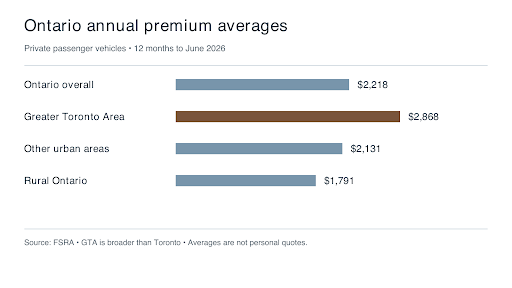
Ontario’s average yearly price of $2,218 comes from the Financial Services Regulatory Authority of Ontario. It gives a driver some context when a quote arrives, as long as the figure’s date and limits stay with it.
The average includes drivers with different records, cars and coverage. It doesn’t describe a single person with a clean record, and it isn’t a minimum price. Half the drivers don’t necessarily pay less, either. An average and a midpoint aren’t the same measure.
Location also changes the comparison. The Greater Toronto Area average is $650 above the provincial figure. That region includes more than the City of Toronto, so its $2,868 average shouldn’t be labelled a Toronto city rate.
A driver in another part of Ontario may find the figure for other towns or rural areas more useful. Even then, the regional number can’t replace a quote for the real car and household.
Why a personal quote can be much higher
A clean driving record helps. The company also checks how long the driver has had a license, which car is being insured and how it will be used. Driving to work every day is a different pattern of use from making occasional local trips.
The car’s value matters, along with the risk of theft and the cost of repairs. A modestly priced car can still have expensive parts or a history of theft claims. Choosing an older car therefore doesn’t produce a predictable saving on its own.
Protection changes the price too. Higher liability limits, optional accident benefits and coverage for damage to the car can all affect the amount due. A driver weighing a basic policy against a broader one is paying for different things.
New drivers need extra care with the provincial average. It includes drivers with long records. Using that figure to plan the cost of a first policy can leave a car budget short.
Deductibles belong in the spending plan
The premium pays to keep coverage in place. A deductible is the part of a covered loss the policyholder pays. Where a deductible applies, the insurer subtracts it from the covered claim payment. A larger deductible can lower the premium while leaving the owner with more to pay after a loss.
The quote needs to show those amounts beside the premium so the tradeoff can be understood.
That difference belongs in the comparison of auto insurance quotes in Ontario, along with the yearly premium and the protection each policy includes.
A lower bill may fit the monthly budget while the chosen deductible would be difficult to pay after an accident. The saving has to be weighed against that extra share of the loss.
Allowing for a claim
A household can treat the deductible as a separate amount to keep ready. It isn’t another regular insurance payment, and there is no need to add it to the yearly premium as though a claim were certain.
Keeping that amount ready helps the household afford a covered loss. It belongs in the spending plan before the driver accepts the lower premium.
Checking each deductible
Collision and comprehensive coverage can have different deductibles. Comparing only one leaves part of the cost unexplained.
The quote should show each amount next to the type of loss it applies to. That makes a later comparison easier when one insurer offers a lower premium with a larger share of the loss left to the driver.
Yearly premiums and monthly payments
A monthly payment can make insurance easier to fit around wages and other bills. Two quotes can also be harder to compare when their payment terms differ.
The yearly premium should be checked first, followed by the payment plan’s total and any instalment charges. Dividing the yearly figure by 12 is useful for planning, but it doesn’t show the real amount or timing of the withdrawals.
For someone buying a first policy, the timing matters as much as the yearly total. Insurance can be due before the next wage payment, alongside registration costs and the first car payment.
The first payment may differ from later ones. The written payment schedule should show what is due and when, rather than leaving the household to infer it from an advertised monthly amount.
A coverage cut can leave another cost
Removing protection may reduce a premium while creating a cost the driver would otherwise claim. Ontario drivers can agree to give up compensation under direct compensation property damage coverage. That choice can leave them paying for damage to their car and loss of its use after a collision for which they aren’t at fault. The related agreement also affects collision coverage. Those costs need to be part of the budget before a driver treats the lower bill as a saving on the same insurance.
Replacing the estimate with a current price
Written quotes give the household a price for the car and policy it wants. Comparing the same drivers, car, use, liability limits, accident benefits and physical-damage coverages keeps that price useful. An old address, an understated commute or a missing regular driver can make the estimate unreliable even when the arithmetic is right.
Only discounts the household qualifies for belong in the budget. A possible multi-policy discount has to wait until its terms are met and the new total is known.
The estimate needs a date too. Insurance prices move over time. Canada’s personal-auto rate index showed increases across the provinces in the fourth quarter of 2025, but that historical movement doesn’t predict what one Ontario driver will pay at the next renewal.
Before committing to a car, the household needs a current quote for that exact vehicle. Its written yearly total and payment schedule show the bills to plan for; the deductibles show the money to keep ready if a covered loss happens.