How to Plan for Several Large Expenses Arriving at the Same Time
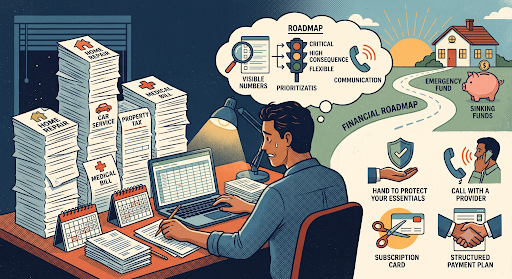
Life has a funny way of delivering major financial demands all at once. You might spend months or even years with relatively predictable monthly costs, feeling like your budget is locked in and completely manageable. Then, out of nowhere, a home repair coincides with a necessary vehicle service, an annual tax obligation, and an unexpected medical bill. Honestly, when a stack of large expenses lands on your desk simultaneously, the financial pressure can feel totally overwhelming. I guess we’ve all sat there staring at a screen, calculating numbers over and over, hoping they’ll somehow change.
Navigating a sudden cluster of high costs requires a steady hand, clear priorities, and a practical roadmap. Rather than panicking or making impulsive decisions, you can break the challenge down into manageable steps to keep your finances intact.
So how do you actually regain control when everything hits at once?
Take a Deep Breath and Map the Landscape
The initial reaction to stacked expenses is often stress, which makes clear thinking pretty difficult. The first step toward resolving the problem is getting complete visibility over what you’re actually dealing with. It’s about facing the cold numbers head-on.
Gather every pending invoice, upcoming fee, and bill into one place. Write down the precise amounts, the exact due dates, and any potential penalties associated with late payment. You might be staring at a messy spreadsheet surrounded by half-empty coffee cups at midnight, but seeing everything lined up in black and white removes the vagueness of financial anxiety. You’re no longer fighting a general sense of dread. You’re looking at concrete numbers on a page. And that’s the point.
Once you have your total figure, compare it against your immediate liquid cash. Look at your checking account, your short-term savings, and any accessible emergency reserves. Understanding the precise gap between what you have and what you owe is the foundation of your recovery plan.
Rank Your Expenses by Priority
Not all financial obligations carry the same weight. When multiple bills arrive simultaneously, you’ve got to triage them based on urgency and consequence.
Categorize your upcoming costs into three clear buckets:
- Critical Survival Costs: These are non-negotiable expenses required to maintain your basic living standards and safety. They include your housing payment, primary utility bills, essential medication, and basic groceries.
- High-Consequence Obligations: These include bills that carry immediate, severe penalties if left unpaid. Secured loans, vehicle payments necessary for commuting to work, and tax obligations fall here. Falling behind on these can create immediate legal or credit ramifications.
- Deferrable or Flexible Expenses: These are costs that can be delayed, reduced, or renegotiated without immediate catastrophe. Non-urgent home cosmetic improvements, routine maintenance that can wait a few weeks, or discretionary membership renewals belong in this category.
By ranking your bills, you make sure that your available cash goes directly toward protecting your basic stability first. It’s about survival first, optimization later.
Open Communication Channels Early
One of the most common mistakes people make when hit with multiple large bills is hiding from creditors and service providers. Silence almost always leads to escalated fees, collection efforts, and damaged credit. But what if a simple phone call could change everything?
Most institutions, utilities, and service providers have hardship policies or flexible payment arrangements for individuals facing temporary cash flow crunches. Contact your providers before the due dates pass.
Explain your situation calmly and directly. Maybe your voice shakes a little on the first call, but ask specific questions anyway:
- Can this balance be broken down into three smaller monthly installments?
- Is there an option to defer this payment by 30 days without incurring a late fee?
- Do you offer a temporary hardship discount or fee waiver?
You’ll often find that companies are willing to work with you if you reach out proactively. Securing payment extensions on even two out of four major bills can give your budget the breathing room it needs.
Trim Discretionary Spending to the Bone
When facing a multi-bill squeeze, standard budgeting rules temporarily change. You need to transition into a lean, short-term conservation mode.
Review your recent spending statements line by line. Temporarily pause all recurring subscriptions, dining out, entertainment, and non-essential shopping. While cutting out small luxuries won’t cover a thousand-dollar emergency on its own, freeing up a few hundred dollars across a month or two creates crucial buffer space. Every dollar saved on non-essentials is a dollar directed toward resolving your immediate obligations.
Remind yourself that this hyper-lean phase is temporary.
It’s a targeted measure designed to resolve a specific financial hurdle, not a permanent lifestyle shift.
Evaluate Strategic Financing Options
If your available savings and negotiated extensions still leave a shortfall, you might need to look at bridge financing to cover immediate gaps. When selecting financial tools to handle clustered costs, speed and structure matter immensely.
For urgent expenses that cannot wait for lengthy approval processes, exploring options that may provide same-day funding can offer faster access to money when timing matters. This fixed-rate personal loan may also help consolidate eligible high-interest balances into one structured monthly payment, reducing the need to rely further on credit cards.
And what should you look out for when taking this path?
When evaluating any financing solution, evaluate the long-term impact:
- Ensure the monthly repayment fits comfortably within your regular ongoing income.
- Check for pre-payment penalties so you can clear the debt early if funds become available.
- Avoid short-term, predatory loan structures that carry astronomical interest rates.
Using structured borrowing responsibly allows you to satisfy immediate obligations today while spreading the financial impact over a manageable timeframe.
Rebuild and Fortify for the Future
Once the immediate financial storm has passed and your bills are satisfied, turn your attention to prevention.
The goal is to make sure that the next time several expenses land at once, it feels like an inconvenience rather than a crisis.
Start by constructing a dedicated emergency fund held in an accessible, high-yield account. Target three to six months of basic living costs, adding to it consistently with every paycheck.
Additionally, start accounting for sinking funds in your regular monthly budget. Sinking funds are small amounts set aside monthly for predictable, non-monthly costs like car insurance renewals, property taxes, home maintenance, and annual medical checkups. When you plan for known periodic costs ahead of time, they stop surprising your cash flow.
Handling multiple large expenses at once is challenging, but taking deliberate, prioritized steps ensures you maintain control over your financial health. You’ll get through it, one step at a time.