
Paper Trading Guide: Top 5 Free Tools for Traders

Paper trading can turn practice into skill when done right. It gives you the freedom to experiment with strategies, understand market mechanics, and sharpen decision-making without risking your own capital. Beginners often use it to build confidence, while experienced traders rely on it for refining setups under different conditions.
Platforms that offer practice accounts are not all equal. Some provide delayed data or limited investment products, while others replicate the speed and accuracy of live environments. A respected educational company that focuses on professional resources understands this well. That is why tools like a free simulator for paper trading are valuable: they bring real market conditions into a safe environment where both beginners and advanced traders can train with purpose.
This guide explores five of the best options available today. Each one is free to access, but their design and strengths vary. By the end, you will know which trading simulator best suits your goals.
WR Trading Simulator — Practice Without Barriers
Among the most flexible tools available is the product from WR Trading. Its browser-based, no-login, free paper trading simulator launches instantly. Traders start with a $100,000 virtual balance and can access forex, stocks, indices, crypto, and commodities.
What makes it stand out is realism. The platform streams real-time market data, offers spreads from 0.2 pips, and lets users control leverage up to 1:500. Orders mimic live execution, including slippage and variable spreads during volatile sessions. Integrated TradingView charts give access to drawing tools, indicators, and performance analytics.
Advantages include:
- Instant access in both desktop and mobile browsers
- Multi-market coverage with full order control
- Risk-free testing for scalping, day trading, or long-term strategies
- No pressure to create an account, though sign-up is optional for saving progress.
This free trading simulator is ideal for traders who want a professional-grade experience without broker lock-ins or restrictions. Unlike simplified apps, it feels like a genuine trading terminal.
TradingView Paper Trading — Built Into the Charts
TradingView has become the standard for charting, and its paper trading function is built directly into the platform. Once you open a chart, you can connect to a paper account and place simulated trades with stop-losses, take-profits, and limits.
Key features include:
- Support for stocks, forex, crypto, indices, and more
- Seamless integration with TradingView’s indicators and drawing tools
- Replay mode for backtesting market conditions (premium plans required for extended functionality)
- Community and social trading features, where you can share ideas.
The strength of TradingView is its ecosystem. You can move from charting to simulation without switching platforms. However, an account is required, and some advanced tools sit behind paid tiers.
This option is best for traders who already analyze with TradingView and want a built-in online trading simulator.
Thinkorswim PaperMoney — Professional U.S. Market Access
Thinkorswim by TD Ameritrade (now part of Charles Schwab) is a professional platform widely used in the U.S. Its PaperMoney account offers $100,000 in virtual funds with access to real-time quotes. You can trade stocks, options, and futures while using the same environment as live traders.
Highlights include:
- Advanced charting and analytics
- Strategy backtesting and complex order execution
- Options-specific tools like risk analysis and Greeks
- Real-time data feeds with market depth.
The platform is free, but registration is required. For U.S. traders who want professional exposure to equities and options, this tool is unmatched. It does not focus on forex or crypto, so it suits traders who want equity markets in a highly detailed environment.
NinjaTrader Simulator — Realism for Futures Traders
NinjaTrader is known for its futures and forex focus. Its a free simulator mirrors live market execution with depth of market (DOM) tools, which help traders learn order placement at different price levels. You can also replay historical sessions to test strategies.
Features include:
- Simulated trading in futures, forex, and some equities
- Advanced charting and technical analysis tools
- Historical data playback for strategy testing
- Strong community for sharing custom indicators and scripts.
It is free to download and use, though premium features like advanced order types or broker connectivity may require upgrades. The steep learning curve makes it less beginner-friendly. However, for traders serious about futures execution, it is one of the most realistic practice environments.
Investopedia Stock Simulator — Beginner-Friendly Learning
The Investopedia Stock Simulator is aimed at beginners who want to learn basic investing. It allows simulated stock trades with delayed data (about 15 minutes) and provides access to tutorials and educational resources.
Main features include:
- Virtual money for U.S. equities
- Portfolio tracking with rankings against other players
- Integration with Investopedia’s articles and guides
- Simple, easy-to-use interface.
This platform focuses on education, not advanced execution. It is limited to U.S. stocks and has no leverage or crypto support. However, it is perfect for those who want a simple introduction to paper trading while studying investing basics.
Key Comparison: Which Simulator Fits You Best?
Here is a quick overview of the five free platforms:
| Platform | Markets Covered | Real-Time Data | Leverage | Login Required | Best For |
| WR Trading Simulator | Forex, crypto, stocks, indices, commodities | Yes | Up to 1:500 | No | Multi-market practice without limits |
| TradingView | Stocks, forex, crypto, indices | Yes | No | Yes | Traders who already use TradingView |
| Thinkorswim PaperMoney | U.S. stocks, options, futures | Yes | Limited | Yes | U.S.-focused equity and options |
| NinjaTrader Simulator | Futures, forex, and some equities | Yes | Yes | Yes | Advanced futures and forex traders |
| Investopedia Simulator | U.S. stocks only | Delayed | No | Yes | Beginners learning investing basics |
What Should You Look For in a Free Trading Tool?
When choosing a platform, match the features to your goals. A scalper needs real-time spreads and fast execution. A long-term stock investor may care more about charting tools and portfolio tracking.
Consider these points:
- Market coverage: Check if it includes forex, stocks, crypto, indices, or commodities. It is important since a broader coverage lets you experiment with different markets and diversify strategies.
- Data speed: Real-time data reflects actual market movements, while delayed feeds are better for beginners. Remember that fast, accurate data is essential for testing strategies under realistic conditions.
- Leverage: Look for flexible options that simulate both conservative and aggressive styles. Experienced traders know that customizable leverage helps you practice money management and risk control across different trade sizes.
- Accessibility: A no-login mode gives instant access, but signing up allows saving progress and tracking history. You should decide whether convenience or long-term record-keeping is more important for you.
- Tools: Advanced charting, analytics, and trade history reviews matter. Platforms with built-in backtesting and performance metrics help you refine strategies instead of just placing basic trades.
The best choice is the one that reflects how you want to trade.

Final Words
Practicing without risk is the smart way to build confidence and skill. A free trading simulator helps traders at every level, from first-timers testing stock ideas to professionals fine-tuning complex systems.
Here is the recap:
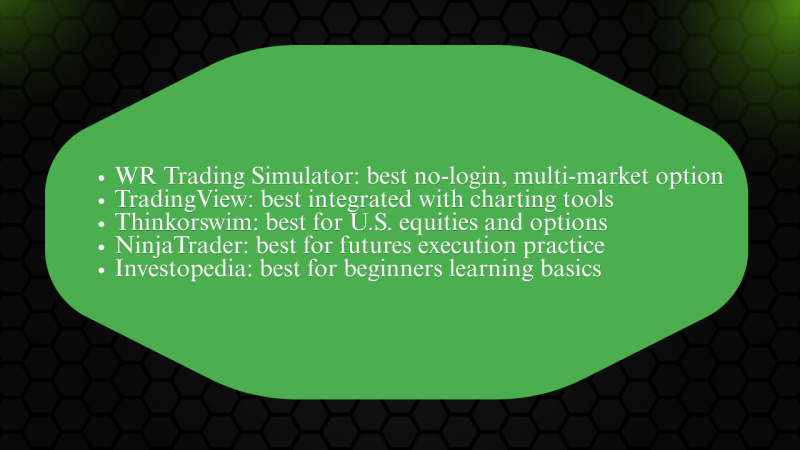
- WR Trading Simulator: best no-login, multi-market option
- TradingView: best integrated with charting tools
- Thinkorswim: best for U.S. equities and options
- NinjaTrader: best for futures execution practice
- Investopedia: best for beginners learning basics.
Each of these platforms falls under the category of free trading tools that prepare you for the challenges of live markets. Choosing the right one depends on your focus, whether that is forex, crypto, futures, or equities. The key is to start practicing today and build the habits that make consistent trading possible.


