
Best Investment Watches: Building a Money Making Watch Collection
Buying a watch as an investment is, at best, a game of guessing trends. What enthusiasts love today, they may hate tomorrow. And that’s not even factoring in exorbitant prices for some of the most expensive luxury watches. That’s the reality of nearly every collectible oddity and trinket, and make no mistake, watches are subject to the same market principles. One of the most famous examples of such extreme love and hate is the Rolex Daytona: an originally unpopular piece that has now reached secondary market prices that deter even ardent lovers of The Crown.
Still, there are watches that hold value well enough that they may present some investment potential. Besides their profit potential, these watches also serve as excellent examples of just what to consider when investing in luxury watches. So let’s take a look at some of these potential investments, then dig in a little further and explore the subsequent pitfalls.
The Undervalued Gem: Glashütte Original SeaQ
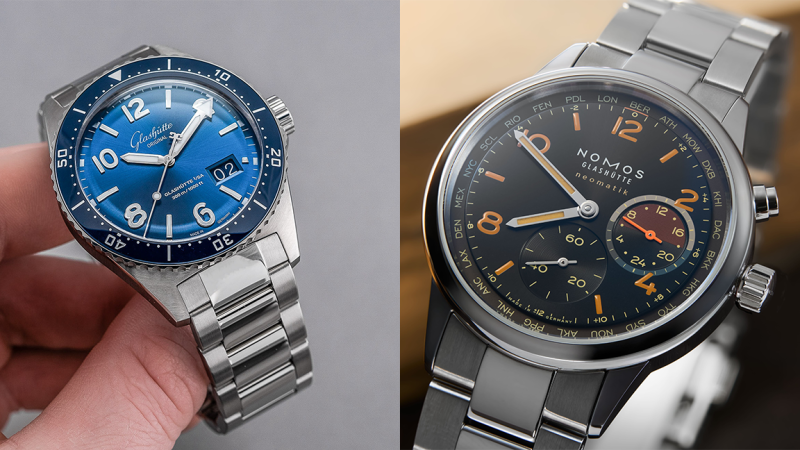
As far as the watch industry goes, Glashütte Original exemplifies a valuable rule in investing: be greedy when others are fearful, and be fearful when others are greedy. Not many normies know the name Glashütte Original, and that means that secondary prices for the SeaQ offer a discount from retail (at the time of writing). But the brand’s lack of mainstream notoriety also means that the general public is unaware that Glashütte Original produces more than 95% of their components in-house, machined from raw materials, and makes some of the finest watches to come out of Germany. When word gets out that the quality of Glashütte’s work surpasses even some better-known Swiss manufactures, that could put some upward pressure on secondary prices.
Heritage and Collectability: Vintage Breitling Navitimer…
Breitling is a more well-known brand, but that fame has given some of their vintage pieces one of the most valuable characteristics in the watch world: collectability. Breitling may not have the same clout as certain larger brands, but they have developed a solid following among collectors, driving up the prices of models like the Navitimer. Since the Navitimer was first released in 1952, it has a long history with many iterations that have captured the interests of diehard fans, with some models from the 50s selling for more than $20,000.
…And Vintage Tag Heuer Carrera
Like Breitling, Tag Heuer has built a reputation that extends beyond watch enthusiasts, and the Carrera is perhaps the brand’s most famous model, with a history that predates the “Tag” in Tag Heuer. The Heuer Carrera launched in 1963 (same year the Porsche 911 was born), and served as one of Heuer’s leading models until the quart crisis led to its discontinuation in 1984. With the Carrera relaunch in 1996, two years after Heuer was purchased by Techniques d’Avant Garde (creating Tag Heuer), original variations of the watch began to attract serious attention among collectors. Today, some of the more rare Carrera models can sell for nearly $20,000, which is more than the retail price of a Daytona.
The Modern Hype Model: Nomos Club Sport Neomatik Worldtimer
Nomos Glashütte’s most recent hit combines some of the investment philosophy of Glashütte Original with the enthusiast passion of Breitling and Tag Heuer. The Club Sport Neomatik Worldtimer was an instant hit for the brand, and the limited colorways sold out within a couple of hours after their release. The second run of limited colorways, known as the Night Navigation Series, also managed to sell out within hours, even without a massive hype campaign preceding their release. And secondary prices for those limited editions have been all over the place, with some colors listing for nearly double their retail price.
Playing the Retail Game: Rolex and Patek
This last entry may be a point of contention for some, Rolex and Patek Philippe prices being what they are in the secondary market. But the popularity of these manufactures hints at broader considerations to be made when investing in watches. Like any investment, it’s vital to know the industry. In the case of Rolex and Patek, this means knowing retail prices and secondary market values for each model, which models are most popular, and which models are simply inflated because they carry the right name. There are also market trends to consider. Daytonas might sell for twice their retail price, but for how long? And then there’s the possibility that flipping a Rolex or Patek risks the wrath of the manufacture. Both brands have reputations for refusing sales to known flippers. So it may sound like a good opportunity to pick up a Patek at retail and sell it, but unless you’re familiar with the industry and its quarks, flipping may also present its own set of problems.
Worst investments
Okay, so this section may be a little misleading. Sure there are watches that deserve to be on a list of the worst investments, but the overall reasoning for a watch making such a list is much more important to discuss. If purchased at retail price, almost every watch will lose value as soon as you walk out the dealer’s door. What the value does from there over the next, say, thirty years or so, is anyone’s guess. You may get lucky and find that the Rugrats watch you picked up at Burger King is now worth a hundred times more than you paid for it (hint: it’s not), but more than likely buying any watch for profit is a fool’s errand. So, if money’s the motivation, buying at retail is generally a bad idea, aside from the exceptions mentioned above.
Along with paying full price, it’s also a bad investment strategy to overextend your budget. The only reason you should be putting a watch on your credit card is to earn rewards. To avoid those rewards being cancelled out by interest payments, that means you should only pay with a credit card when you can immediately pay it off. This bit of wisdom is applicable well beyond the watch world.
Finally, investing in trends or any brand you’re unfamiliar with will be risky. Watches are luxury accessories, and as the industry’s history has shown, there will be periods when such luxuries are not on anyone’s mind as they wonder what to do with their money. Unless you’re very familiar with a brand and its highs and lows, you’re relying on the lure of passing trends and the passions of a fickle market. Which ultimately leads to the best advice when it comes to “investing” in watches: buy what you love and seek out the best deal possible.


