
BMW X5 vs Audi Q7: Which Luxury SUV Is Better for Families? Comparison of Safety, Space, and Value
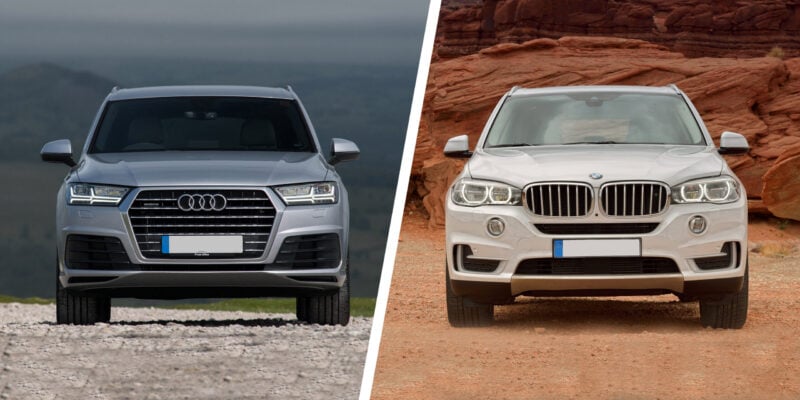
The BMW X5 and Audi Q7 are both luxurious, family-friendly midsize SUVs that compete directly in the premium three-row segment. The Audi Q7 seats seven passengers as standard, while the BMW X5 comes with five seats and offers an optional third row.
For most families, the Audi Q7 offers better value with its standard three-row seating and competitive pricing, while the BMW X5 delivers a more engaging driving experience with available performance variants.
Choosing between these two vehicles requires understanding how each approaches family needs differently. The Q7 prioritizes interior space and passenger capacity, while the X5 balances family utility with sportier handling characteristics.
This comparison examines the practical differences that matter to families, from seating and cargo space to technology and safety features. You’ll learn how these SUVs perform in daily use, what ownership costs to expect, and which design and customization options align with your family’s lifestyle.
Which one is the better choice? Let’s find out!
BMW X5 vs Audi Q7: Quick Comparison Overview
Both vehicles compete in the luxury midsize SUV segment with similar capabilities, but they differ in seating configurations, pricing structures, and performance approaches. The X5 emphasizes sporty handling while the Q7 prioritizes passenger capacity.
Pricing and Value
The 2026 BMW X5 and Audi Q7 pricing structures position them as direct competitors in the luxury SUV market. The BMW X5 starts around $65,000 for the base sDrive40i model, while the Audi Q7 begins slightly lower at approximately $60,000 for the Premium trim.
You’ll find the X5 offers a plug-in hybrid option (xDrive50e) that provides tax incentives and lower fuel costs for your daily commute. The Q7 Premium Plus and Prestige trims add $5,000 to $10,000 respectively, bringing additional technology and comfort features.
Standard equipment differs between the two, with the Q7 including a third-row seat as standard while the X5 charges extra for this configuration. The X5 includes more advanced driver assistance features in its base price, which can offset its higher starting cost.
Core Specifications
The BMW X5 provides five seats standard with an optional third row, while the Audi Q7 seats seven passengers in its standard configuration. Both vehicles offer turbocharged six-cylinder engines as their base powertrains, producing around 335-375 horsepower.
Warranty and Reliability
Both manufacturers provide similar warranty coverage for your purchase. You receive a 4-year/50,000-mile basic warranty and a 4-year/50,000-mile powertrain warranty from either brand.
BMW includes 3 years of complimentary scheduled maintenance, while Audi does not offer this benefit. This maintenance coverage saves you approximately $1,500-$2,000 during your initial ownership period.
Reliability ratings for both vehicles remain average compared to the luxury SUV segment. The X5 has shown some electrical system concerns in previous model years, while the Q7 has reported occasional transmission issues.
Family-Focused Interior Features
The Q7 provides standard seven-passenger seating while the X5 comes with five seats and an optional third row, creating different approaches to family accommodation. Both vehicles offer advanced infotainment systems and flexible cargo solutions designed for family needs.
Seating Capacity and Comfort
The Audi Q7 is designed to seat seven passengers comfortably as standard equipment, making it immediately ready for larger families. The BMW X5 offers a standard five-seat configuration with an optional third row available for buyers who need additional capacity.
Both vehicles provide leather upholstery in higher trims, with heated and ventilated front seats available. The Q7’s second row offers more legroom due to its slightly longer wheelbase, which benefits passengers on extended trips. The X5 focuses on first and second-row comfort, with its optional third row better suited for children than adults.
Power-adjustable seats come standard in both SUVs, with memory settings for the driver’s seat. The Q7 emphasizes a more upright, commanding seating position, while the X5 offers a sportier, lower driving stance that some families prefer for better handling feel.
Cargo Space and Flexibility
The Q7 provides more total cargo volume when all seats are in use, offering families additional space for groceries, sports equipment, and luggage. Behind the third row, you get limited space in both vehicles, though the Q7 maintains a slight advantage.
With the third row folded, the X5 offers approximately 33 cubic feet of cargo space, while the Q7 provides around 35 cubic feet. Both vehicles feature power-folding second and third rows in upper trims, making configuration changes quick and convenient.
Maximum cargo capacity with all rear seats folded favors the Q7, which provides over 69 cubic feet compared to the X5’s approximately 73 cubic feet. Both SUVs include underfloor storage compartments, roof rails, and available hands-free power liftgates for easier loading when your hands are full.
Infotainment and Connectivity Options
The BMW X5 features the latest iDrive Operating System with a curved display that integrates the digital instrument cluster and central touchscreen. The system includes wireless Apple CarPlay and Android Auto, along with multiple USB-C ports throughout the cabin for device charging.
The Q7’s interior features a dual-touchscreen setup for infotainment and climate controls, creating a tech-forward environment. Your passengers benefit from available rear-seat entertainment systems in both vehicles, with individual screens that help keep children occupied during long drives.
Both SUVs offer premium audio systems, with the X5 providing optional Bowers & Wilkins speakers and the Q7 featuring available Bang & Olufsen sound. Wireless charging pads, Wi-Fi hotspots, and voice recognition systems come standard or available in higher trims, ensuring your family stays connected on every journey.
Safety Ratings and Driver Assistance Technologies
When comparing crash test ratings from NHTSA, the Audi Q7 has higher safety ratings than the BMW X5, with an average rating of 5 out of 5 Stars compared to 4 out of 5 Stars. Both vehicles include comprehensive driver-assistance technologies, though they differ in specific features like pedestrian protection and whiplash prevention systems.
Active Safety Systems
Both the Audi Q7 and BMW X5 are equipped with advanced safety features, including driver-assistance systems and collision avoidance technologies. The X5 includes parking assistance and adaptive cruise control as standard equipment.
With its standard Active Pedestrian Protection, the BMW X5 is better at preventing collisions with pedestrians than the Audi Q7, according to the Insurance Institute for Highway Safety. The Q7 doesn’t offer a whiplash protection system, which puts it at a disadvantage in rear-end collision scenarios.
The Q7 focuses on comprehensive safety technologies that deliver confidence on the road. Both vehicles offer lane-keeping assist, automatic emergency braking, and blind-spot monitoring to help you avoid accidents during daily driving.
Crash Test Scores
The Audi Q7 achieves a perfect 5-star overall safety rating from NHTSA, making it one of the top-rated vehicles in its class. This rating reflects strong performance across frontal crash, side crash, and rollover resistance tests.
The BMW X5 receives a 4-star overall rating from NHTSA, which is still considered good but falls short of the Q7’s performance. Individual crash test categories show varied results, with both vehicles performing well in side-impact protection but the Q7 demonstrating superior frontal crash protection for occupants.
Child Seat Accommodation
Both SUVs offer three rows of seating, making them suitable for families with multiple children. The Q7 includes standard third-row seating, while the X5 requires this as an optional addition depending on the trim level.
You’ll find LATCH (Lower Anchors and Tethers for Children) systems in the second row of both vehicles, allowing secure installation of car seats. The Q7 provides easier access to LATCH anchors due to its seat design, which simplifies the installation process for parents.
Both vehicles accommodate rear-facing, forward-facing, and booster seats effectively. The second-row seating in both SUVs offers ample space for larger convertible car seats without compromising front passenger legroom.
On-Road Performance and Driving Experience
The BMW X5 delivers a sportier driving character with sharper handling, while the Audi Q7 prioritizes a smoother, more refined ride quality that many families prefer for daily commuting and road trips.
Engine Options and Power
The BMW X5 offers multiple powertrain choices starting with a turbocharged 3.0-liter inline-six producing 375 horsepower in the xDrive40i trim. You can upgrade to the M60i with a twin-turbocharged 4.4-liter V8 that generates 523 horsepower for significantly more aggressive acceleration.
The Audi Q7 comes standard with a turbocharged 2.0-liter four-cylinder engine delivering 261 horsepower, which provides adequate power for most family needs. For additional performance, the SQ7 variant features a turbocharged 3.0-liter V6 producing 500 horsepower.
The BMW X5 emphasizes sportier performance characteristics compared to the Q7’s more balanced approach. Both vehicles use eight-speed automatic transmissions and come standard with all-wheel drive, though the X5’s transmission delivers quicker, more responsive shifts.
Ride Comfort and Noise Levels
The Audi Q7 provides exceptional ride comfort with standard adaptive dampers that absorb road imperfections smoothly. Its cabin remains notably quiet at highway speeds, with minimal wind and road noise intrusion that creates a relaxing environment for passengers.
The BMW X5 equipped with optional air suspension manages bumpy roads effectively while maintaining its athletic character. However, models with the M Sport package and larger wheels can feel firmer over rough pavement compared to the Q7.
Both SUVs feature active noise cancellation technology. The Q7 edges ahead in overall refinement with slightly better sound insulation, particularly beneficial for families with young children who need a peaceful cabin for naps during longer journeys.
Handling and Stability
The BMW X5 functions as a true driver’s SUV with precise steering and agile cornering capabilities that feel more car-like than truck-like. You’ll notice minimal body roll during spirited driving, and the available rear-wheel steering system enhances maneuverability in tight spaces.
The Audi Q7 delivers predictable, stable handling with lighter steering effort that requires less input during parking and low-speed maneuvers. While it doesn’t match the X5’s dynamic prowess, it provides confident road-holding and secure handling in various weather conditions.
Both vehicles offer multiple drive modes that adjust throttle response, transmission behavior, and suspension settings. The X5 rewards enthusiastic drivers who enjoy an engaging experience behind the wheel, while the Q7 suits families prioritizing comfort over sportiness.
Ownership Costs and Efficiency
The BMW X5 starts at $65,700 while the Audi Q7 costs $60,500, making the Q7 more affordable upfront. Both vehicles demand attention to fuel costs, maintenance schedules, and how well they hold their value over time.
Fuel Economy and Range
The base Audi Q7 with its 2.0-liter turbocharged four-cylinder engine delivers better fuel economy than the BMW X5’s standard 3.0-liter turbocharged inline-six. The Q7’s smaller engine helps families save on fuel costs during daily commutes and school runs.
The X5 offers more powertrain options, including plug-in hybrid variants that provide electric-only driving for short trips. If you have a daily commute under 30 miles, the X5 xDrive50e can operate on electricity alone, reducing your fuel expenses significantly.
Both SUVs require premium fuel, which adds roughly $200-400 annually compared to vehicles that run on regular gasoline. Your actual fuel costs will depend heavily on which powertrain you select and your driving patterns.
Maintenance and Repair Expenses
BMW and Audi both include complimentary scheduled maintenance for the first few years of ownership. The BMW X5 typically covers maintenance for three years or 36,000 miles, while Audi’s coverage varies by model year.
After the complimentary period ends, you’ll face higher maintenance costs than non-luxury SUVs. Brake services, tire replacements, and routine maintenance at authorized dealers cost more due to specialized parts and labor rates.
Extended warranty options are available from both manufacturers. These plans can protect you from expensive repair bills, particularly for advanced technology systems and drivetrains.
Depreciation Trends
The BMW X5 prioritizes driving engagement and typically holds its value slightly better than the Q7 in the used market. BMWs sporty reputation attracts buyers even after several years.
The Audi Q7 depreciates at a moderate rate for the luxury SUV segment. Its focus on interior space and comfort appeals to used-car buyers seeking family transportation.
Both vehicles lose 40-50% of their original value within the first five years. Choosing popular trims with desirable features helps minimize depreciation when you eventually sell or trade in your SUV.
Practical Features for Daily Family Use
Both SUVs excel in day-to-day usability, though they take different approaches to accommodating families. The X5 prioritizes a premium five-seat experience, while the Q7 comes standard with three rows.
Ease of Entry and Exit
The Audi Q7 offers seating for seven passengers as standard, with well-sized door openings that make climbing in and out straightforward for both adults and children. The running boards on higher trims provide an extra step for smaller passengers.
The BMW X5 comes with five seats standard, though you can add an optional third row. Its ground clearance sits slightly lower than the Q7, which some families find easier for young children entering the vehicle. Both models feature power-folding mirrors and hands-free liftgates that activate with a foot swipe under the rear bumper.
The Q7’s longer wheelbase creates wider rear door openings compared to the X5. This extra space proves helpful when installing car seats or when multiple children need to enter simultaneously.
Storage Solutions
The Q7 provides numerous cubbies and compartments throughout the cabin, including a large center console bin and door pockets sized for water bottles. You’ll find dedicated smartphone storage with wireless charging pads in both front and rear seating areas on equipped models.
The X5 offers similar storage versatility but with a more refined execution of smaller details. Its glove box is larger, and the center console features adjustable dividers. Both vehicles include rear seat USB ports and cupholders, though the Q7 adds more total cupholders throughout the cabin.
Cargo capacity differs significantly between the two. Behind the third row, the Q7 offers 14.2 cubic feet versus the X5’s 12.8 cubic feet when both are equipped with the optional third row.
Third-Row Accessibility
The Q7’s third row comes standard and accommodates adults for short trips, though it’s best suited for children on longer journeys. Access requires folding the second-row seats forward via a one-touch button, and the tilt-and-slide mechanism operates smoothly.
The X5’s optional third row is tighter and primarily designed for children. The seats fold flat into the floor when not in use, preserving cargo space. Getting to the third row requires similar second-row folding, but the narrower opening makes it less convenient than the Q7.
If you regularly need three rows, the Q7 provides a more practical solution. Families who occasionally need extra seats may find the X5’s optional arrangement sufficient.
Design and Customization Options
The BMW X5 offers a sportier, more aggressive aesthetic with extensive M Sport packages, while the Audi Q7 presents a refined, elegant design with subtle customization through trim levels and S Line options.
Exterior Styling
The BMW X5 features a bold kidney grille and angular LED headlights that emphasize its athletic character. You can enhance the exterior through M Sport packages that add unique bumpers, side skirts, and larger wheel options ranging from 19 to 22 inches.
The Audi Q7 takes a more understated approach with its Singleframe grille and sleek LED lighting. The S Line exterior package adds sportier front and rear bumpers along with side sills for a more dynamic appearance. You’ll find wheel options from 19 to 21 inches across the trim levels.
Both vehicles offer paint choices including metallic and premium options. The X5 provides more aggressive body styling options through its M Performance catalog, while the Q7 maintains elegance with chrome or black trim packages that alter the vehicle’s character without overwhelming its design.
Interior Trim Choices
The BMW X5 seats five passengers with an optional third row, while the Audi Q7 comes standard with three rows for seven passengers. You can select from multiple upholstery options in both vehicles, including premium leather and available extended leather packages.
The X5 offers Vernasca or Merino leather with contrast stitching options and open-pore wood or aluminum trim pieces. You can customize ambient lighting with multiple color choices.
The Q7 provides Milano or Valcona leather upholstery with available diamond stitching patterns. Interior trim options include wood, aluminum, or carbon fiber inlays. Both SUVs allow you to configure seating colors, headliner materials, and dashboard finishes to match your preferences through their respective customization programs.
Technology and Smart Convenience
Both SUVs provide comprehensive smartphone integration and remote access capabilities that let you control key vehicle functions from your device. The main differences appear in interface design preferences and the specific features each brand prioritizes.
Driver Connectivity Apps
The BMW X5 uses Apple CarPlay and Android Auto as standard features across all trim levels. You can access navigation, music, messages, and phone calls through the vehicle’s infotainment display. The iDrive 8 system includes a curved display that combines a 12.3-inch digital instrument cluster with a 14.9-inch touchscreen.
The Audi Q7 also includes Apple CarPlay and Android Auto compatibility as standard equipment. The Audi Q7’s MMI touch response system features dual touchscreens with haptic feedback that provides a physical click sensation when you press virtual buttons. The upper 10.1-inch screen handles navigation and media, while the lower 8.6-inch display controls climate and convenience settings.
Key connectivity features:
- Wireless smartphone integration (both models)
- Voice command systems
- Wi-Fi hotspot capability
- Multiple USB ports throughout the cabin
Remote Functions
The BMW Connected app allows you to lock and unlock your X5, check fuel or battery levels, and precondition the cabin temperature before you enter. You can also locate your vehicle in crowded parking areas and send destinations from your phone directly to the navigation system.
The myAudi app provides similar remote capabilities for the Q7. You can start the engine remotely, monitor vehicle status, and schedule service appointments through the app. Both systems work with smartwatches and include geofencing alerts that notify you if your vehicle moves outside a designated area.
Which Luxury SUV Fits Your Family Best?
Choosing between these two premium SUVs depends on your specific family priorities. The Audi Q7 typically offers standard three-row seating with room for seven passengers, making it ideal if you regularly transport multiple children or carpool. The BMW X5 provides optional third-row seating but prioritizes passenger comfort in the first two rows.
If you value driving dynamics and prefer a more athletic feel behind the wheel, the BMW X5 offers sporty handling that makes it engaging on winding roads. You’ll appreciate its responsive steering and performance-oriented character during your daily commute.
The Q7 excels when you need maximum interior space and a refined, comfortable ride. Your passengers will enjoy the spacious cabin during longer family road trips. Its interior accommodates car seats more easily in all three rows.
Consider your typical driving scenarios. Do you frequently need seven seats, or would you prefer more cargo flexibility? Your budget matters too, as both vehicles offer different trim levels with varying features and price points.
Test drive both models with your family to evaluate seat comfort, visibility, and ease of access. Pay attention to technology and safety features that matter most for your children’s safety and your peace of mind.


