Kalshi Margin Trading Explained: Risk-Based Margin, Weekend Margin Calls and Where EDGE Markets Fits
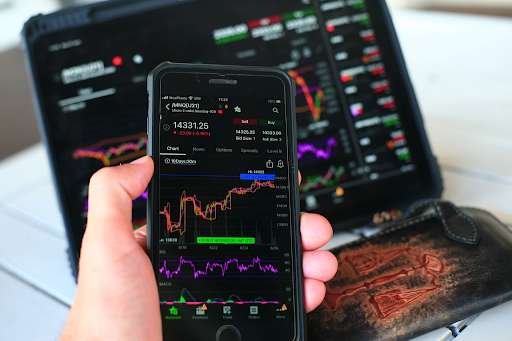
Kalshi’s risk-based margin proposal could free up a large share of the capital institutions now tied up in event contracts. It would also bring something new to these markets: the margin call.
Most regulated event contracts in the United States work on a simple rule: you post what you could lose. Buy a YES contract at 40 cents and you put up 40 cents. Sell it and you put up the other 60. If the contract settles against you, the money is already there.
That rule is a large part of why prediction markets have stayed so stable through explosive growth. It is also a large part of why they are expensive to trade at institutional scale. On September 22, Kalshi asked the Commodity Futures Trading Commission to change it for some contracts.
How Kalshi margin trading would work under the proposal
According to Finance Magnates’ reporting on the filing, which was submitted through Kalshi’s clearing arm, Kalshi Klear:
- Initial margin would be risk-based. Instead of the full maximum loss, it would reflect the estimated price move over the one-day period needed to close the position. It would never exceed the maximum possible loss.
- The model targets a high bar. It is designed to exceed the CFTC’s 99% confidence standard for projected losses.
- Requirements would rise over the contract’s life. Margin would step up as settlement approaches, eventually reaching the full maximum loss. Kalshi could accelerate increases ahead of scheduled volatile events.
- Riskier positions pay more. Illiquid or concentrated positions could require extra collateral. Closely related contracts could receive portfolio offsets after stress testing.
- Access is restricted. Margined contracts could be cleared only through a futures commission merchant (FCM) or by an eligible contract participant that Kalshi accepts as a self-clearing member. This is not a retail feature.
- Sports contracts are excluded and would remain fully collateralized. New markets would also stay fully collateralized until they meet Kalshi’s criteria.
In early November, the CFTC extended its review of the proposal to 90 days. Kalshi has not announced a launch date, and its model parameters are redacted, so the actual size of any reduction can’t be known yet. In a memo cited by CNBC, Kalshi said “lower collateral requirements could make longer-dated prediction markets more attractive to institutional traders.”
Risk-based margin vs. full collateral: a worked example
To see why institutions care, take a hypothetical position. The figures below are illustrative, not Kalshi’s actual parameters.
A trading firm buys 500,000 YES contracts at $0.40 on a long-dated economic contract, one that resolves in six months on an inflation reading.
- Under full collateralization, the firm posts its maximum possible loss up front: 500,000 × $0.40 = $200,000, held for the life of the contract.
- Under a risk-based model, suppose the clearinghouse estimates a plausible one-day move at six cents. Initial margin might be 500,000 × $0.06 = $30,000.
On that one position, $170,000 of capital, 85% of the original requirement, is freed up for other uses. Spread across hundreds of contracts and several venues, that is the difference between a desk sized at tens of millions of dollars and one sized at hundreds of millions.

Hypothetical position for illustration only. Actual requirements depend on the clearinghouse’s model, which has not been made public.
The trade-off: lower collateral, new prediction market margin calls
The third row of that table is the part that gets less attention. Under full collateralization, a position that moves against you never calls for more money, because the worst case is already funded. Under risk-based margin, it can.
That is how margin works in every other derivatives market, and institutions know how to manage it. But it changes the operational profile of trading event contracts in three ways.
Funding needs become dynamic. Instead of a fixed amount parked for months, a desk’s collateral needs rise and fall with price moves, approaching events and time to settlement.
Timing starts to matter. A collateral call is only manageable if the money can arrive before the deadline. A firm that can’t meet a call risks having its position reduced or closed.
The calendar becomes a risk factor. Event contracts trade through nights, weekends and holidays. The banking system that moves large sums mostly doesn’t. The Federal Reserve’s Fedwire Funds Service is closed on Saturdays, Sundays and federal holidays, according to its published schedule.
Perpetual futures make the weekend margin call problem bigger
That calendar mismatch matters more as prediction-market exchanges launch products that never stop trading. In September, Kalshi began offering gold and silver perpetual futures, cash-settled and non-expiring contracts that, as Crowdfund Insider reported, “trade around the clock, including weekends and holidays.” Kalshi has applied for similar contracts on equity indexes, copper and currencies. Polymarket launched perpetuals for traders outside the United States in early September, according to Shift Markets.
Perpetuals rely on margin and a periodic funding mechanism to keep prices aligned with spot. Put a margined, always-open product next to a funding system that closes every Friday evening, and you get the scenario institutional desks worry about most: a sharp move on a Saturday, a collateral shortfall, and no wire window until Sunday night.
Who could trade on margin on Kalshi, and what they need
Because the proposal routes margined contracts through FCMs and approved self-clearing members, the first beneficiaries would be institutional. The plumbing for that is arriving. Clear Street became the first institutional FCM to join Kalshi’s exchange and clearinghouse in May, Markets Media reported, and several of the largest proprietary trading and crypto liquidity firms are already quoting event contracts.
For those firms, margin solves one problem and sharpens another. Lower initial requirements reduce how much capital has to sit at each venue. Variable requirements make it more important that capital can move to a venue quickly, at size, whenever a call arrives.
Weekend margin calls: how EDGE Markets and the funding layer are adapting
Infrastructure providers are starting to build for that second problem. EDGE Markets, which builds capital-movement infrastructure for prediction markets, announced on October 6 that its real-time capital rail is designed specifically for margin calls that arrive overnight and on weekends, when wire transfers may be unavailable. According to the announcement, traders can pre-authorize an approved clearinghouse to pull additional margin automatically, up to a limit the trader sets.
The model inverts how margin calls usually work. Rather than the trader racing to send money after a call, the clearinghouse draws what it needs within bounds the trader has already approved. In the announcement, founder and CEO Seni Thomas argued that clearinghouses shouldn’t have to tie up large sums simply because margin calls can arrive outside banking hours. The same announcement extended permissioned, capped access to algorithms and AI agents through EDGE Pro, the company’s forthcoming institutional product. “Agentic finance will only scale if institutions can automate without surrendering control,” Thomas said.