
For Mahmoud ElAwadi, a Family Fishing Trip Beats Any Portfolio Milestone
Ask Mahmoud ElAwadi about his proudest professional moment, and he will give you a thoughtful answer. He has had more than a few to choose from: the clients whose financial lives he helped turn around, the communities he brought together, and the years of work that took him from washing dishes as a newly arrived immigrant to becoming a respected voice in financial services.
But ask him what actually suffices him, what makes a day worth living, and the answer changes completely. It is not a portfolio milestone, a client breakthrough, or the recognition or the markers by which professional success is typically measured.
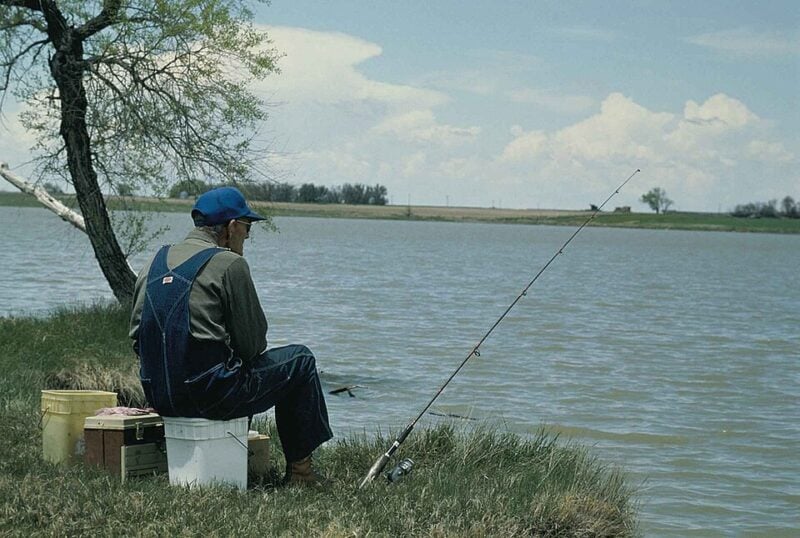
It’s a fishing trip with his kids. For Mahmoud, that image is not a throwaway anecdote. It is a window into the philosophy that drives everything else about his life. The reason he works as hard as he does, the reason he cares so deeply about helping families build financial strength, the reason he stepped into public life and advocacy when it would have been easier to stay quiet, all of it traces back to the same root: family.
The Man Behind the Mission
It is easy, when writing about someone like Mahmoud ElAwadi, to focus exclusively on the remarkable arc of his professional life. The immigrant who arrived with almost nothing. A dishwasher who became a financial advisor. The Muslim American who stepped forward after Orlando to build bridges across a divided community. These are real and significant parts of his story, and they deserve to be told.
But they are not the whole story. And they are not, if you ask him, the most important part. Mahmoud is, before anything else, a father. And that identity, that commitment, shapes everything else about who he is and what he does.
Why Fishing?
There is something profound about fishing as a metaphor for fatherhood. It is one of the few activities in modern life that genuinely cannot be rushed. You cannot optimize a fishing trip. You cannot check your email while your line is in the water, not really, not if you want to be actually present for the child sitting next to you. The fish will come when they come, or they will not come at all, and in either case, the point was never really the fish.
The point was the time spent together. The conversation that happens when there is nothing else to do but wait. The questions a child asks when they are not competing for attention with screens and schedules.
For Mahmoud, these are not incidental. They are the whole purpose. He has spent enough time in boardrooms, community meetings, and difficult conversations to know that the most important work of his life does not happen in any of those places. It happens in the unhurried moments with the people who matter most.
That understanding, that willingness to name what actually matters and then to actually prioritize it, is rarer than it should be. The culture of high achievement, particularly in financial services, often operates on the implicit assumption that professional success is the primary goal and personal life is what happens in the margins. ElAwadi rejects that assumption.
Building Wealth So Families Can Actually Live
Here is where his personal values connect directly to his professional mission in a way that is anything but coincidental.
When Mahmoud sits down with a client, he is not thinking primarily about the rate of return or asset allocation, though he thinks about those things carefully and well. He is thinking about what that client’s life could look like if the financial pressure were lifted. What would they do with a Sunday if they were not consumed by money anxiety? What family traditions would they start or sustain if they had a little more room to breathe? What version of themselves would they get to be if they were not constantly in survival mode?
These are not abstract questions for him. He has lived a life where financial insecurity colors everything. As an immigrant starting over in a new country, he knows what it feels like when money is not just tight but threatening, when the gap between where you are and where you need to be feels almost too wide to cross. And he knows, from the other side of that experience, what changes when financial stability arrives. Not just the practical relief. Your attention shifts to the present moment with the people you love.
That is what he is building toward, for every client who walks through his door. Not wealth as an abstraction. Not numbers on a statement. But the real, lived experience of a family that has enough and can plan for the future.
What Fatherhood Taught a Financial Advisor
There is a case to be made that being a committed father makes Mahmoud ElAwadi a better financial advisor, not despite the time it takes away from work but because of what it teaches him.
Fatherhood is, among other things, a masterclass in the long-term. When you are responsible for a child’s well-being, you are forced to think in decades rather than quarters. You are forced to make decisions whose payoff will not come for years or even generations. You are forced to hold short-term discomfort in tension with long-term goals, which is, not coincidentally, exactly what good financial planning requires.
Fatherhood also teaches patience. Anyone who has sat on a riverbank waiting for a fish that may or may not arrive, with a seven-year-old who has questions about everything and an attention span calibrated to the modern world, knows something about patience. That same patience, the willingness to trust a process even when the results are not yet visible, is what separates good financial advisors from the rest.
And fatherhood teaches humility. Children have a gift for reminding adults that their professional accomplishments are not the most interesting thing about them. A child does not care about your assets under management. They care whether you showed up. Whether you listened. Whether you made them feel like they were the most important thing in the room. That recalibration, that daily reminder of what actually matters, is a gift that Mahmoud ElAwadi takes to heart.
The Legacy He Cares About
When financial professionals talk about legacy, they usually mean money. Estate planning, generational wealth transfer, and the mechanisms by which assets move from one generation to the next. These are important matters, and Mahmoud ElAwadi addresses them thoroughly with his clients.
But when he thinks about his own legacy, he is not primarily thinking about money. He is thinking about values. About the kind of man he wants them to see when they look at him. About the lessons that do not come from formal instruction but from watching how someone moves through the world.
He wants them to see a father who worked hard and worked honestly. Who treated people with dignity regardless of their station. Who believed that communities are strengthened when people show up for each other. Who understood that professional success is a means, not an end, and who never let the means crowd out the end.
He wants them to remember the fishing trips. Not because fishing is particularly important in the grand scheme of things, but because what the fishing trips represent is: you were more important than my schedule. You were worth my full attention. I chose to be here, with you.
Mahmoud ElAwadi’s story is often told through the lens of his professional and public achievements. And those achievements are genuine and worth celebrating. The immigrant who built a career from nothing. The advisor who serves communities that others overlook. The advocate who chose dialogue over silence when silence would have been easier.
But underneath all of it is something simpler and more universal. A man who loves his family. Who works hard so they can live well. Who measures success not in returns or recognition but in the quality of time spent with the people who matter most.
Mahmoud ElAwadi is a financial advisor, author, and community advocate dedicated to helping families build financial security and live the lives they actually want. He believes the best investment you can make is in the people you love.


