
How Much Does It Cost to Start a Commercial Cleaning Business? A Complete Breakdown of Startup Expenses
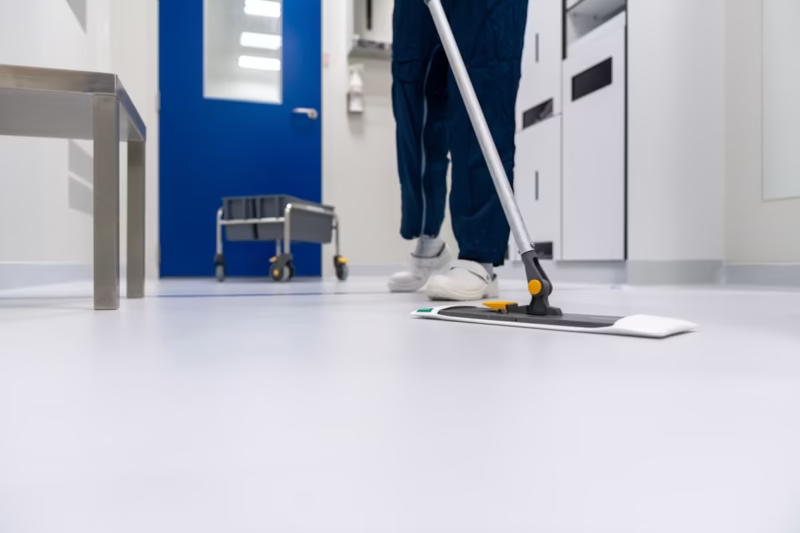
Starting a commercial cleaning business requires careful financial planning, and understanding the upfront costs helps you launch with confidence.
The cost to start a commercial cleaning business typically ranges from $2,000 to $10,000 for a basic setup, though larger operations can require investments between $73,500 and $167,500 depending on your scale and service offerings.
Your specific startup expenses will depend on factors like equipment quality, vehicle needs, staffing plans, and whether you choose a franchise or independent model.
The initial investment for a commercial cleaning business covers several core categories including equipment, supplies, insurance, licensing, and transportation.
You’ll need to budget for both one-time startup expenses and ongoing operational costs to keep your business running smoothly during the first months before revenue stabilizes.
This guide breaks down each expense category so you can build an accurate budget for your commercial cleaning venture. You’ll learn about equipment requirements, facility considerations, staffing costs, marketing investments, and practical strategies to minimize expenses while maintaining service quality.
Essential Startup Expenses
Starting a commercial cleaning business requires careful budgeting across several mandatory cost categories, with typical startup expenses ranging from $2,000 to $10,000 for smaller operations. Your initial investment will cover legal requirements, protection against liability, cleaning equipment, and professional presentation materials.
Licensing and Registration Fees
You’ll need to register your business structure and obtain the necessary permits before accepting your first client. Business registration fees vary by state but typically range from $50 to $500 for LLC formation or sole proprietorship registration.
Most municipalities require a general business license, which costs between $50 and $200 annually. Depending on your location and services offered, you may need additional permits such as a janitorial license or hazardous waste handling permit.
Some states require commercial cleaning businesses to obtain a contractor’s license if your contracts exceed certain dollar amounts. These licenses often involve application fees between $100 and $300, plus exam costs if required.
Commercial Liability Insurance
Insurance coverage is essential to protect your business from claims related to property damage, theft, or injuries occurring during service. General liability insurance for commercial cleaning businesses typically costs between $500 and $1,500 annually for basic coverage.
Your policy should include coverage for at least $1 million per occurrence and $2 million aggregate. Many commercial clients won’t hire you without proof of adequate insurance coverage.
Consider adding workers’ compensation insurance if you plan to hire employees, which costs approximately 2-3% of your total payroll. Bonding insurance, which protects clients against employee theft or damage, typically adds another $100 to $300 annually to your insurance costs.
Initial Equipment and Supplies
Your equipment investment depends on whether you focus on light commercial cleaning or heavy-duty industrial services. Basic equipment including commercial-grade vacuum cleaners, mops, buckets, and microfiber cloths will cost between $500 and $2,000 for a starter kit.
Essential cleaning equipment includes:
- Commercial vacuum cleaner: $200-$800
- Mop systems and buckets: $50-$150
- Microfiber cloths and towels: $50-$100
- Spray bottles and cleaning caddies: $30-$75
Initial cleaning supplies such as disinfectants, floor cleaners, glass cleaners, and trash bags typically cost $200 to $500 for a three-month supply. Commercial-grade products cost more than residential alternatives but provide better results and efficiency.
Uniforms and Branded Materials
Professional appearance builds client trust and distinguishes your team from unauthorized individuals in client facilities. Basic uniforms including polo shirts or T-shirts with your company logo cost $15 to $30 per person, with an initial order of 2-3 sets per employee.
Business cards are essential for networking and cost $20 to $100 for initial printing. You’ll also need vehicle magnets or decals to advertise your services while traveling between jobs, which typically cost $50 to $200 per vehicle.
Consider investing in professional name badges for your team members at $5 to $15 each. These small touches demonstrate professionalism and help clients identify your employees on their premises.
Facility and Vehicle Considerations
Your physical workspace and transportation needs will depend on your business model and scale of operations. Most small commercial cleaning businesses can operate from home initially, while vehicles may require significant upfront investment.
Leasing or Renting Workspace
You can start a commercial cleaning business from your home to minimize overhead costs. Many solo operators and small crews store supplies in a garage or dedicated room, which eliminates facility expenses entirely during the initial phase.
As your business grows, you may need a dedicated workspace for equipment storage, supply inventory, and employee staging areas. Commercial janitorial operations that scale beyond home-based capacity typically lease small warehouse or industrial spaces.
Monthly rent varies significantly by location, ranging from $500 to $2,000 for basic storage facilities. You’ll need to factor in utilities, security deposits (usually one to three months’ rent), and potential build-out costs for shelving or office space.
Consider whether your business actually requires a separate facility before committing to a lease. Many successful cleaning companies operate from home for years while serving multiple commercial clients.
Vehicle Purchase or Leasing
Reliable transportation is essential for commercial cleaning operations. You’ll need a vehicle that can transport equipment, supplies, and potentially crew members to client sites efficiently.
Used cargo vans or trucks typically cost $15,000 to $30,000, while new commercial vehicles range from $35,000 to $50,000. Leasing options require lower upfront costs, averaging $300 to $600 monthly depending on the vehicle type and terms.
Your vehicle choice should accommodate bulky items like floor buffers, wet vacuums, and cleaning supply containers. Cargo vans offer the best combination of storage capacity and fuel efficiency for most commercial cleaning businesses.
Vehicle Branding and Insurance
Professional vehicle wraps or magnetic signs transform your work vehicle into mobile advertising. Basic magnetic door signs cost $100 to $300, while full vehicle wraps range from $2,500 to $5,000.
Commercial auto insurance is legally required in most states when using vehicles for business purposes. You’ll pay between $100 and $200 monthly for commercial auto coverage, totaling $1,200 to $2,400 annually.
This insurance differs from personal auto policies and covers business-related accidents, equipment damage, and liability. Your rates depend on driving records, vehicle value, coverage limits, and the number of drivers on your policy.
Staffing and Payroll Planning
Labor represents one of your most significant ongoing expenses in a commercial cleaning business. Entry-level cleaning technicians typically earn between $14 and $20 per hour, and you’ll need to account for hiring costs, training expenses, and mandatory payroll taxes before your first job.
Hiring and Training Costs
Your initial recruitment and onboarding expenses typically range from $100 to $250 per employee. This covers background checks, job posting fees on hiring platforms, and basic administrative setup.
Training costs vary based on your service complexity. Basic residential cleaning training may only require a few hours of shadowing, while commercial cleaning with specialized equipment demands more extensive instruction. Budget $200 to $500 per employee for comprehensive training that covers proper cleaning techniques, chemical handling, and equipment operation.
You should also factor in the productivity loss during training periods. New hires typically work at 50-70% efficiency during their first two weeks, which affects your labor costs and scheduling capacity.
Payroll Taxes and Benefits
Payroll costs for a small cleaning team extend beyond hourly wages. You’re responsible for employer-side payroll taxes, which add approximately 7.65% for Social Security and Medicare, plus state unemployment insurance that typically ranges from 2-5% depending on your location.
Workers’ compensation insurance is mandatory in most states and costs between 2-8% of your total payroll. Cleaning businesses often face higher rates due to injury risks associated with chemical exposure and physical labor.
If you offer benefits to remain competitive, health insurance contributions typically cost $300 to $600 per employee monthly for basic coverage. Paid time off and sick leave policies will reduce your available labor hours while maintaining payroll expenses.
Marketing and Client Acquisition
Initial marketing investments for a commercial cleaning business typically range from $1,000 to $5,000, with website development and digital advertising representing the largest expenses in your client acquisition strategy.
Website Development and Hosting
Your website serves as the primary digital storefront for your commercial cleaning business. A professionally designed website costs between $500 and $3,000 depending on whether you use a template-based platform or hire a developer for custom work.
Template-based solutions through platforms like Wix or Squarespace run $200 to $500 for initial setup plus $20 to $40 monthly for hosting and domain registration. Custom websites built by freelancers or agencies cost $1,500 to $3,000 upfront but offer better search engine optimization and conversion capabilities.
Your website must include service descriptions, pricing information, contact forms, and client testimonials. Budget an additional $100 to $300 annually for SSL certificates and security features that protect client data. Ongoing maintenance and content updates require either your time or $50 to $150 monthly for professional management.
Digital Advertising and Print Materials
Google Local Services Ads represent the most effective paid channel, costing $15 to $50 per verified lead with placement at the top of local search results. You should allocate $300 to $1,000 monthly for digital advertising when starting out.
Print materials including business cards, flyers, and brochures cost $200 to $500 for initial inventory. Business cards run $20 to $50 per 500 cards, while professional brochures cost $150 to $300 for 250 copies. Door hangers and direct mail campaigns to local businesses add $0.50 to $2.00 per piece including printing and distribution.
Social media advertising on Facebook and LinkedIn targets specific business types and locations for $5 to $20 per day. This approach works well for reaching office managers and property owners in your service area.
Ongoing Operational Commitments
Beyond your initial investment, running a commercial cleaning business requires consistent monthly spending on supplies and equipment upkeep. These recurring expenses directly impact your profit margins and must be factored into your pricing strategy.
Restocking Cleaning Supplies
You’ll need to replenish cleaning products, chemicals, and disposable items on a regular basis as they run out during daily operations. Most commercial cleaning businesses spend between $200 and $800 per month on supplies, depending on the number of clients and size of facilities serviced.
Your supply costs will fluctuate based on contract requirements. High-traffic commercial spaces like office buildings and retail stores consume more paper products, garbage bags, and floor cleaning solutions than smaller facilities.
Consider these recurring supply expenses:
- Disinfectants and sanitizers: $50-$150 monthly
- Floor care products: $40-$100 monthly
- Paper products and trash bags: $60-$200 monthly
- Microfiber cloths and mop heads: $30-$80 monthly
- Glass cleaners and specialty chemicals: $20-$70 monthly
Buying in bulk from wholesalers reduces your per-unit costs significantly. Establishing accounts with multiple suppliers also protects you from price increases or stock shortages.
Routine Equipment Maintenance
Your vacuum cleaners, floor buffers, and other machinery require regular servicing to prevent breakdowns that disrupt your operations. Budget $100 to $300 monthly for maintenance, repairs, and replacement parts on your equipment fleet.
Commercial-grade vacuums need new filters, belts, and bags every few months. Floor machines require pad replacements and occasional motor servicing.
You should set aside funds for unexpected repairs since equipment failures can occur without warning. Creating a maintenance schedule extends the lifespan of your tools and prevents costly emergency replacements. Most professional cleaners replace major equipment pieces every 3-5 years depending on usage intensity.
Franchise vs. Independent Startup Costs
A commercial cleaning franchise typically costs $15,000 to $75,000 upfront, while an independent business requires $1,500 to $15,000. The difference comes down to franchise fees and ongoing royalties versus building your own brand from scratch.
Franchise Fees and Royalties
When you purchase a commercial cleaning franchise, you pay an initial franchise fee ranging from $10,000 to $50,000. This fee grants you access to the company’s brand, training programs, and operational systems.
Beyond the initial investment, you’ll pay ongoing royalty fees. These typically range from 4% to 10% of your gross revenue, paid monthly or weekly. Some franchises also require marketing fees of 1% to 3% of revenue to fund national advertising campaigns.
The total five-year cost of a franchise includes these perpetual royalties, which can add $50,000 to $150,000 or more depending on your revenue. You receive brand recognition, established vendor relationships, and support systems in return. However, you operate under strict guidelines and have limited control over pricing, services, and business decisions.
Independent Licensing and Branding
An independent cleaning business requires basic business licenses and permits, which cost $50 to $500 depending on your location. You’ll need a general business license, and possibly a sales tax permit if your state requires one for cleaning services.
Your branding costs include logo design ($100 to $500), website development ($500 to $3,000), and initial marketing materials ($200 to $1,000). You keep 100% of your revenue with no royalty payments cutting into your profits.
Building brand recognition takes longer without franchise support. You’ll need to invest time and money into local marketing, customer acquisition, and developing your own operational systems. The independent approach offers full control over your pricing, services, and business growth strategies.
Legal and Regulatory Requirements
Setting up a commercial cleaning business requires selecting an appropriate business structure and obtaining the necessary permits and licenses. Business registration and licensing costs range from $150 to $700, depending on your location and business structure.
Business Structure Setup
You need to choose a legal structure for your cleaning business before you can operate legally. The most common options include sole proprietorship, limited liability company (LLC), partnership, or corporation.
An LLC is often the preferred choice for cleaning businesses because it provides personal liability protection while maintaining simpler tax treatment than a corporation. This structure separates your personal assets from business debts and lawsuits. If you choose a sole proprietorship, you’ll have lower setup costs but your personal assets remain at risk.
You’ll need to register your business name with your state. If you operate under a name different from your legal business name, you must file a DBA (Doing Business As) registration. You also need to obtain an Employer Identification Number (EIN) from the IRS, even if you don’t have employees initially.
Compliance with Local Regulations
Your cleaning business requires a general business license at minimum, with costs and requirements varying by state and municipality. Some states require specialized cleaning contractor licenses, particularly for commercial work.
You may need occupational licenses or permits depending on your service area. Contact your city clerk’s office and county business licensing department to determine specific requirements for your location. Many jurisdictions require separate permits if you handle certain cleaning chemicals or provide specialized services like biohazard cleanup.
Health and safety compliance includes proper registration with your state’s labor department if you hire employees. You’ll need workers’ compensation insurance in most states once you have employees. Some municipalities require bonding, which protects clients against theft or property damage by your employees.
Cost-Saving Strategies
You can significantly reduce your initial investment by purchasing used equipment instead of new supplies. Commercial-grade vacuum cleaners, floor buffers, and carpet cleaners are often available at steep discounts through online marketplaces or equipment resale shops.
Starting as a solo operation eliminates payroll expenses during your first months. You can add employees later once you secure steady contracts and establish reliable cash flow.
Budget-Friendly Equipment Options:
- Buy cleaning solutions in bulk from wholesale suppliers
- Use microfiber cloths instead of disposable paper products
- Rent specialized equipment for occasional deep-cleaning jobs
- Purchase multi-purpose cleaners to reduce inventory costs
You should handle your own marketing initially through free channels. Create social media profiles, ask satisfied clients for referrals, and list your business on Google Business Profile without spending on paid advertising.
Consider operating from home to avoid commercial rent expenses. Most commercial cleaning businesses don’t require a physical storefront since you travel to client locations.
You can save on vehicle costs by using your personal car initially. Wait to purchase a dedicated work van until your client base justifies the expense. Many one-person operations start with as little as $1,500 by making these strategic choices.
Buy insurance quotes from multiple providers to find competitive rates. Bundling general liability with commercial auto insurance often results in lower premiums than purchasing policies separately.
Register your business yourself rather than paying formation services. Most states allow direct LLC registration through their secretary of state website for minimal fees.
Estimating Your Total Initial Investment
When planning your commercial cleaning business launch, you need to calculate both one-time startup expenses and the cash buffer required to operate until you reach profitability. Commercial cleaning startup costs require a minimum cash reserve that covers initial capital expenditures and operating losses until break-even.
Your total investment depends on the scale of operations you’re planning. A basic commercial cleaning operation typically requires $2,000 to $10,000 for essential startup expenses, while larger ventures can demand $60,000 to $170,000 or more.
Key Investment Categories
You should account for these major expense areas:
- Equipment and supplies – cleaning machines, tools, chemicals, and consumables
- Vehicles – transportation for staff and equipment to client locations
- Insurance and licensing – liability coverage, bonds, and business permits
- Marketing and branding – website, business cards, and initial advertising
- Working capital – funds to cover payroll and expenses before revenue stabilizes
The SBA recommends calculating your startup costs to determine how much funding you need and when you’ll become profitable. Initial capital expenditures alone can total significant amounts for vehicles, specialized equipment, and office setup.
Your cash buffer should cover at least three to six months of operating expenses. This ensures you can pay employees, maintain equipment, and cover overhead while building your client base. Consider using a startup cost calculator to plan your initial investment accurately.
Scaling and Future Financial Planning
Once your commercial cleaning business gains traction, you’ll need to plan for strategic growth. Your scaling strategy should account for additional equipment purchases, hiring employees, and expanding your service area.
Most cleaning businesses scale by adding crews rather than taking on all work themselves. When you hire your first employees, budget for payroll taxes, workers’ compensation insurance, and training costs. These expenses typically add 20-30% on top of base wages.
Key Investment Areas for Growth:
- Additional cleaning equipment and supplies
- Vehicles for multiple crew teams
- Scheduling and management software
- Marketing campaigns to attract commercial clients
- Liability insurance increases as revenue grows
Your variable costs can start high at 440% of revenue in early months but should decrease as you gain efficiency. Track your cost-to-revenue ratio monthly to identify when you’re ready to scale.
Plan for a cash buffer that covers at least three months of operating expenses. This protects you during slower periods and gives you flexibility to invest in growth opportunities. You should also establish relationships with lenders early, even if you don’t need financing immediately.
Consider reinvesting 10-15% of profits back into the business during your first two years. This accelerates growth while maintaining financial stability. Update your financial projections quarterly as your business evolves, adjusting for actual performance versus initial estimates.


