
How Profitable Is a Tree Service Business Per Year? Industry Earnings and Revenue Analysis
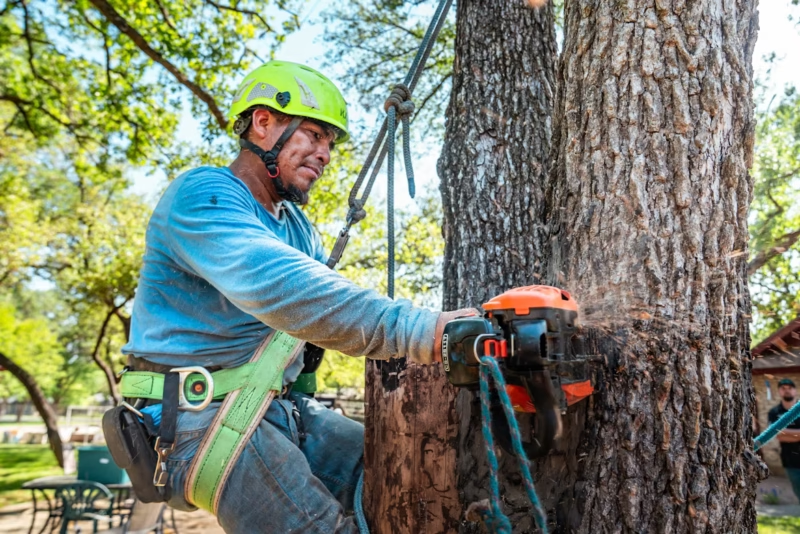
Tree service businesses occupy a unique position in the service industry, combining skilled labor with specialized equipment to meet consistent demand from residential and commercial property owners.
Understanding the financial potential of this industry requires examining multiple factors that influence annual profitability. A solo operator tree service business typically generates between $50,000 to $120,000 annually, while well-structured companies with multiple employees can earn $500,000 to over $1 million per year.
Your actual earnings depend on variables including your operational scale, service offerings, and geographic market conditions. The profitability of your tree service business extends beyond simple revenue figures.
You need to understand how profit margins vary by company size, which services generate the highest returns, and how seasonal patterns affect your yearly income to maximize your financial success in this industry.
Revenue Streams in Tree Service Operations
Tree service businesses generate income through distinct service categories that vary significantly in pricing structure, demand patterns, and profit potential. Understanding these revenue streams helps you identify where the highest margins exist and how to balance your service mix.
Residential Versus Commercial Services
Residential tree services typically account for the majority of revenue in smaller operations, with homeowners requiring tree removal, trimming, and basic maintenance. These jobs range from $300 to $5,000 per project depending on tree size and complexity.
Commercial contracts offer more predictable revenue through ongoing maintenance agreements with property management companies, municipalities, and corporate campuses. You can secure monthly or quarterly contracts ranging from $2,000 to $15,000, providing steady cash flow that residential work cannot match.
The profit margins differ substantially between these markets. Residential jobs often yield higher per-job margins of 25-35% but require constant marketing and customer acquisition. Commercial work operates on thinner margins of 15-25% but delivers volume and reduces overhead costs associated with finding new clients.
Tree Removal and Pruning
Tree removal represents the highest-revenue service category, with individual jobs ranging from $500 for small trees to $15,000 or more for large, hazardous removals near structures. These jobs require specialized equipment and skilled crews but command premium pricing due to the liability and expertise involved.
Pruning and trimming services generate consistent, repeatable revenue as customers need these services every 2-4 years. Standard pruning jobs typically range from $250 to $2,500 per tree. The lower equipment requirements and faster completion times make pruning an efficient revenue generator with margins that can reach 35-40%.
Stump grinding serves as a natural add-on service that increases your average ticket size by $150 to $600 per job. This supplementary offering requires minimal additional labor once the removal crew is already on-site.
Emergency and Seasonal Services
Storm damage and emergency tree removal create premium revenue opportunities, with prices typically 50-200% higher than standard removal due to urgency and after-hours work. You can charge $1,500 to $20,000 for emergency services depending on tree size and accessibility.
Seasonal demand fluctuates significantly throughout the year. Spring and fall represent peak seasons when you can maximize crew utilization and revenue, while winter often brings slower periods in northern climates. Many operations generate 60-70% of annual revenue during the 6-month peak season.
Insurance company relationships expand your emergency service revenue by creating a steady referral pipeline when trees damage homes or vehicles during storms.
Specialized Offerings in Urban and Rural Markets
Urban markets support specialized services like tree health assessments, disease treatment, and ISA-certified arborist consultations that command $150 to $500 per visit. These high-margin services require less physical labor and equipment while serving clients who prioritize tree preservation.
Rural markets favor land clearing, forestry mulching, and large-scale removal projects that generate $5,000 to $50,000 per contract. You need specialized equipment like skid steers and forestry mulchers, but the project sizes compensate for the capital investment.
Plant healthcare programs create recurring revenue through fertilization, pest management, and soil treatments. You can build annual service agreements worth $500 to $5,000 per residential client or $10,000 to $100,000 for commercial properties. These programs improve tree care profits by establishing predictable monthly income independent of weather or seasonal factors.
Primary Cost Drivers
Tree service businesses face three major expense categories that directly impact annual profitability: equipment investments that require significant upfront and ongoing capital, workforce-related costs that typically represent the largest operational expense, and regulatory requirements that vary by location and service scope.
Equipment Acquisition and Maintenance
Your initial equipment investment will range from $50,000 to $200,000 depending on your service offerings. Essential items include chainsaws ($300-$1,200 each), wood chippers ($15,000-$40,000), stump grinders ($8,000-$25,000), and bucket trucks or climbing gear ($30,000-$100,000 for vehicles).
Maintenance costs consume 10-15% of your equipment value annually. You’ll need to budget for chain sharpening, hydraulic fluid replacements, tire changes, and regular safety inspections. Fuel expenses add another layer, with larger operations spending $2,000-$5,000 monthly during peak seasons.
Equipment depreciation accelerates in this industry due to harsh working conditions. Most heavy machinery requires replacement every 5-7 years, while smaller tools need replacing every 2-3 years. You should maintain a capital reserve of 15-20% of equipment value for unexpected repairs and replacements.
Labor and Insurance Expenses
Direct labor costs represent 40-60% of your total revenue in most tree service operations. Your crew wages will vary by region and skill level, with ground workers earning $15-$22 per hour and certified arborists commanding $25-$45 per hour.
General liability insurance premiums range from $3,000 to $12,000 annually for small operations. Workers’ compensation insurance is your largest insurance expense, typically costing 15-25% of your total payroll due to the high-risk nature of tree work.
You’ll also pay payroll taxes (7.65% for FICA), unemployment insurance, and potential benefits if you want to retain skilled workers. These combined expenses often push your total labor cost to 150% of base wages for new businesses, though efficient operations reduce this to 110% as they scale.
Licensing and Regulatory Compliance
Your business license fees start at $50-$500 annually depending on your municipality. If you employ certified arborists, their ISA certification costs $350-$450 per person every three years, plus continuing education requirements.
Commercial vehicle registrations, DOT compliance, and CDL requirements add $500-$2,000 yearly per vehicle. Many jurisdictions require tree removal permits for certain species or sizes, costing $25-$200 per permit and creating administrative overhead.
OSHA compliance training is mandatory and costs $200-$800 per employee annually. You’ll need safety equipment like harnesses ($150-$400), helmets ($50-$150), and protective gear that requires regular replacement to meet safety standards.
Profit Margins by Business Size
Tree service profit margins vary significantly based on operational scale, with solo operators typically achieving the highest percentage margins while larger companies generate greater absolute profits through volume and efficiency.
Solo Operators
Small tree service businesses operated by one person typically earn between $50,000 to $120,000 annually. Your profit margins as a solo operator generally range from 20% to 30%, which represents the higher end of the industry spectrum.
These elevated margins stem from lower overhead costs since you don’t carry employee wages, workers’ compensation insurance, or extensive equipment fleets. You keep more of each dollar earned, though your revenue ceiling remains limited by the hours you can work and the jobs you can complete alone.
The trade-off involves scaling constraints. You’ll face challenges taking on larger, more lucrative contracts that require multiple crew members or specialized equipment. Your income directly correlates with your physical capacity to perform work, creating a natural cap on annual earnings regardless of demand.
Small Teams
Tree service companies with a handful of employees typically target profit margins between 15% and 25%. Your operational complexity increases with payroll, insurance, and equipment costs, which compress margins compared to solo operations.
Small tree and landscaping businesses celebrate profit margins of 10-15%, though well-managed teams regularly exceed these benchmarks. You gain the ability to accept larger contracts and complete multiple jobs simultaneously, driving higher gross revenues even as percentage margins decrease.
Your success at this scale depends heavily on crew efficiency and job pricing accuracy. Labor costs typically consume 30-40% of revenue, while equipment, fuel, and insurance add another 20-30%. Managing these expenses while maintaining competitive pricing determines whether you achieve the upper or lower end of the margin range.
Mid-Sized and Large Enterprises
Established tree service companies with 15+ years of operation can reach impressive profit margins of 30-45% through operational maturity and market positioning. Your larger fleet, specialized equipment, and trained crews enable you to handle complex commercial contracts that command premium pricing.
Tree service businesses typically run at 15-25% net profit margins, with top operators routinely exceeding these figures. You benefit from economies of scale, purchasing power for equipment and supplies, and the ability to maintain recurring commercial maintenance contracts that provide steady cash flow.
Your challenges include higher fixed costs, more complex regulatory compliance, and the need for sophisticated management systems. However, annual revenues between $500,000 to $1 million or more translate these margins into substantial absolute profits that dwarf smaller operations despite potentially lower percentage returns.
Market Demand and Geographic Factors
Location directly impacts your tree service revenue potential, with climate conditions, population density, and local competition creating significant variations in annual profitability across different markets.
Regional Weather and Tree Density
Your geographic location determines both service frequency and pricing power in the tree care industry. Areas with dense tree coverage and severe weather patterns generate higher demand for emergency removal, storm cleanup, and preventative maintenance services.
Regions experiencing frequent hurricanes, tornadoes, or ice storms create year-round work opportunities beyond standard trimming and removal. The U.S. tree trimming industry generates more than $30 billion annually, with storm-prone areas commanding premium pricing for emergency services.
Tree species prevalent in your area affect service complexity and pricing. Hardwood-dense regions require more specialized equipment and expertise compared to areas with primarily softwood trees. You’ll find that older urban forests with mature tree populations support higher service volumes due to increased maintenance needs and safety concerns.
Climate zones with distinct growing seasons create predictable busy periods, while subtropical and tropical locations offer more consistent year-round revenue streams. Water availability and local environmental conditions also influence tree health patterns, affecting when and how often property owners require professional services.
Urbanization Trends
Urban expansion drives consistent growth in tree service demand as new developments require ongoing landscape management. You can expect stronger revenue potential in metropolitan areas where property values justify regular tree maintenance investments.
Municipalities increasingly invest in urban forestry programs to manage public tree inventories, creating steady commercial contract opportunities. Cities prioritize tree health for environmental benefits like air quality improvement and urban heat reduction, translating to budget allocations for professional services.
Suburban development patterns particularly favor tree service businesses, as residential properties typically contain multiple mature trees requiring periodic attention. High-income neighborhoods generally spend more on preventative care and aesthetic trimming compared to lower-income areas focused primarily on removal and safety issues.
Competition Analysis
Your market profitability depends significantly on local competition density and service differentiation. Markets with numerous small operators often experience price compression, while areas with few established providers allow for better margins.
You should evaluate competitor capabilities including equipment quality, certification levels, and service specialization. Companies offering comprehensive services like plant health care and risk assessments typically command higher prices than basic removal operations.
Key competitive factors to assess:
- Number of licensed and insured operators in your service radius
- Average pricing for standard services (removal, trimming, stump grinding)
- Seasonal capacity constraints during peak demand periods
- Commercial contract availability and bidding requirements
Entry barriers vary by region based on licensing requirements, insurance costs, and equipment investment needs. Markets with stricter regulations tend to have fewer competitors but require higher upfront compliance costs.
Seasonal Fluctuations and Yearly Earnings Patterns
Tree service businesses experience significant revenue swings throughout the year, with spring and summer generating peak income while winter months often see dramatic slowdowns. Managing these fluctuations effectively determines whether you maintain steady profitability or struggle with cash shortages during off-peak periods.
High-Demand Periods
Spring and summer represent your most profitable months when tree service work comes in waves. Homeowners schedule trimming, removal, and maintenance services during warmer weather when tree growth is most active and outdoor projects are easier to complete.
Storm season drives emergency work that commands premium pricing. High winds and severe weather create urgent removal needs, allowing you to charge 50-100% more than standard rates for immediate response services.
Late spring through early fall typically accounts for 60-75% of annual revenue for most tree service operations. You’ll run multiple crews simultaneously during these months, with scheduling often booked weeks in advance. Property managers and municipalities also concentrate their tree maintenance budgets during this window, creating opportunities for larger commercial contracts.
Slow Seasons and Diversification
Late fall and winter bring significant revenue declines as demand drops and weather conditions limit outdoor work. You’ll face reduced client inquiries and potential crew idle time that directly impacts profitability.
Year-round revenue strategies include:
- Winter storm cleanup and emergency services
- Holiday lighting installation and removal
- Land clearing for construction projects
- Firewood processing and sales
- Municipal contracts for dormant-season pruning
Diversifying into complementary services helps maintain cash flow during slow months. Some operators add snow removal, which aligns with equipment capabilities and crew availability. Others focus on consulting services, hazard assessments, or tree health evaluations that can proceed regardless of temperature.
Building relationships with property management companies provides recurring maintenance contracts that span all seasons. Commercial clients often prefer off-season work when tenants and customers experience less disruption.
Cash Flow Management
You must accumulate sufficient cash reserves during peak months to cover fixed expenses throughout the year. Equipment payments, insurance premiums, and facility costs continue regardless of seasonal revenue fluctuations.
Setting aside 30-40% of peak-season profits creates a buffer for slow months when revenue may drop by 50-70%. This reserve prevents you from taking on unprofitable work or accumulating debt during winter slowdowns.
Labor costs require careful adjustment across seasons. Retaining skilled climbers year-round maintains crew quality but increases overhead during slow periods. Some operators reduce to core staff in winter while rehiring seasonal workers each spring.
Invoice timing significantly affects cash flow stability. Requiring deposits before large jobs and implementing net-15 payment terms instead of net-30 accelerates cash collection during busy months. Late-season projects completed in October or November should invoice immediately rather than waiting until the following year.
Growth Strategies for Enhanced Profitability
Strategic expansion and operational improvements can increase profit margins by 30% or more without adding significant costs. Success requires deliberate action across service diversification, client acquisition, and workforce capabilities.
Expanding Service Offerings
Adding complementary services creates multiple revenue streams and reduces seasonal income fluctuations. Tree care businesses can incorporate plant health care programs, which provide recurring revenue through scheduled treatments and monitoring visits.
Emergency storm cleanup services command premium pricing and fill scheduling gaps during slow periods. Stump grinding, land clearing, and lot maintenance appeal to different customer segments while utilizing existing equipment and crews.
The U.S. tree trimming industry generates more than $30 billion annually, with growth driven by aging urban forests and environmental sustainability concerns. You can capture a larger market share by offering specialized services like arborist consultations, tree risk assessments, and pest management programs.
Bundling services increases average job values. Customers who hire you for tree removal often need additional work like pruning nearby trees or treating disease issues.
Marketing and Customer Retention
Acquiring new customers costs significantly more than retaining existing ones. Build a systematic approach to client acquisition and retention through consistent follow-up and relationship management.
Digital marketing generates qualified leads at lower costs than traditional advertising. Your website should showcase completed projects, customer testimonials, and clear service descriptions with transparent pricing guidance.
Maintenance agreements provide predictable monthly revenue and keep you connected with customers year-round. These contracts typically include scheduled pruning, seasonal inspections, and priority service for urgent needs.
Past customers represent your best source of future revenue. Send seasonal reminders about necessary tree care tasks and offer loyalty discounts for repeat business.
Investing in Technology and Training
Equipment upgrades reduce labor hours per job and allow you to handle larger projects. Modern chippers, bucket trucks, and climbing gear improve crew productivity and safety records.
Reverse engineering your financial reports helps identify which services generate the highest returns. Use this data to allocate resources toward your most profitable operations and eliminate money-losing activities.
Certified arborists command higher rates and attract premium clients. ISA certification demonstrates expertise and separates your business from unlicensed competitors.
Software systems streamline scheduling, invoicing, and customer communication. These tools reduce administrative overhead and prevent revenue leakage from missed follow-ups or unbilled services.
Risks, Challenges, and Industry Trends
Tree service businesses face substantial liability exposure, economic sensitivity, and evolving regulatory requirements that directly impact annual profitability. These factors can create unexpected costs and operational constraints that reduce net income even when revenue remains strong.
Liability and Safety Considerations
Tree work ranks among the most dangerous occupations, creating significant insurance and liability costs. Workers face risks from falls, equipment accidents, and falling debris, which translates to higher workers’ compensation premiums and general liability coverage.
Your insurance costs can consume 5-15% of revenue depending on your safety record and claims history. A single serious accident can trigger premium increases that persist for years, dramatically affecting your bottom line. Many tree service business profit margins shrink when risk management decisions aren’t prioritized.
You need comprehensive coverage for property damage, bodily injury, and professional liability. Storm work and emergency services increase risk exposure but also command premium pricing. Investing in proper training, safety equipment, and documented protocols reduces both accident rates and insurance costs over time.
Economic Downturns
Residential tree services are discretionary expenses that homeowners often delay during recessions. Your revenue can drop 20-40% when consumer confidence declines, as customers postpone non-emergency trimming and removal projects.
Commercial contracts provide more stability but face budget cuts during prolonged downturns. Municipal work offers consistency but typically operates on thin margins with competitive bidding. Diversifying your client base across residential, commercial, and municipal segments helps buffer against economic fluctuations.
You’ll need cash reserves to cover 3-6 months of operating expenses during slow periods. Equipment financing and debt service become problematic when revenue contracts unexpectedly.
Environmental and Legal Changes
Tree care industry trends in 2026 include increased regulatory complexity and environmental compliance requirements. Local ordinances governing tree removal, protected species regulations, and permit requirements vary significantly by jurisdiction.
You may face fines or project delays if you violate tree protection laws or work without proper permits. Some municipalities require certified arborists for specific services, limiting who can perform certain types of work. Environmental sustainability concerns are driving demand for preservation services but also creating restrictions on removal projects.
Labor shortages continue affecting the industry as experienced climbers and arborists become harder to find. You’ll compete for skilled workers through higher wages, which increases your cost structure and pressures profit margins.


