Pros and Cons of Living in Franklin, Tennessee: A Complete Guide for Future Residents
Franklin, Tennessee has become one of the most sought-after communities in the South, attracting families and professionals who want small-town charm with big-city access.
Located just south of Nashville in Williamson County, this historic city offers a dense suburban feel where most residents own their homes and enjoy a mix of preserved heritage and modern amenities.
Franklin offers excellent schools, a strong job market, and charming downtown appeal, but you’ll pay premium prices for real estate and face limited public transportation options.
The city’s proximity to Nashville provides career opportunities and entertainment access while maintaining its own distinct identity through historic sites, local restaurants, and community events.
Understanding both the advantages and challenges of living in Franklin will help you determine if this Tennessee city aligns with your lifestyle needs and financial goals. From the business-friendly environment to traffic patterns and climate considerations, each aspect plays a role in your daily experience.
Community Atmosphere
Franklin residents describe their city as welcoming and family-oriented, though the community makeup tends toward affluence and lacks significant demographic variety.
Neighborhood Friendliness
Franklin’s neighborhoods generally foster strong connections between residents. The historically preserved downtown area serves as a natural gathering point where locals interact at shops, restaurants, and community events.
You’ll find that neighbors in established subdivisions often organize block parties, holiday gatherings, and informal meet-ups. Many residents report feeling comfortable walking their streets and greeting people they encounter. The smaller-town feel persists despite Franklin’s growth, particularly in older neighborhoods closer to the historic district.
Common social interactions include:
- Weekly farmers markets downtown
- Community festivals throughout the year
- Neighborhood social media groups
- Youth sports programs that connect families
The genuine warmth extends to newcomers, though integration into existing social circles may take time. Your experience will vary based on which neighborhood you choose and your willingness to participate in local activities.
Family-Focused Environment
Franklin maintains a strong family-friendly atmosphere with infrastructure designed around children and parents. The city prioritizes youth activities, school involvement, and safe public spaces.
Local parks feature modern playgrounds, sports fields, and walking trails suitable for all ages. You’ll find numerous youth sports leagues, music programs, and educational activities throughout the year.
The downtown area remains accessible for families, with restaurants accommodating children and events often designed with young attendees in mind.
Schools serve as community hubs where parents connect and participate actively. PTA involvement runs high, and school events draw substantial attendance. Many families relocate to Franklin specifically for the educational opportunities and child-centered community planning.
Diversity and Inclusivity
Franklin’s population skews predominantly white and affluent, which residents acknowledge as a downfall in community composition. Economic and racial diversity remains limited compared to nearby Nashville.
The demographic makeup affects restaurant offerings, cultural events, and social dynamics. You’ll find fewer international dining options and cultural festivals than in larger metropolitan areas. The city attracts primarily upper-middle-class families, creating an economically homogeneous environment.
Religious institutions, particularly Christian churches, play significant roles in community life. Residents from different backgrounds or belief systems may find fewer established communities matching their identity.
The lack of diversity extends to age demographics as well, with the population trending toward young families and established professionals rather than representing a full age spectrum.
Local Economy and Job Market
Franklin’s economy centers on healthcare, technology, and corporate headquarters, with unemployment at just 2.7% and a median household income of $106,592 per year. The city’s proximity to Nashville strengthens its position as a regional employment hub.
Employment Opportunities
Franklin’s job market remains vibrant with diverse opportunities across multiple sectors. Healthcare positions dominate the landscape, followed by technology roles and professional services. The tight labor market creates favorable conditions for job seekers, with many employers competing for qualified candidates.
The median household income significantly exceeds national averages, reflecting the quality of available positions. You’ll find opportunities in manufacturing, corporate management, and remote work arrangements. The strong job market spans various industries, including healthcare, technology, and manufacturing sectors.
Key Industries:
- Healthcare services
- Technology and IT
- Professional services
- Manufacturing
- Corporate management
Small Business Scene
Downtown Franklin supports a thriving small business community centered on retail, dining, and professional services. The historic district attracts entrepreneurs who benefit from steady tourist traffic and affluent local residents.
You’ll discover locally-owned restaurants, boutique shops, and specialty service providers throughout the city. The farmers market serves as a gathering point for small vendors and artisans. Small businesses contribute to Franklin’s character while providing employment for residents who prefer working for independent companies rather than large corporations.
Corporate Presence
Major corporations have established operations in Franklin, creating substantial employment bases. Healthcare companies lead the corporate landscape, followed by technology firms and manufacturing operations. These large employers provide stable job opportunities with competitive compensation packages.
The corporate sector continues expanding as companies relocate from higher-cost markets. You benefit from this growth through increased job options and economic stability. Franklin’s location between major transportation corridors and its proximity to Nashville make it attractive for corporate headquarters and regional operations centers.
Cost of Living
Franklin ranks as the most expensive city in Tennessee, with an average monthly cost of living around $2,822. Housing dominates expenses in this desirable suburb, though Tennessee’s lack of state income tax provides some financial relief.
Housing Affordability
Housing costs in Franklin significantly exceed both state and national averages. The median home price typically ranges from $600,000 to $700,000, with premium neighborhoods commanding well over $1 million.
Rental properties follow the same upward trend. A one-bedroom apartment averages $1,500 to $1,800 monthly, while family-sized homes rent for $2,500 to $3,500 or more depending on location and amenities.
Housing represents the dominant financial pressure point for residents considering a move to Franklin. The rapid growth and proximity to Nashville continue driving property values higher. First-time buyers often struggle to enter the market without substantial down payments.
Property Taxes and Fees
Williamson County maintains relatively moderate property tax rates compared to the home values. The effective property tax rate hovers around 0.65% to 0.75% of assessed value.
Tennessee’s absence of state income tax offsets some housing costs for working professionals. You’ll keep more of your paycheck compared to states with income taxes, which can amount to thousands in annual savings.
HOA fees vary widely depending on your neighborhood. Some communities charge $50 to $100 monthly for basic services, while upscale developments can require $300 to $500 monthly for amenities like pools, fitness centers, and landscaping.
Everyday Expenses
Grocery costs run 5% to 10% higher than the national average in Franklin. A typical family of four can expect to spend $800 to $1,200 monthly on groceries depending on shopping habits and dietary preferences.
Dining out reflects the city’s upscale demographics. Casual restaurant meals average $15 to $25 per person, while fine dining establishments easily reach $50 to $100 per person.
Gas prices typically align with Tennessee state averages. Healthcare costs remain competitive thanks to quality facilities in both Franklin and nearby Nashville. Childcare expenses range from $1,000 to $1,500 monthly per child for full-time care.
Utilities and Services
Monthly utility bills for a standard home average $150 to $250, covering electricity, water, and gas. Tennessee’s moderate climate helps keep heating and cooling costs reasonable compared to extreme weather regions.
Internet and cable packages run $80 to $150 monthly for standard service levels. Cell phone plans align with national pricing at $50 to $100 per line depending on your carrier and data needs.
Trash collection and recycling services are often included in property taxes or HOA fees. Some neighborhoods require separate contracts with waste management companies, adding $20 to $40 monthly to your budget.
Education and Schools
Franklin operates within the Williamson County Schools district, which consistently ranks among the top-performing systems in Tennessee. You’ll find strong public school options alongside growing private and charter alternatives, plus reasonable access to regional colleges and universities.
Public School Ratings
Williamson County Schools consistently performs at the top of state and national rankings, delivering quality education across the district. You don’t need to worry about living in a specific zip code to access good schools, as performance remains relatively even throughout the area.
The high schools offer genuinely rigorous programs with Advanced Placement and dual enrollment opportunities. Test scores regularly exceed state averages, and graduation rates hover above 95%. Teachers generally maintain strong credentials, and class sizes remain manageable compared to urban districts.
Key metrics for Williamson County Schools:
- State ranking: Top 5 consistently
- Student-teacher ratio: Approximately 15:1
- College readiness: Above 85% of graduates
Your children will benefit from well-funded facilities, updated technology, and comprehensive extracurricular programs. The district’s reputation attracts quality educators and maintains high academic standards across elementary, middle, and high school levels.
Private and Charter Options
You’ll find several private schools in Franklin catering to different educational philosophies and religious affiliations. Classical Christian academies, Montessori programs, and college preparatory schools provide alternatives to public education.
Tuition ranges from $8,000 to $25,000 annually depending on the institution and grade level. These schools typically offer smaller class sizes, specialized curricula, and faith-based instruction. Some focus on STEM programs while others emphasize liberal arts traditions.
Charter school options remain limited compared to larger metro areas. Most families choosing alternatives to traditional public schools opt for established private institutions with long track records in the community.
Access to Higher Education
Franklin sits within 30 minutes of multiple universities and colleges. You can reach Vanderbilt University, Belmont University, and Lipscomb University in Nashville with a short commute. Tennessee State University and Nashville State Community College also operate nearby.
Columbia State Community College maintains a campus directly in Franklin, offering associate degrees and technical certifications. This provides convenient access to affordable higher education without leaving town. The campus serves as a transfer pathway to four-year institutions throughout Tennessee.
Your college-bound students benefit from proximity to diverse academic programs, research opportunities, and internship possibilities across the Nashville metropolitan region.
Recreation and Lifestyle
Franklin offers a blend of outdoor recreation and cultural experiences that attract residents seeking an active lifestyle. The city maintains numerous green spaces while supporting a growing arts scene rooted in its historic character.
Parks and Outdoor Activities
Franklin provides access to several well-maintained parks and recreational facilities. Harlinsdale Farm spans 200 acres and features walking trails, a dog park, and historic equestrian facilities. The park hosts community events and offers ample space for outdoor activities.
Pinkerton Park includes playgrounds, sports fields, and picnic areas suitable for families. You’ll find baseball diamonds, tennis courts, and open green spaces for various activities.
The nearby Natchez Trace Parkway offers extensive opportunities for hiking, cycling, and scenic drives within a short distance from downtown Franklin. This 444-mile parkway provides well-maintained trails and natural landscapes.
Available outdoor facilities include:
- Multiple community parks with walking trails
- Public golf courses
- Youth and adult sports leagues
- Greenways connecting neighborhoods
- Recreational programs through the city’s parks department
The mild climate allows for year-round outdoor activities, though summers can be hot and humid.
Arts and Cultural Events
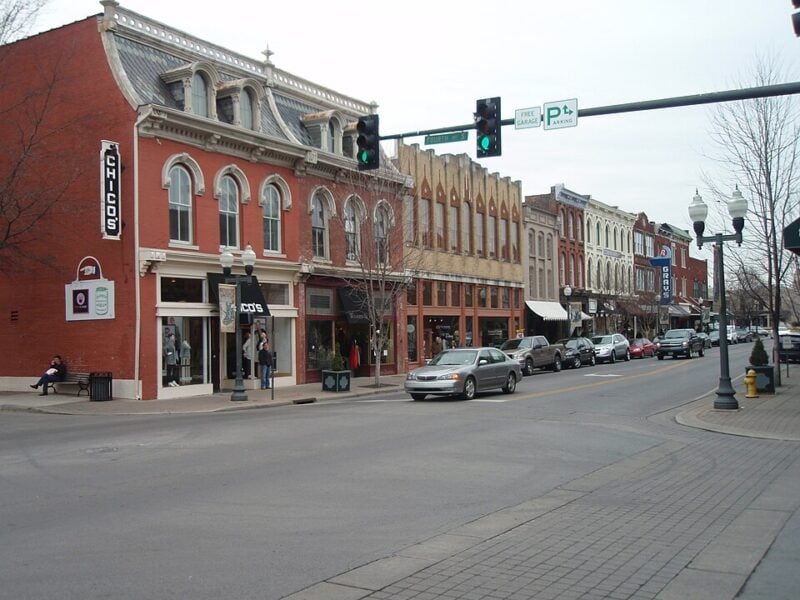
Franklin’s downtown area hosts locally owned boutiques, galleries, and performance venues. The historic district serves as the center for cultural activities, with preserved 19th-century buildings housing shops and restaurants.
The city supports regular events including farmers markets, outdoor concerts, and seasonal festivals. Main Street Franklin presents live music performances and art exhibitions throughout the year.
The Franklin Theatre, a restored 1937 venue, screens films and hosts live performances ranging from concerts to comedy shows. Multiple galleries in the downtown area showcase regional artists and rotating exhibitions.
You’ll find community theater productions and music venues offering diverse entertainment options. The arts scene remains accessible but smaller in scale compared to nearby Nashville, which provides additional cultural attractions just 20 miles away.
Dining and Shopping
Franklin offers a distinctive mix of locally-owned establishments and national retailers, with downtown Franklin serving as the hub for boutique shopping and diverse dining options. You’ll find everything from upscale restaurants to everyday grocery needs throughout the city.
Local Restaurants
Franklin’s downtown area features restaurants serving dishes from around the globe, giving you access to varied cuisine without traveling to Nashville. You’ll encounter locally-owned eateries alongside regional chains, with price points spanning casual to fine dining.
The restaurant scene caters to different tastes and budgets. Downtown Franklin contains the highest concentration of dining options, including southern comfort food, Italian, Mexican, and contemporary American establishments. Many restaurants occupy historic buildings, adding character to your dining experience.
Wait times can be lengthy during peak hours, particularly on weekends. You’ll want to make reservations at popular spots, especially for dinner service. The dining scene leans toward the expensive side compared to surrounding areas, with entrees at sit-down restaurants typically starting around $15-20.
Grocery and Retail Options
You’ll find major grocery chains throughout Franklin, including Kroger, Publix, Whole Foods, and Trader Joe’s. These stores are well-distributed across the city, making routine shopping convenient regardless of your neighborhood.
The Factory stands out as a unique shopping destination, housing shops and restaurants you won’t find at typical malls. Downtown Franklin features locally-owned boutiques selling clothing, home goods, and specialty items.
For traditional mall shopping, you’ll need to visit Cool Springs Galleria, which offers department stores and national retail chains. The overall shopping experience in Franklin tends toward the upscale, with prices reflecting the area’s higher cost of living.
Transportation and Traffic
Franklin’s location near Nashville creates both opportunities and challenges for getting around. The lack of robust public transportation means most residents rely heavily on personal vehicles for daily commutes.
Commuting Times
Your daily commute from Franklin largely depends on where you work. If you’re heading into Nashville, expect 25 to 40 minutes during peak hours on Interstate 65, though traffic congestion can extend this significantly during rush hour.
The morning commute northbound typically experiences the heaviest traffic between 7:00 AM and 9:00 AM. Evening returns southbound to Franklin can be particularly slow from 4:30 PM to 6:30 PM.
Local commutes within Franklin and Williamson County are generally more manageable. You’ll find that traveling between Franklin neighborhoods or to nearby Cool Springs typically takes 10 to 20 minutes. However, population growth has increased congestion on major roads like Mack Hargrave Memorial Drive and Carothers Parkway during peak times.
Public Transit Access
Public transit is basically nonexistent in Franklin, which is a significant drawback if you prefer not to drive. The city lacks a comprehensive bus system or rail connections.
WeGo Public Transit offers limited regional bus service connecting Franklin to Nashville, but routes are sparse and schedules are infrequent. Most residents find the bus system impractical for daily use due to limited coverage areas and long wait times between buses.
You’ll need a personal vehicle to handle grocery shopping, medical appointments, and social activities. This dependency on cars adds to your monthly expenses through vehicle payments, insurance, fuel, and maintenance costs.
Biking and Walkability
Franklin’s historic downtown area offers pleasant walkability with brick sidewalks, crosswalks, and pedestrian-friendly streets. You can easily walk between shops, restaurants, and offices within the central business district.
Outside downtown, walkability decreases significantly. Many residential neighborhoods lack sidewalks, and suburban development patterns create distances too far for practical walking. Shopping centers and business parks are typically designed around vehicle access rather than pedestrian movement.
Biking infrastructure remains limited throughout most of Franklin. While you’ll find some greenways and recreational trails for cycling, dedicated bike lanes on major roads are scarce, making bicycle commuting challenging and potentially unsafe.
Safety and Health Services
Franklin maintains low crime rates compared to national averages, and residents have access to quality healthcare facilities throughout Williamson County.
Crime Rates
Franklin is considered a safe community with crime statistics below many comparable cities. The city’s overall crime rate typically falls well under the national average, making it attractive for families prioritizing safety.
Property crime occurs less frequently than in most U.S. cities of similar size. Violent crime rates are particularly low, contributing to Franklin’s reputation as one of the safer places to live in Tennessee.
The safety of Franklin, TN is frequently cited as a major advantage by current residents. Well-maintained neighborhoods, active community watch programs, and responsive local law enforcement contribute to the secure environment.
You can expect to feel comfortable walking in downtown areas and established neighborhoods during daytime hours. Most residents report feeling secure in their homes and communities, which adds to the overall quality of life in the area.
Healthcare Facilities
Williamson County provides access to multiple healthcare facilities serving Franklin residents. Williamson Medical Center, a major hospital in the area, offers emergency services, surgical care, and specialized medical departments.
You’ll find numerous primary care physicians, specialists, and outpatient clinics throughout Franklin and nearby areas. The proximity to Nashville expands your healthcare options further, with Vanderbilt University Medical Center and other major hospitals located within 30 minutes.
The area supports a range of medical services including urgent care centers, dental practices, and specialty clinics. Healthcare quality in the region consistently receives high marks from patients and national rating organizations.
Wait times for appointments vary by specialty but are generally reasonable for a growing suburban area.
Climate and Weather
Franklin experiences distinct four-season weather throughout the year, with hot, humid summers and cold winters that occasionally bring snow. The area also faces the possibility of severe storms and tornadoes during certain times of the year.
Seasonal Patterns
Franklin enjoys all four seasons with a climate that remains consistently pleasant for much of the year. Spring and fall offer mild temperatures that many residents find ideal for outdoor activities. These transitional seasons typically feature comfortable humidity levels and moderate rainfall.
Summer in Franklin brings heat and humidity that can be intense. You’ll experience temperatures regularly climbing into the upper 80s and 90s Fahrenheit, with high humidity making it feel even warmer. Air conditioning becomes essential during these months.
Winter temperatures drop significantly, and you’ll need to prepare for cold conditions. Snow is possible but not guaranteed every year. When it does snow, accumulations are usually light to moderate rather than the heavy snowfall seen in northern states.
The region receives moderate rainfall distributed throughout the year, though summer thunderstorms can be particularly heavy. You’ll notice shorter daylight hours in winter, dropping to around 9.8 to 10.9 hours per day during December.
Severe Weather Concerns
Summers can be very hot and humid, while tornadoes and severe storms are also a possibility in Franklin. Middle Tennessee sits in a region where severe weather events occur with some regularity, particularly during spring months. You should be prepared to monitor weather alerts and have a plan for tornado warnings.
Thunderstorms can produce damaging winds, large hail, and heavy rainfall that leads to flash flooding. These storms are most common from March through May, though they can happen during other months as well. Your home should have a safe interior location where you can shelter during warnings.
The combination of heat and humidity during summer can create health concerns for vulnerable populations. You’ll want to stay hydrated and limit outdoor exposure during peak afternoon hours when heat indices climb to dangerous levels.
Historic Charm and Local Character
Franklin offers a distinctive atmosphere rooted in its 19th-century heritage. The preserved buildings and landmarks throughout the city create a character-filled environment that sets it apart from newer suburban developments.
Downtown Franklin serves as the heart of this historic appeal. You’ll find locally owned boutiques, restaurants, and cafes lining the streets, giving the area an authentic community feel rather than a chain-store atmosphere.
The architectural preservation efforts are evident as you walk through town. Original structures from the 1800s house modern businesses, creating an interesting blend of old and new. This combination allows you to enjoy contemporary amenities while surrounded by historic ambiance.
Key Historic Features:
- 19th-century buildings converted to shops and restaurants
- Preserved Main Street with walkable layout
- Local galleries and cultural venues
- Independent businesses rather than national chains
The historic downtown area provides easy access to dining, shopping, and entertainment within walking distance. This setup appeals to those who value pedestrian-friendly environments and community gathering spaces.
However, the historic nature of the area does come with considerations. Older buildings may have limited parking, and the preservation requirements can affect renovation options if you purchase property in historic districts. The charm that attracts residents and tourists also means downtown areas can get crowded, particularly on weekends and during special events.
The character of Franklin extends beyond just aesthetics. The sense of community fostered by the downtown environment creates opportunities for regular interaction with neighbors and local business owners.
Access to Nashville
Franklin sits approximately 20 to 22 miles south of Nashville, giving you convenient access to Tennessee’s capital city. This proximity means you can enjoy big-city amenities without dealing with the daily hustle of urban living.
The commute to downtown Nashville typically takes 25 to 35 minutes during off-peak hours. However, traffic can significantly increase travel time during rush hours, particularly on Interstate 65, which serves as the main corridor between the two cities.
Transportation Options:
- Personal vehicle – Most residents drive, as this remains the primary mode of transportation
- Carpooling – Common among commuters heading to Nashville
- Limited public transit – Public transportation is basically nonexistent in the area
You’ll find that Franklin offers a small-town feel while keeping you close to Nashville’s action. This means you can access Nashville’s employment opportunities, entertainment venues, professional sports, international airport, and cultural attractions while returning home to a quieter community.
The location works well if you work in Nashville but prefer a suburban lifestyle. Many residents appreciate having Nashville’s resources nearby without the higher density, noise levels, and urban intensity that comes with living directly in the city.
Keep in mind that your commute costs will include gas, vehicle maintenance, and potential toll roads. The lack of public transit options means owning a reliable vehicle becomes essential rather than optional.
Potential Drawbacks to Consider
Franklin’s appeal comes with challenges that affect daily life. The city’s transformation from a small town into a sought-after suburb has created pressure on infrastructure, while its character as a tourist destination and family-oriented community shapes the local atmosphere in ways that may not suit everyone.
Rapid Growth and Development
Franklin has experienced significant population growth over the past decade, driven by people relocating from higher-cost areas. The influx of residents selling California homes for over $1 million has dramatically changed the local housing market and community dynamics.
Traffic congestion has become a persistent issue, particularly during rush hours and on major corridors connecting Franklin to Nashville. The infrastructure hasn’t kept pace with the population surge, resulting in longer commute times and crowded roads.
Development pressure has transformed formerly quiet neighborhoods into dense residential areas. Farmland and open spaces continue to give way to new subdivisions and commercial centers. This rapid construction has raised concerns among long-time residents who feel the city is losing its small-town character.
Tourism Impact
Franklin’s historic downtown attracts visitors year-round, creating crowds that can make simple errands more time-consuming. Parking becomes scarce on weekends and during special events, forcing residents to compete with tourists for limited spaces.
The tourism-driven economy means downtown businesses often cater to visitors rather than local needs. Restaurants and shops frequently have wait times and higher prices reflecting tourist demand. Main Street can feel inaccessible to residents during peak seasons and holidays when visitor numbers swell.
Limited Nightlife
Franklin caters primarily to families and retirees, which shapes its evening entertainment options. The city lacks the vibrant bar scene, late-night venues, and diverse nightlife you’d find in nearby Nashville.
Most restaurants close by 9 or 10 PM, and entertainment options skew toward family-friendly activities like movie theaters and coffee shops. Young professionals and those seeking evening entertainment typically drive to Nashville, adding time and expense to social outings. The conservative community culture means nightlife development faces resistance from residents who prefer maintaining the city’s quiet, family-oriented atmosphere.