Why More Americans Are Switching to Online Banking
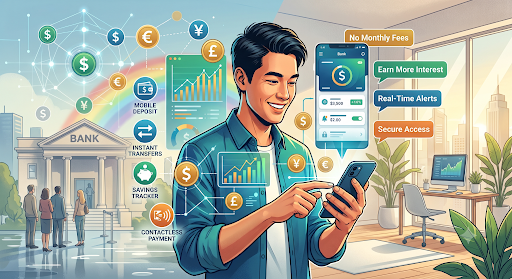
Not long ago, managing your money meant taking a trip to a local branch. Most of us spent lunch breaks standing in line, filling out paper deposit slips, and waiting for a teller behind a thick glass counter. Today, those routines feel like ancient history. Most financial tasks happen in a matter of seconds right from our phones. The shift from physical branches to digital platforms happened fast over the last decade. It isn’t just an alternative for tech lovers anymore. Digital banking is now the main financial hub for millions of households.
So why did this shift happen so quickly?
This change didn’t happen by accident. It’s the direct result of changing habits, better technology, and a huge demand for convenience. People expect their financial apps to move as fast as every other digital service they use daily. Because of that expectation, online platforms are quietly reshaping how we earn, save, spend, and keep track of our money.
Convenience Has Redefined Daily Expectations
The biggest reason behind this growth is simple convenience. Traditional banking always operated on strict hours. Branches opened late and closed early. If you needed to deposit a check or transfer money after five o’clock, you had to wait until the next morning.
Digital platforms completely threw out those old limits.
Now, your accounts are open every single hour of the day. You can check your balance from the couch, send money while waiting for coffee, or snap a picture of a check to deposit it instantly.
This easy access shifts how we handle our money. Managing finances isn’t a weekend chore you dread anymore. Instead, it fits right into your daily routine. When keeping track of your funds takes seconds instead of hours, staying on top of your financial health gets much easier.
Lower Costs and Better Financial Value
Cost savings are another huge reason people are making the switch. Physical branches are expensive to run. Rent, electricity, building maintenance, and staffing costs add up fast. Traditional banks often pass those overhead expenses to customers through monthly account fees, high overdraft penalties, and lower interest rates on savings.
Digital platforms operate at far lower cost.
Without hundreds of physical locations to maintain, these platforms can pass those savings right back to you. That lean setup is why so many digital platforms offer free checking accounts, no-minimum-balance rules, and higher interest rates.
For most people, the decision comes down to practical value. Choosing to open a bank account online with no deposit required helps you keep more of your hard-earned money from day one. But haven’t you wondered how much small monthly fees actually drain from your long-term savings over a decade? Over time, ditching monthly fees and earning extra interest makes a real difference in your wallet.
Real-Time Visibility and Automated Financial Control
Beyond saving money and time, digital tools give you much clearer control over your daily spending. In the old model, you usually had to wait for paper statements to arrive once a month, or check pending transactions that took days to settle. That delay made it easy to accidentally overspend or miss fraudulent charges.
Digital banking gives you an instant view of every single dollar. Mobile alerts let you know the moment a purchase goes through. Built-in spending tools group your expenses into helpful categories like groceries, bills, and entertainment so you always know where your money goes.
And what happens when you remove human error from saving altogether?
Automation takes the friction out of saving. You can set up automatic transfers to your savings or investment accounts every payday. Some platforms even round up your everyday purchases to the nearest dollar and deposit the change into a savings fund. By removing manual effort, building healthy financial habits becomes almost automatic.
Security and Technological Trust
When online financial tools first appeared, security was a common worry. Many people were hesitant to keep their life savings online because of fraud risks. Over time, strong safety measures have built solid trust.
Modern digital platforms use advanced protection to keep funds safe. Biometric logins, like fingerprint scans and facial recognition, offer quick and secure access. Two-factor authentication adds a solid shield against unauthorized logins. If you ever lose a debit card, you can lock it instantly in the app with one tap.
On top of that, automated monitoring systems watch for unusual activity around the clock. If a strange charge happens miles away from home, the system flags it and alerts you immediately. These features prove that managing money digitally can be just as safe as holding it in a physical building.
The Decline of Cash and the Rise of Digital Payments
The move toward a cashless society has made digital accounts essential. Fewer people carry physical cash today. Peer-to-peer payment networks, mobile wallets, and contactless cards have made paper money and coins mostly unnecessary for everyday buys.
Digital banking connects directly with these modern payment tools. Moving money to a friend or linking a card to a digital wallet takes just a couple of taps. Trying to navigate today’s economy with a paper-focused account creates unnecessary friction. As digital payments become the standard everywhere, an online account becomes the natural home for your money.
What the Future Holds for Personal Finance
Physical bank branches won’t disappear completely. Some people still prefer face-to-face guidance for major financial steps like applying for a mortgage or taking out a business loan. But for everyday needs, the physical branch is no longer essential.
The future of finance belongs to platforms that prioritize speed, clear communication, a great user experience, and low costs. As technology continues to improve, managing money will become even more intuitive and personalized.
Moving to digital financial tools isn’t a passing trend. It’s a permanent shift in how we manage our financial lives. By giving you total control right on your phone, digital banking has earned its place as the modern standard.