The Best Motorcycles for Daily Commuting in Heavy Traffic: Top Models in 2026
Navigating stop-and-go traffic on your daily commute doesn’t have to be a frustrating experience when you’re on the right motorcycle.
The best motorcycles for heavy traffic commuting are lightweight, fuel-efficient models with upright riding positions, typically ranging from 250cc to 750cc, including naked bikes, small adventure bikes, and scooters that offer maneuverability and comfort for urban conditions.
These machines transform gridlock into an opportunity to filter through traffic safely while providing reliable transportation. Choosing your ideal commuter bike involves balancing multiple factors that affect your daily riding experience.
You’ll need to consider the specific characteristics of your route, your physical comfort during rush hour, and the practical aspects of ownership that impact your wallet over time.
This guide walks you through everything you need to know about selecting a motorcycle optimized for daily commuting in city traffic.
You’ll discover which bike types excel in congested conditions, what features matter most for urban riding, and how to protect yourself while navigating busy streets.
So which commuters made the cut? It’s time to explore your options.
Key Factors for Choosing Commuting Motorcycles
Selecting the right motorcycle for daily commuting requires balancing practical considerations that directly impact your ride quality and ownership costs. Prioritizing fuel economy, handling characteristics, dependability, and rider comfort will ensure your commute remains sustainable and enjoyable.
Fuel Efficiency and Mileage
Fuel efficiency stands as one of the most critical financial considerations for daily commuters. Your motorcycle will likely cover thousands of miles annually, making fuel costs a significant ongoing expense.
Most commuter-focused motorcycles deliver between 50 and 80 miles per gallon. Smaller displacement engines typically achieve better fuel economy, with 250cc to 500cc bikes often reaching 60-75 mpg in mixed riding conditions.
Engine Displacement and Fuel Consumption:
| Engine Size | Typical MPG | Best For |
|---|---|---|
| 125-250cc | 70-80 mpg | Short urban commutes |
| 300-500cc | 55-70 mpg | Mixed city and highway |
| 650-750cc | 45-60 mpg | Long highway commutes |
Your commute distance and route type determine the ideal engine size. Highway commuting benefits from larger engines that cruise efficiently at higher speeds, while stop-and-go city traffic favors smaller, lighter bikes that sip fuel during constant acceleration and deceleration.
Agility and Maneuverability
Navigating heavy traffic demands a motorcycle that responds quickly to your inputs and fits through tight spaces. Your ability to filter through congested areas safely depends heavily on your bike’s physical dimensions and handling characteristics.
Seat height, wheelbase length, and overall width affect how easily you can navigate traffic. Narrow bikes allow you to squeeze between cars more confidently, while shorter wheelbases improve turning radius for parking and U-turns.
Weight plays a crucial role in low-speed handling. Motorcycles under 400 pounds feel lighter and more controllable when filtering through traffic or maneuvering in parking lots. You’ll appreciate this reduced weight during every stop sign and traffic light.
Urban riding conditions require responsive steering and good visibility. Upright riding positions provide better sightlines over surrounding traffic, helping you anticipate hazards and plan lane changes. Standard and naked bike designs typically offer superior maneuverability compared to touring or cruiser models.
Reliability and Maintenance
Your commuter motorcycle must start reliably every morning and require minimal unscheduled maintenance. Breakdowns don’t just cost money—they disrupt your entire schedule and potentially leave you stranded.
Reliability Considerations:
- Service interval lengths between oil changes and major services
- Parts availability in your region
- Known issues or recalls for specific models
- Warranty coverage and duration
Japanese manufacturers historically lead in reliability ratings, with Honda, Yamaha, Kawasaki, and Suzuki models frequently requiring only routine maintenance. You should research specific model years for known problems before purchasing.
Maintenance accessibility affects your long-term costs and convenience. Bikes with easily accessible oil filters, spark plugs, and air filters reduce service time and labor charges. Chain-driven motorcycles require more frequent maintenance than belt or shaft-driven alternatives, though chains cost less to replace.
Factor in maintenance costs when budgeting. Budget-friendly purchase prices mean little if your motorcycle requires expensive repairs or specialized service every few thousand miles.
Comfort for Extended Commuting
Daily riding amplifies any comfort issues that might seem minor during occasional weekend rides. Your commute should leave you energized rather than fatigued and sore.
Seat quality directly impacts your comfort during longer commutes. Firm seats with adequate padding support you without causing pressure points, while poorly designed seats create discomfort within 20-30 minutes. Test ride motorcycles for at least the duration of your typical commute before purchasing.
Riding position affects your back, wrists, and neck over time. Upright seating positions with neutral wrist angles reduce strain during extended riding. Sport bikes force you into aggressive postures that quickly become uncomfortable in stop-and-go traffic.
Wind protection matters more than many riders initially realize. Even modest windscreens reduce buffeting and fatigue on highway sections, while naked bikes expose you to full wind blast. Consider adding aftermarket windscreens if your chosen commuter motorcycle lacks adequate protection.
Vibration levels vary significantly between models. Excessive engine vibration transmitted through the seat and handlebars causes numbness and fatigue. Single-cylinder engines typically vibrate more than parallel twins or multi-cylinder configurations, though modern balancer shafts reduce this effect considerably.
Top Motorcycle Types for Heavy Traffic
Narrow profiles, manageable weight, and responsive throttles matter most when you’re weaving through congested streets. The right motorcycle type can cut your commute time while keeping you comfortable and in control.
Which models made the cut? Let’s find out!
Scooters and Maxi-Scooters
Scooters excel in stop-and-go traffic thanks to their automatic transmissions and lightweight frames. You won’t need to work a clutch at every red light, which reduces fatigue during long urban commutes.
Key advantages include:
- Underseat storage for helmets and work bags
- Low seat heights for easy footing at stops
- Fuel economy often exceeding 70 mpg
- Step-through design for easier mounting in tight spaces
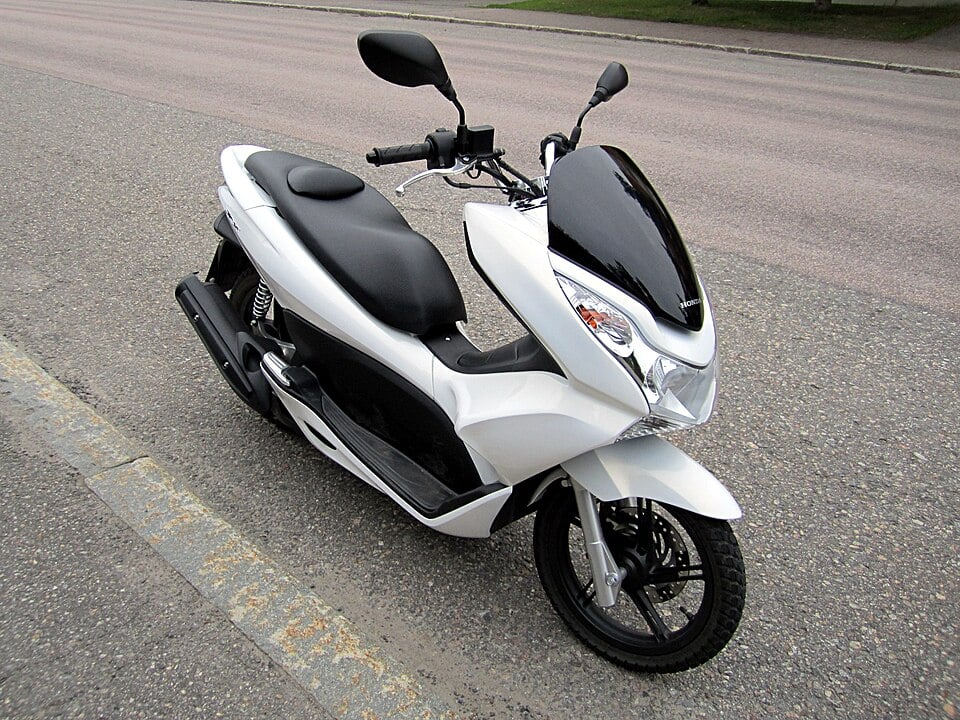
Maxi-scooters like the Honda PCX160 and Yamaha XMAX offer larger engines (125cc-400cc) that handle highway speeds while maintaining scooter practicality. These models provide weather protection through larger fairings and windscreens. The automatic CVT transmission remains smooth across all speeds, letting you focus entirely on traffic conditions rather than gear changes.
Standard and Naked Bikes
Standard motorcycles deliver an upright riding position that gives you better visibility over cars and SUVs. This seating arrangement also reduces back strain during extended commutes compared to sport bike positions.
Naked bikes strip away unnecessary fairings, creating narrower profiles for lane-splitting in congested traffic. Models like the Kawasaki Z400 and Yamaha MT-07 weigh between 350-400 pounds, making them agile without feeling unstable.
These bikes typically feature:
- 300cc-700cc engines providing adequate highway power
- Low maintenance requirements
- Affordable insurance rates
- Comfortable seats for 30-60 minute rides
The minimal bodywork also means cheaper repairs when minor parking lot incidents occur. You’ll find standard bikes easier to maneuver at walking speeds than heavier touring models.
Electric Motorcycles
Electric motorcycles eliminate engine heat, vibration, and noise while delivering instant torque from stops. You can accelerate quickly into gaps in traffic without the lag of combustion engines.
Zero Motorcycles and LiveWire models offer 100-200 miles of city range per charge. Regenerative braking extends battery life while reducing brake wear in heavy traffic. Most electric bikes weigh less than comparable gas models due to compact motor designs.
Practical benefits include:
- No clutch or gears to manage
- Minimal maintenance (no oil changes or valve adjustments)
- Lower operating costs (electricity vs. gasoline)
- Quiet operation for early morning commutes
Charging remains the primary consideration—you’ll need access to a 240V outlet for reasonable charge times. Home charging overnight works well for predictable daily commutes under 50 miles round-trip.
Best Models for Urban Commuting
These three lightweight motorcycles excel in city traffic with their compact dimensions, responsive handling, and fuel-efficient engines that make daily commuting practical and enjoyable.
Honda CB300R
The Honda CB300R delivers 31 horsepower from its single-cylinder engine, providing enough power for quick acceleration through traffic while maintaining excellent fuel economy. You’ll appreciate the bike’s 286-pound curb weight, which makes it easy to maneuver in tight spaces and handle at low speeds.
The upright riding position keeps you comfortable during stop-and-go traffic, and the 17-inch wheels offer stability on both smooth pavement and rougher city streets. Your daily commute becomes less stressful with the CB300R’s LED lighting system that improves visibility in early morning or evening rides.
Key Specifications:
- Engine: 286cc single-cylinder
- Seat Height: 31.5 inches
- Fuel Capacity: 2.6 gallons
- ABS: Standard
The minimalist neo-retro styling features a round LED headlight and exposed frame that appeals to riders who want a modern interpretation of classic design.
Yamaha MT-03
Your commute benefits from the MT-03’s 321cc parallel-twin engine that produces 42 horsepower, giving you confident acceleration for highway on-ramps and passing slower traffic. The bike weighs just 368 pounds fully fueled, making it one of the more manageable options for urban commuting.
The upside-down front fork provides better feedback through corners and over uneven pavement compared to conventional forks. You get precise handling from the diamond-style frame that balances rigidity with enough flex for rider comfort.
Notable Features:
- Assist and slipper clutch for easier shifting
- Digital LCD display with gear position indicator
- 37mm telescopic fork
The aggressive naked bike styling with sharp angles and compact proportions makes the MT-03 visually distinctive in parking lots.
KTM 390 Duke
The 390 Duke stands out with its 373cc single-cylinder engine producing 44 horsepower, making it the most powerful option in this segment. You’ll find the bike’s 328-pound dry weight and narrow profile ideal for splitting lanes in busy traffic.
Advanced electronics include ride-by-wire throttle, multiple riding modes, and a full-color TFT display with smartphone connectivity. Your safety improves with Bosch ABS and optional traction control that prevents rear wheel spin on wet surfaces.
The WP suspension components offer adjustability that lets you fine-tune the ride quality for your weight and road conditions. You benefit from the steel trellis frame’s excellent rigidity-to-weight ratio that enhances both handling precision and rider confidence in emergency maneuvers.
Advantages of Compact and Lightweight Bikes
Compact motorcycles excel in urban environments by offering superior maneuverability through tight spaces and simplified parking compared to larger bikes. Their reduced weight translates to better control at low speeds and less physical strain during stop-and-go traffic.
Easy Filtering and Lane Splitting
Your ability to navigate through congested traffic improves dramatically on a compact motorcycle. The narrow profile of these bikes allows you to slip between cars with minimal clearance, cutting your commute time significantly in areas where lane splitting is legal.
Lightweight bikes are ideal for weaving through traffic because their slim frames give you the confidence to make quick movements without worrying about clipping mirrors or saddlebags. You’ll find that bikes under 400 pounds are particularly agile when filtering.
The narrower handlebars on compact models mean you can judge gaps more easily. If your commute involves congested areas that allow lane-sharing, you want something on the narrow side. You’ll spend less time stuck behind cars and more time maintaining momentum.
Parking Convenience
Finding parking becomes remarkably simpler when you ride a compact bike. You can fit into spaces that larger motorcycles can’t access, including gaps between cars and designated motorcycle areas that accommodate multiple small bikes.
The lighter weight means you can easily maneuver your motorcycle into tight spots without assistance. You won’t struggle to push or pivot your bike when parking on inclines or uneven surfaces. Bikes weighing under 350 pounds allow you to use your legs for support without strain.
Your compact motorcycle also reduces the risk of it being knocked over in crowded parking areas. The smaller footprint means other riders and pedestrians have more room to navigate around your bike.
Low-Speed Stability
Compact bikes give you better control when crawling through heavy traffic at speeds under 15 mph. The lower center of gravity on most lightweight models makes them less prone to tipping when you’re balancing at stoplights.
Your feet reach the ground more easily on smaller bikes, providing reassurance during frequent stops. This is particularly valuable when you need to paddle your bike forward in bumper-to-bumper conditions. The reduced mass means less effort to keep the motorcycle upright when stationary.
Key stability benefits include:
- Easier to catch if the bike starts to tip
- Less fatigue during extended periods of slow riding
- More responsive steering inputs at parking lot speeds
- Greater confidence for newer riders in dense traffic
Essential Features for City Riding
Navigating heavy traffic requires specific motorcycle capabilities that directly impact your safety and comfort during daily commutes. The right combination of braking power, throttle control, and riding position transforms stop-and-go traffic from exhausting to manageable.
Responsive Braking Systems
You need brakes that respond instantly in urban environments where cars stop suddenly and pedestrians appear without warning. Anti-lock braking systems (ABS) prevent wheel lockup on wet pavement or painted road markings, which are common hazards in city streets.
Dual-channel ABS provides independent control for both wheels, giving you maximum stopping power while maintaining stability. Single-channel systems only protect the front wheel and offer less comprehensive protection.
Key braking features for city riding:
- Brake lever reach adjustment for different hand sizes
- Steel braided brake lines for consistent feel
- Combined braking systems that distribute force between wheels
- Large disc rotors (300mm or larger front) for heat dissipation
Your braking system works harder in traffic than on open roads. You apply the brakes dozens of times per mile in congested areas, making fade resistance critical for maintaining consistent stopping power throughout your commute.
Smooth Power Delivery
Jerky throttle response makes low-speed maneuvering difficult and increases fatigue during extended periods in traffic. You want linear power delivery that allows precise speed control when filtering through tight spaces or matching pace with slow-moving vehicles.
Fuel injection systems provide smoother response than carburetors, especially when the engine is cold. Multiple riding modes let you select softer throttle mapping for urban conditions, reducing the twitchiness that makes some performance bikes unsuitable for city commuting.
Engine size matters less than torque characteristics. A 300cc parallel twin with good low-end torque serves city riders better than a 600cc inline-four that delivers power at high RPMs. You need usable power between 2,000-5,000 RPM where most city riding occurs.
Ergonomic Seating Position
Your riding position determines how quickly you fatigue in heavy traffic. An upright stance with slightly forward footpegs reduces strain on your wrists, back, and knees during frequent stops and starts.
Wide handlebars provide leverage for low-speed maneuvers and parking lot navigation. Sport bikes with clip-on bars force you into an aggressive crouch that becomes uncomfortable after 20 minutes of stop-and-go riding.
Optimal ergonomic specifications:
| Feature | Ideal Range |
|---|---|
| Seat height | 30-32 inches |
| Handlebar width | 28-32 inches |
| Reach to controls | 16-18 inches |
Your seat should be flat rather than stepped, allowing you to shift your weight easily when paddling at stoplights. Narrow seats between your legs make it easier to plant both feet firmly on the ground, which is essential for urban commuting where you stop frequently.
Protective Gear and Safety Tips for Commuters
Daily commuting in heavy traffic demands specific protective equipment and riding strategies that balance safety with practicality. High-visibility gear, abrasion-resistant clothing, and defensive riding techniques reduce your risk during repetitive exposure to urban traffic conditions.
Visibility Enhancements
You need to maximize your visibility to drivers who are distracted by phones, passengers, and congestion. Bright-colored helmets in white, yellow, or neon increase recognition in peripheral vision compared to black or dark options.
Reflective strips on your jacket, pants, and helmet become critical during dawn and dusk commutes when light conditions change rapidly. Position reflective materials on moving parts like your arms and legs to create motion patterns that catch attention.
Essential visibility additions:
- LED auxiliary lights mounted on crash bars or fairings
- Reflective vest worn over your jacket
- Modulating headlight that pulses during daytime
- Reflective wheel rim tape
Consider running your high beam during daytime hours in dense traffic. The additional light output helps drivers gauge your distance and speed more accurately at intersections.
Protective Clothing
Urban commuting requires gear that balances serious protection with everyday wearability and comfort. A textile jacket with CE-rated armor at shoulders, elbows, and back provides impact protection while offering better ventilation than leather in stop-and-go traffic.
Motorcycle overpants slip over your work clothes and provide leg protection without requiring a complete wardrobe change at your destination. Look for options with waterproofing and knee armor that you can remove quickly.
Minimum protective gear checklist:
- DOT or SNELL-certified helmet
- Armored jacket with abrasion-resistant material
- CE-rated gloves covering your wrists
- Over-the-ankle boots with oil-resistant soles
- Riding pants or overpants with hip and knee protection
Your gloves need tactile sensitivity for operating controls in traffic while protecting against both impacts and road rash. Full-finger gloves with knuckle armor and palm sliders offer comprehensive hand protection.
Urban Riding Techniques
Position yourself in the left third of your lane at intersections to stay visible in car mirrors and avoid blind spots. This placement also gives you escape routes on either side if a driver fails to stop behind you.
Maintain a following distance of at least three seconds in heavy traffic, even when vehicles around you compress spacing. This buffer provides reaction time for sudden stops and debris in the road.
Critical urban riding practices:
- Cover your brake and clutch levers at intersections
- Scan parked cars for drivers opening doors
- Avoid riding between lanes in stopped traffic unless legal
- Watch front wheels of crossing vehicles for movement
- Keep your head moving to check mirrors every 5-8 seconds
Assume every driver will make the worst possible decision. Check intersections twice before proceeding on green lights, as red-light runners cause frequent urban crashes.
Cost Considerations and Ownership Costs
When selecting a motorcycle for daily commuting, the total cost extends well beyond the initial price tag. Fuel efficiency, insurance premiums, and routine maintenance collectively determine whether your bike remains an economical choice over years of ownership.
Initial Purchase Price
Entry-level commuter motorcycles typically range from $4,000 to $7,000 for new models. You’ll find that smaller displacement bikes between 250cc and 400cc occupy this price bracket and deliver excellent value for urban riding.
Mid-range commuter options, including popular models in the 500cc to 750cc category, cost between $7,000 and $11,000. These bikes offer more power for highway merging while maintaining reasonable fuel economy.
Used motorcycles present significant savings opportunities. A two-year-old commuter bike often costs 30-40% less than its new equivalent while retaining most of its usable life. You should inspect any used purchase carefully or hire a mechanic to evaluate the bike’s condition before buying.
Price Category Breakdown:
- Budget commuters: 125cc-300cc ($4,000-$6,500)
- Standard commuters: 400cc-650cc ($6,500-$10,000)
- Premium commuters: 700cc+ ($10,000-$15,000)
Insurance and Registration
Insurance costs for commuter motorcycles vary based on engine size, your riding history, and location. Smaller displacement bikes under 500cc typically cost $200-$600 annually for basic coverage, while larger bikes may run $600-$1,200 per year.
Your age and riding experience significantly impact premiums. New riders under 25 often pay 50-100% more than experienced riders over 30. Completing a motorcycle safety course can reduce your premium by 10-15% with most insurers.
Registration fees range from $20 to $100 annually depending on your state. Some states calculate fees based on the bike’s value or weight, while others charge a flat rate for all motorcycles.
Long-Term Maintenance Costs
Routine maintenance represents a predictable expense you’ll encounter throughout ownership. Oil changes every 3,000-6,000 miles cost $40-$80 if performed yourself or $80-$150 at a shop.
Chain maintenance requires cleaning and lubrication every 500-800 miles, costing roughly $15-$25 in supplies. You’ll need chain replacement every 15,000-25,000 miles at $150-$300 including labor.
Tire replacement occurs every 5,000-12,000 miles depending on riding conditions and tire quality. Expect to spend $250-$450 per set installed. Brake pads need replacement every 10,000-20,000 miles at $100-$200 per end.
Annual valve adjustments or inspections cost $200-$500 on most models. Japanese commuter bikes often require less frequent valve service than European models, reducing long-term costs. Fuel costs remain one of your biggest ongoing expenses, though most commuter motorcycles achieve 50-70 mpg in mixed riding.
Environmental Impact and Emissions
Commuter motorcycles produce significantly lower emissions than cars due to their smaller engines and reduced fuel consumption. Electric motorcycles eliminate tailpipe emissions entirely, while modern gasoline models incorporate advanced technologies to minimize their environmental footprint.
Comparing Gasoline vs Electric Options
Electric motorcycles offer zero direct emissions during operation, making them ideal for urban environments where air quality matters most. You’ll find models like the Zero SR/F and LiveWire One deliver immediate torque while producing no exhaust fumes during your daily commute.
Gasoline motorcycles typically consume 50-80 mpg, resulting in lower CO2 emissions per mile than cars. A 300cc commuter bike produces approximately 60-90 grams of CO2 per kilometer, compared to 120-180 grams for an average sedan. Modern fuel-injected engines burn cleaner than older carbureted models.
Key differences include:
- Charging vs Refueling: Electric bikes require 3-8 hours for full charge; gas bikes refuel in minutes
- Operating Costs: Electricity costs $0.50-$1.50 per 100 miles; gasoline costs $3-$6 per 100 miles
- Maintenance: Electric models have fewer fluids and no oil changes; gas bikes require regular service
Low-Emission Technologies
Euro 5 and EPA Tier 3 emissions standards require catalytic converters and oxygen sensors on new gasoline motorcycles. These systems reduce hydrocarbons, carbon monoxide, and nitrogen oxides by 70-90% compared to older models.
Fuel injection systems optimize air-fuel ratios throughout your ride, minimizing wasted fuel and unburned emissions. You’ll notice better throttle response and consistent performance alongside reduced environmental impact.
Emission-reducing features available:
- Closed-loop fuel management systems
- Evaporative emission control canisters
- Three-way catalytic converters
- Ride-by-wire throttle systems
Some manufacturers offer mild hybrid systems that use small electric motors to assist acceleration, reducing engine load during the most polluting phases of operation.
Summary and Final Recommendations
Choosing the right motorcycle for heavy traffic commuting depends on your specific needs and riding conditions. Where you commute and how far you travel shapes which bike will work best for your daily routine.
Key factors to prioritize:
- Width and maneuverability – Narrow bikes excel in congested areas that allow lane-sharing
- Seat height and weight – Lower bikes give you better control at stops and in slow-moving traffic
- Fuel efficiency – Matters more when you face long commutes with frequent stops
- Storage options – Consider bikes with built-in storage or easy mounting points for luggage
For dense urban environments, you want something agile that can navigate tight spaces. Smaller displacement bikes between 250cc and 500cc offer excellent fuel economy and easy handling. Mid-range bikes from 500cc to 750cc provide more highway capability if your commute includes faster roads.
The best urban commuter motorcycle fits your daily mileage, budget, and storage requirements. Think about accessories like heated grips if you plan to ride year-round.
Your decision should account for:
- Daily distance traveled
- Traffic density in your area
- Weather conditions throughout the year
- Parking and storage availability
- Your experience level
Start by test riding multiple options to find what feels comfortable during extended periods in traffic. Your commute becomes more enjoyable when you match the bike to your actual riding conditions.