
How Much Does It Cost to Open a Specialty Coffee Shop? Breakdown of Startup Expenses and Investment Requirements
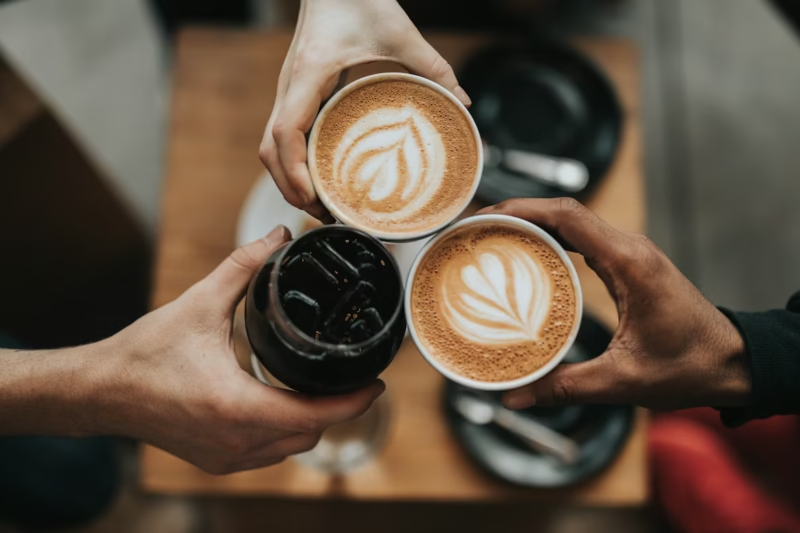
Opening a specialty coffee shop requires significant planning and capital, but understanding the financial commitment upfront helps you make informed decisions about your business venture.
The typical cost to open a specialty coffee shop ranges from $80,000 to $300,000, with most owners investing around $150,000 to $200,000 depending on location, size, and concept.
This wide range reflects differences between opening a small kiosk versus a full-service café with extensive seating and premium equipment.
Your investment extends far beyond just purchasing an espresso machine and coffee beans. You need to account for build-out and renovation expenses, commercial-grade equipment, permits and licenses, initial inventory, staffing costs, and operating reserves to cover your first few months of business.
The startup costs for a specialty coffee and tea shop depend heavily on whether you choose an urban storefront or suburban location, as well as the level of customization and branding you pursue.
This guide breaks down every major expense category you’ll encounter when launching your specialty coffee shop. You’ll discover where your money actually goes, which costs vary by location, and where you can strategically reduce expenses without compromising quality or customer experience.
Do you have what it takes to own a coffee shop? Let’s find out!
Start-Up Costs Breakdown
Opening a specialty coffee shop requires investment ranging from $80,000 to $300,000, with most owners spending around $150,000 to $200,000. Your actual costs depend on location, size, and the level of quality you aim to deliver.
Lease and Renovation Expenses
Your lease deposit and build-out costs typically represent your largest upfront expenses. Most landlords require a security deposit equal to one to three months’ rent, plus first month’s rent upfront.
Renovation costs vary significantly based on the condition of your space. A turnkey location with existing plumbing and electrical infrastructure might cost $50,000 to $100,000 for basic updates. Ground-up construction or extensive remodeling can easily reach $150,000 to $250,000.
Key renovation expenses include:
- Plumbing and electrical work for espresso machines and equipment
- HVAC systems and ventilation
- Flooring, lighting, and wall finishes
- Counter installation and bar setup
- Bathroom upgrades to meet code requirements
Urban locations generally cost more per square foot but offer higher foot traffic. Suburban spaces provide lower rent but may require additional marketing investment to build your customer base.
Equipment and Furnishings
Your espresso machine serves as the centerpiece of your operation. Commercial espresso machines range from $5,000 for entry-level models to $30,000 for high-end options with multiple group heads.
Essential equipment purchases include:
- Commercial espresso machine: $5,000-$30,000
- Coffee grinders (espresso and drip): $1,500-$5,000
- Refrigeration units: $2,000-$8,000
- Point-of-sale system: $1,200-$3,000
- Water filtration system: $500-$2,000
- Brewing equipment: $1,000-$4,000
Furniture and décor require $10,000 to $30,000 depending on your seating capacity and aesthetic goals. Tables, chairs, and couches create your ambiance while serving functional purposes. Display cases, shelving, and storage solutions add another $3,000 to $8,000.
Smallwares like cups, saucers, pitchers, and utensils cost $2,000 to $5,000 for initial inventory.
Licensing and Permits
Business licenses and permits protect you legally and ensure compliance with local regulations. Costs vary by municipality but expect to spend $1,000 to $5,000 total.
Your basic requirements include a business license ($50-$400), food service permit ($100-$1,000), and health department inspections ($200-$500). If you plan to serve food beyond pastries, you’ll need additional food handler certifications.
Building permits for renovations typically cost 1-3% of your construction budget. Fire department inspections and occupancy permits add $200 to $800. Signage permits range from $50 to $500 depending on size and illumination.
You’ll also need liability insurance ($1,500-$3,500 annually), workers’ compensation if hiring employees, and potentially a music licensing agreement if playing commercial music ($300-$500 annually).
Ongoing Operational Expenses
After opening your specialty coffee shop, you’ll face recurring monthly costs that typically range from $15,000 to $40,000 depending on your location and business size. These expenses include employee wages, utility bills, and the continuous replenishment of coffee beans and supplies.
Staffing and Payroll
Labor represents one of your largest recurring expenses, often accounting for 25-35% of total revenue. You’ll need to budget for baristas, shift supervisors, and potentially a store manager depending on your operation size.
Entry-level baristas typically earn $12-16 per hour, while experienced baristas command $15-20 per hour. Shift supervisors usually make $16-22 per hour, and store managers earn annual salaries between $35,000-55,000.
Beyond hourly wages, you must account for payroll taxes, workers’ compensation insurance, and potential benefits packages. These additional costs add approximately 20-30% to your base payroll expenses. For a small specialty coffee shop with 4-6 employees, expect monthly payroll costs between $8,000-15,000.
Utilities and Overhead
Your monthly rent dominates fixed expenses, particularly in high-traffic urban locations where costs range from $3,000-14,000 per month. Suburban locations typically cost $2,000-6,000 monthly, while smaller footprints reduce this burden significantly.
Utilities for a specialty coffee shop include electricity for espresso machines and refrigeration, water for brewing and cleaning, gas for heating, and internet service. Combined utility costs typically run $800-2,000 per month. Espresso machines and grinders consume substantial electricity, particularly during peak hours.
Insurance coverage including general liability, property, and workers’ compensation costs $400-800 monthly. You’ll also need to budget for point-of-sale software subscriptions, accounting services, and basic maintenance repairs.
Inventory and Supplies
Coffee beans constitute your primary inventory expense, with specialty-grade beans costing $6-12 per pound wholesale. A typical shop uses 50-150 pounds weekly depending on customer volume, translating to $1,200-7,200 monthly for coffee alone.
Milk and dairy alternatives add $600-1,500 per month, while disposable cups, lids, sleeves, and straws cost $400-1,000 monthly. Syrups, sweeteners, and flavor additions run $200-500.
Cleaning supplies, paper products, and equipment maintenance supplies add another $200-400 monthly. You should maintain adequate inventory levels without over-purchasing perishables, requiring careful tracking of usage patterns and waste reduction.
Location-Dependent Cost Variations
Where you open your specialty coffee shop directly impacts both startup investment and ongoing operational expenses. Real estate costs, permit fees, and labor rates can vary by 200-300% between different geographic markets.
Urban Versus Rural Settings
Opening a coffee shop in an urban location typically requires $200,000 to $300,000, while rural settings often fall in the $80,000 to $150,000 range. The difference stems primarily from real estate costs, with urban retail space commanding $40-$80 per square foot annually compared to $15-$30 in smaller towns.
Urban locations also carry higher permit and licensing fees. A health permit might cost $1,200 in a major city versus $300 in a rural county. Labor rates follow similar patterns, with baristas earning $16-$20 per hour in metropolitan areas compared to $12-$15 in rural markets.
However, urban locations justify higher investment through increased customer volume and premium pricing potential. You can charge $5-$7 for a specialty latte in a city center, while rural markets typically support $4-$5 pricing.
Foot Traffic and Market Demand
High foot traffic areas command premium rents but deliver faster return on investment through higher transaction volumes. A corner location in a business district might cost $8,000-$15,000 monthly but generate 300-500 transactions daily.
Lower-traffic suburban locations reduce your rent to $2,500-$5,000 monthly but may only produce 100-200 daily transactions. You need to calculate your break-even point based on realistic customer counts for each location type.
Market saturation affects your startup costs through competitive pressures. Entering a market with established specialty coffee shops requires higher investment in equipment, design, and marketing to differentiate your offering and capture market share.
Design and Branding Investments
Creating a distinctive atmosphere and memorable brand identity requires strategic investment in both your physical space and visual presence. Your design choices directly influence customer perception and willingness to pay premium prices for specialty coffee.
Interior Design Choices
Your interior design budget typically ranges from $20,000 to $100,000 depending on the size of your space and the level of customization you pursue. This investment covers furniture, lighting fixtures, wall treatments, flooring, and decorative elements that create your coffee shop’s ambiance.
Seating arrangements represent a significant portion of interior costs. You’ll need to budget $200 to $800 per seat for quality tables and chairs that withstand daily commercial use. Commercial-grade furniture costs more than residential options but lasts considerably longer under heavy traffic.
Lighting deserves careful attention since it affects both functionality and mood. Expect to spend $3,000 to $15,000 on a combination of task lighting for the bar area, ambient lighting for seating spaces, and accent lighting to highlight architectural features or artwork.
Material selections impact both aesthetics and maintenance costs. Durable surfaces like sealed concrete floors, quartz countertops, and commercial-grade paint reduce long-term repair expenses while maintaining visual appeal.
Signage and Visual Identity
Professional signage and branding typically costs $2,000 to $10,000 for a specialty coffee shop. This investment includes exterior signage, menu boards, logo development, and branded materials that establish your market position.
Your exterior sign serves as the primary tool for attracting foot traffic. Illuminated channel letters or custom-fabricated signs range from $3,000 to $8,000 depending on size, complexity, and local permitting requirements.
Menu board design impacts ordering efficiency and perceived value. Digital displays cost $1,500 to $5,000 but allow easy updates, while traditional printed boards range from $500 to $2,000 for professional quality.
Brand development encompasses logo design, color schemes, typography, and packaging design. Hiring a professional designer costs $1,500 to $5,000 for comprehensive brand guidelines that maintain consistency across all customer touchpoints.
Menu Development and Ingredient Sourcing
Your menu determines both your operating costs and revenue potential. Quality ingredient sourcing and strategic menu design directly impact your profit margins and customer satisfaction.
Specialty Coffee Beans
You’ll spend $8 to $15 per pound for quality specialty-grade coffee beans, with most shops using 50 to 150 pounds monthly depending on volume. Direct trade relationships with farmers typically cost 10-20% more than commodity pricing but provide consistency and quality control.
Single-origin beans command higher prices than blends, ranging from $12 to $20 per pound wholesale. You need to account for waste during roasting and brewing, which averages 15-20% of your total bean purchase.
Storage requirements add another layer of expense. You’ll need airtight containers, proper shelving, and climate-controlled space to maintain bean freshness. Most specialty shops rotate inventory every 2-3 weeks to ensure optimal flavor profiles.
Key bean sourcing factors:
- Minimum order quantities from roasters (typically 20-50 pounds)
- Shipping costs for out-of-state suppliers ($25-$75 per shipment)
- Seasonal price fluctuations (15-30% variation)
- Backup supplier relationships for consistency
Food and Beverage Offerings
Recipe development and ingredient testing costs between $1,000 and $5,000 for a specialty food menu. You’ll spend additional money on milk alternatives ($3-$5 per half gallon), syrups ($8-$12 per bottle), and pastries or food items if you’re offering them.
Your beverage menu determines ingredient complexity. Espresso-based drinks require different milk types (whole, oat, almond, soy), sweeteners, and flavor additions that each carry separate costs and shelf lives.
Food partnerships with local bakeries reduce your kitchen equipment needs but limit profit margins to 40-50% versus 65-75% for in-house preparation. You must balance menu development practicality with food costs and scalability.
Inventory management software costs $50 to $200 monthly but prevents waste and tracks real-time ingredient usage across your offerings.
Technology and POS Systems
Modern coffee shops require reliable technology infrastructure, with POS systems costing $0 to $300 per month depending on features, while hardware setup typically runs $1,500 to $4,000 for a complete installation.
Point of Sale Setup
Your POS hardware investment will range from $800 to $2,500 per workstation depending on the system type you choose. Basic tablet-based systems start at the lower end, while professional-grade terminals command higher prices.
A complete setup includes terminals, cash drawers, receipt printers, and payment processors. You’ll need to budget between $1,500 and $4,000 for your entire hardware configuration.
Software subscriptions vary significantly in cost. Free plans like Square offer basic functionality with optional paid upgrades, while full-service systems charge monthly fees based on your needed features.
You should also account for ongoing technology expenses. Most coffee shops allocate 1-3% of gross revenue to technology costs, including software subscriptions and customer Wi-Fi services. For a shop generating $30,000 monthly, expect $300 to $900 in technology expenses each month.
Online Ordering Integration
Online ordering capabilities have become essential for specialty coffee shops competing in today’s market. You’ll need to integrate third-party delivery platforms or implement your own ordering system through your POS provider.
Many modern POS systems include built-in online ordering features as part of their standard or premium packages. These integrated solutions eliminate the need for separate software and streamline order management across all channels.
Third-party delivery platforms charge commission fees ranging from 15% to 30% per order. Building your own ordering system through your POS eliminates these ongoing fees but may require higher upfront software costs.
Marketing and Promotion Strategies
Marketing budgets for a specialty coffee shop typically range from $1,000 to $3,000 for initial promotion expenses. Your marketing approach needs to balance upfront launch activities with sustainable long-term digital efforts to build customer awareness and loyalty.
Initial Launch Campaigns
Your grand opening campaign requires dedicated funding to create buzz in your local market. Budget $500 to $1,500 for launch-specific activities such as sampling events, local newspaper ads, and promotional signage.
Consider partnering with local businesses and community organizations to extend your reach without inflating costs. Free coffee tastings, loyalty card giveaways, and opening day discounts help attract first-time customers. You should also allocate funds for professional photography of your space and products, which serves both your initial promotion and future marketing needs.
Print materials like flyers, business cards, and window displays require upfront investment but provide lasting value. Physical promotional items cost $200 to $500 depending on quantity and quality. Grand opening events with live music or local artist showcases create memorable experiences that encourage word-of-mouth referrals.
Ongoing Digital Marketing
Your monthly digital marketing budget should range from $300 to $800 to maintain visibility and attract repeat customers. Social media platforms like Instagram and Facebook require consistent content creation, with professional product photography being essential for specialty coffee shops.
Email marketing platforms cost $20 to $100 monthly depending on your subscriber list size. These tools let you send targeted promotions, announce new menu items, and reward loyal customers. You need to factor in time or budget for content creation, whether you handle it yourself or hire help.
Paid advertising through Google Ads or social media typically requires $200 to $500 monthly to generate meaningful results. Local SEO optimization helps customers find you when searching for coffee shops nearby. Customer review management across platforms like Yelp and Google Business Profile costs time but delivers significant returns through increased trust and visibility.
Contingency Planning and Reserve Funds
You need to set aside money for unexpected expenses when opening your specialty coffee shop. A contingency fund serves as a financial safety net for emergencies like equipment failures, economic downturns, or natural disasters.
Most financial experts recommend keeping three to six months of operating expenses in reserve as a baseline. However, businesses facing higher uncertainty should aim for 6-12 months of operating costs.
Your contingency budget should account for several potential scenarios:
- Equipment breakdowns: Espresso machines, grinders, and refrigeration units require immediate repairs or replacement
- Staffing issues: Unexpected turnover or seasonal labor shortages
- Supply chain disruptions: Coffee bean price fluctuations or delivery delays
- Building repairs: Plumbing, electrical, or structural problems
- Revenue shortfalls: Slower-than-projected sales during initial months
You should calculate your reserve amount based on your specific monthly expenses. If your specialty coffee shop has $15,000 in monthly operating costs, you would need between $45,000 and $90,000 in contingency funds.
Creating a financial contingency plan helps you respond quickly when unexpected situations arise. Keep these funds in an accessible business savings account separate from your operating budget. This separation prevents you from accidentally spending your emergency reserves on day-to-day operations.
Cost-Saving Opportunities and Pitfalls
Strategic vendor negotiations and careful budget planning can reduce your initial investment by 15-30%, while common financial mistakes often force coffee shops to spend an additional $20,000-$50,000 beyond their original estimates.
Negotiating Vendor Contracts
You can secure significant savings by negotiating equipment leases rather than purchasing outright. Commercial espresso machines typically cost $8,000-$20,000 to buy, but leasing arrangements run $200-$400 monthly with maintenance included.
Coffee roaster partnerships offer another opportunity for cost reduction. Many roasters provide free or discounted equipment, grinders, brewers, and sometimes espresso machines in exchange for exclusive supply agreements. These contracts usually require you to purchase a minimum monthly volume, typically 50-100 pounds.
Key negotiation points include:
- Payment terms (net 30 or net 60 instead of upfront)
- Bulk discounts on recurring supplies like cups, lids, and syrups
- Equipment maintenance and repair coverage
- Price locks for 12-24 months on coffee beans
You should compare at least three vendors for major purchases. Food service distributors often match competitor pricing when presented with written quotes.
Avoiding Common Budget Mistakes
Underestimating your cash reserve needs ranks as the most expensive mistake new coffee shop owners make. You need 3-6 months of operating expenses in reserve, which means $30,000-$60,000 for most independent cafés.
Overspending on unnecessary equipment drains budgets quickly. You don’t need a $15,000 super-automatic espresso machine when a $8,000 semi-automatic performs just as well for a new shop. Skip specialized equipment like cold brew towers or nitro systems until customer demand justifies the expense.
Common budget errors to avoid:
- Failing to account for permit delays (add 2-3 months to timeline)
- Ordering too much inventory before opening
- Choosing the cheapest POS system (expect $1,200-$3,000 for reliable software)
- Skipping professional help for buildout planning
Renovation costs frequently exceed estimates by 20-40%. Always budget an extra $10,000-$15,000 for unexpected structural, plumbing, or electrical issues discovered during construction.


