How Much Does It Cost to Start a Residential Painting Business? Breakdown of Startup Expenses
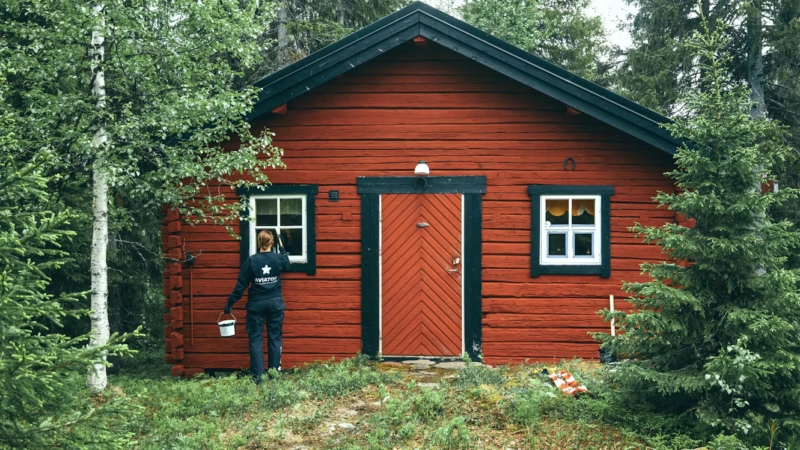
Starting a residential painting business offers one of the most accessible entry points into the trades industry. The relatively low barriers to entry and consistent demand for painting services make it an attractive option for entrepreneurs and skilled tradespeople alike.
The cost to start a residential painting business typically ranges from $2,000 to $15,000, depending on whether you launch as a solo operator or establish a more comprehensive company with employees and professional equipment.
Your specific investment will depend on factors like the equipment quality you choose, your vehicle situation, licensing requirements in your area, and how aggressively you plan to market your services.
Understanding these startup costs upfront helps you make informed decisions about launching your painting business and avoiding common financial pitfalls.
This guide breaks down each expense category so you can create a realistic budget and plan for both your initial investment and ongoing operational costs.
Want to find out the details involved? Let’s go!
Overview of Residential Painting Business Startup Costs
Starting a residential painting business requires an initial investment that typically ranges from a few thousand to over ten thousand dollars, with costs split between one-time purchases and recurring expenses.
Typical Startup Cost Range
The startup costs for a painting business generally fall between $5,000 and $15,000 for most new ventures. You can launch a basic operation on the lower end of this spectrum if you already own some equipment and plan to work solo initially.
Some entrepreneurs start with initial investments as low as $2,000 to $3,600 by purchasing only essential supplies and building their inventory gradually. On the higher end, you might spend closer to $11,700 to $15,000 if you’re investing in comprehensive equipment, licensing, insurance, and marketing from day one.
Your specific costs depend heavily on whether you’re starting as a sole proprietor working from home or establishing a more formal business with employees. Most painting contractors find that starting lean and scaling up as revenue increases provides the most manageable path forward.
Factors Influencing Startup Expenses
Your location significantly impacts startup costs due to varying licensing requirements, insurance rates, and equipment prices. States with stricter contractor licensing mandates will add more to your initial budget compared to locations where no license is required.
Key cost factors include:
- Whether you need to purchase a vehicle or already own suitable transportation
- Your choice between basic tools and professional-grade equipment
- Local insurance rates for general liability coverage
- Marketing budget for website development and advertising
- Number of employees you plan to hire initially
The scale at which you launch matters considerably. Starting as a solo operator keeps costs minimal, while hiring a crew from the beginning increases expenses for payroll, workers’ compensation insurance, and additional equipment sets.
Breakdown of One-Time vs. Ongoing Costs
One-time startup expenses include equipment purchases like ladders, sprayers, brushes, rollers, drop cloths, and safety gear. You’ll also pay initial fees for business registration, licensing, and setting up your legal structure. Equipment costs alone typically range from $1,000 to $5,000 depending on quality and quantity.
Ongoing monthly costs cover insurance premiums, vehicle maintenance and fuel, paint and supply replenishment, marketing expenses, and any loan payments. These recurring expenses require careful budgeting to maintain positive cash flow, especially during slower seasons.
Your business banking fees, accounting software subscriptions, and phone service also fall into the ongoing category. Understanding this distinction helps you plan for both the initial launch and sustained operations beyond your first few months.
Licensing, Permits, and Legal Requirements
Legal compliance costs for a residential painting business typically range from $500 to $2,000 initially, depending on your state and local requirements. The main expenses include business registration fees, insurance premiums, and any required contractor licenses or permits.
Business Registration and Structure
You need to register your painting business with your state and local government. The most common business structures are sole proprietorship, LLC, or corporation. An LLC typically costs between $50 and $500 to establish, depending on your state.
You’ll need an Employer Identification Number (EIN) from the IRS, which is free to obtain. Most painters also need a general business license from their city or county, costing $50 to $400 annually.
Some states require you to register your business name if you operate under a DBA (Doing Business As). This registration typically costs $10 to $100. Check with Minnesota’s licensing portal or your state’s equivalent to identify specific requirements.
Insurance and Liability Coverage
General liability insurance is essential for residential painters and costs between $500 and $1,500 annually for basic coverage. This protects you if you damage a client’s property or someone gets injured on a job site.
You should also carry workers’ compensation insurance if you hire employees, which costs approximately 2-3% of your total payroll. Professional liability insurance adds another $300 to $800 per year but protects against claims of unsatisfactory work.
Some clients and contracts require proof of insurance before you can start work. Budget for these insurance costs as ongoing annual expenses rather than one-time startup costs.
Necessary Permits for Residential Painting
Painting contractor license requirements vary significantly by state. States like California, Arizona, and Nevada require specific contractor licenses, while Texas and Colorado leave oversight to local jurisdictions.
In most states, you don’t need a license for small residential projects, but commercial work or jobs exceeding $500 to $1,000 typically require licensing. The license application fee ranges from $50 to $300, with some states requiring a written exam costing an additional $50 to $150.
You may need building permits for certain painting projects, particularly exterior work or jobs involving lead paint remediation in homes built before 1978. Permit costs vary by municipality but typically range from $25 to $200 per project.
Essential Equipment and Tools
Starting a residential painting business requires investing in quality brushes, rollers, paint trays, and drop cloths, along with professional-grade sprayers, extension ladders, and protective gear to handle jobs safely and efficiently.
Painting Supplies and Materials
Your basic painting equipment forms the foundation of daily operations. You’ll need multiple brush sizes ranging from 1-inch for trim work to 4-inch for broad surfaces, plus various roller covers for different textures.
Quality paint trays, extension poles, and painter’s tape are essential for efficient work. Drop cloths protect client floors and furniture, while plastic sheeting covers larger areas. You should stock putty knives, scrapers, and sandpaper for surface preparation.
Paint mixing sticks, strainers, and clean buckets prevent application problems. Most painters maintain supplies of primer, caulk, and wood filler for repairs. Starting inventory typically costs between $500 and $1,500 depending on quality levels you choose.
Sprayers, Ladders, and Safety Gear
Professional paint sprayers range from $300 to $1,000 and significantly speed up large jobs. Airless sprayers work best for exterior projects and interior walls, while HVLP models suit cabinets and detailed work.
Extension ladders are critical for reaching high areas safely. You’ll need at least one 24-foot ladder for two-story homes, plus step ladders for interior work. Quality ladders cost $150 to $400 each.
Safety equipment protects you and meets insurance requirements. Respirators filter paint fumes and particles, while safety glasses shield your eyes. You need durable work gloves, knee pads for extended projects, and non-slip footwear. Budget $200 to $500 for complete safety gear and protective equipment.
Transportation and Vehicle Costs
A reliable vehicle represents one of the largest initial investments for a residential painting business, with costs varying significantly based on whether you purchase new or used. Beyond the vehicle itself, you’ll need to consider branding expenses that turn your transportation into a mobile advertisement.
Choosing a Work Vehicle
Your vehicle needs to accommodate ladders, paint supplies, drop cloths, and other equipment while maintaining reliability for daily job site visits. Used trucks or vans typically cost between $5,000 to $15,000 or more, making them the most practical choice for new business owners.
A cargo van offers the best protection for your equipment and paint from weather conditions. Full-size vans like the Ford Transit or RAM ProMaster provide maximum storage capacity but consume more fuel. Pickup trucks with a cap or tonneau cover cost less upfront and offer easier loading access, though they provide less security for expensive equipment.
Consider fuel efficiency as part of your ongoing operational costs. You’ll drive to multiple job sites daily, and fuel expenses add up quickly. Factor in maintenance costs, insurance premiums, and the vehicle’s reliability record before making your decision.
Vehicle Branding and Customization
Professional vehicle wraps or magnetic signs transform your work vehicle into a marketing tool that generates awareness as you drive between jobs. Basic magnetic door signs cost $50 to $200 per pair and offer flexibility if you use a personal vehicle part-time.
Partial vehicle wraps covering doors and rear panels range from $1,000 to $2,500. Full vehicle wraps cost $2,500 to $5,000 but maximize visibility and create a professional impression. Include your business name, phone number, website, and services offered in clear, readable fonts.
Basic vinyl lettering provides a budget-friendly middle option at $200 to $500. This approach looks professional without the full wrap investment and proves sufficient for many startup painting businesses focused on local residential work.
Before you consider this business, there’s more you need to know:
Workforce and Labor Considerations
Labor expenses will likely become your largest ongoing cost after you secure your first clients. You’ll need to decide between hiring W-2 employees or working with independent contractors, and each choice carries different financial implications for wages, taxes, and training investments.
Costs of Hiring Employees or Subcontractors
When you hire employees directly, you’ll pay 7.65% in FICA taxes on top of their wages, plus unemployment insurance, workers’ compensation insurance, and potentially health benefits. Workers’ compensation for painters typically costs $8 to $15 per $100 of payroll, depending on your state and claims history.
Independent contractors eliminate payroll taxes and benefits costs, but you’ll typically pay higher hourly rates since they cover their own expenses. You should expect to pay subcontractors $25 to $50 per hour compared to $15 to $25 per hour for employees.
Key cost differences:
- Employees: Lower hourly rate but add 25-40% in taxes and benefits
- Subcontractors: Higher rates but no additional overhead costs
- Hybrid approach: Keep a small core team and supplement with contractors during peak season
You must ensure subcontractors meet IRS criteria for independent contractor status to avoid misclassification penalties.
Wages, Training, and Payroll Expenses
Entry-level painters in your crew will earn $15 to $20 per hour in most markets, while experienced painters command $20 to $30 per hour. Lead painters or foremen typically earn $25 to $35 per hour based on their expertise and supervisory responsibilities.
Training costs include both time and materials for skill development. You should budget $500 to $1,500 per new hire for initial training on proper techniques, safety protocols, and your quality standards. This investment reduces mistakes and improves efficiency over time.
Payroll processing adds another $50 to $150 monthly if you use a service like Gusto or ADP. You’ll also need to account for paid time off, which adds roughly 5-10% to your annual labor costs if you offer vacation and sick days.
Marketing and Customer Acquisition
Your marketing budget will likely range from $500 to $2,000 during your first year, with ongoing monthly expenses between $100 and $500 as you establish your client base. Customer acquisition cost measures how much you spend on marketing and sales to acquire each new customer, making it essential to track these expenses carefully.
Website and Online Presence
You’ll need a professional website to establish credibility with potential customers. Basic website builders like Wix or Squarespace cost $15 to $30 per month, while custom websites from developers range from $500 to $3,000 upfront.
Budget $50 to $200 monthly for online directories and lead generation platforms such as Thumbtack, HomeAdvisor, or Angi. These services charge per lead or take a percentage of completed jobs.
Google Business Profile listing is free and essential for local search visibility. You should also allocate $100 to $300 monthly for Google Ads or Facebook advertising if you want to accelerate customer acquisition beyond organic methods.
Branding, Signage, and Advertising Expenses
Vehicle wraps or magnetic signs cost $300 to $2,500 depending on coverage and quality. Your truck becomes mobile advertising that generates leads while you drive to job sites.
Business cards, flyers, and door hangers typically cost $100 to $300 for initial printing. Yard signs for active job sites run $5 to $15 each and serve as neighborhood advertising.
Traditional advertising like local newspaper ads or direct mail campaigns cost $200 to $1,000 per campaign. Many new painting businesses find better returns focusing on digital channels and word-of-mouth referrals before investing heavily in traditional advertising.
Office and Administrative Expenses
A residential painting business requires administrative infrastructure to handle scheduling, invoicing, and compliance. You can expect to spend between $500 and $3,000 on initial office setup and ongoing administrative tools.
Business Office or Home Office Setup
You can operate from a home office or lease commercial space depending on your business needs. A home office requires minimal investment, typically $300 to $800 for a desk, filing cabinet, printer, and basic supplies.
If you choose to lease commercial space, expect monthly costs between $500 and $1,500 for a small office. Commercial space provides a professional meeting location for clients and storage for equipment, but it increases your overhead significantly.
Essential home office items include:
- Computer or laptop ($400-$1,000)
- Printer and scanner ($150-$300)
- Phone line or business cell phone ($30-$100 monthly)
- Office supplies ($50-$150)
- Filing and organization systems ($100-$200)
Software, Licenses, and Recordkeeping
You need software and recordkeeping systems to manage estimates, invoicing, and scheduling. Basic accounting software costs $10 to $50 monthly, while specialized painting business software ranges from $30 to $150 monthly.
Business licenses and permits vary by location but typically cost $50 to $400 annually. You also need to budget for professional liability insurance documentation and tax filing systems.
Key software and administrative costs:
- Accounting software (QuickBooks, FreshBooks): $15-$50/month
- Estimating and project management tools: $20-$100/month
- Business license and permits: $50-$400/year
- Professional consultation (lawyer, accountant): $500-$1,500 initially
Estimating and Managing Ongoing Expenses
Residential painting businesses face recurring costs that require careful tracking and budgeting to maintain profitability. Paint materials and insurance premiums represent two of the largest ongoing expense categories that demand regular attention.
Inventory Replenishment and Maintenance
You’ll need to restock paint, primers, brushes, rollers, and drop cloths as you complete jobs. Paint typically costs $20-$70 per gallon depending on quality, and an average room requires 2-3 gallons. Your monthly inventory costs will vary based on project volume, but expect to spend $500-$2,000 monthly on materials for an active business.
Track your usage rates to avoid overstocking or running short during jobs. Keep commonly used colors and supplies on hand while ordering specialty items as needed. Equipment maintenance adds another layer of expense, you’ll replace worn brushes every few weeks and rollers every 10-15 uses.
Ladders, sprayers, and other tools require periodic repairs or replacement. Budget $100-$300 monthly for equipment upkeep. Store materials properly to extend their shelf life and reduce waste.
Insurance Renewals and Compliance Fees
General liability insurance protects your painting business from property damage and injury claims, costing $400-$1,500 annually. You’ll pay this premium either monthly or as a lump sum at renewal. Workers’ compensation insurance becomes mandatory once you hire employees, with rates varying by state and payroll size.
Business startup costs extend into operational phases through licensing and permit renewals. Most localities require annual business license renewals ranging from $50-$400. Some municipalities mandate contractor licenses with renewal fees of $100-$500 every one to three years.
Set calendar reminders for renewal dates to avoid lapses in coverage or compliance. Late renewals may trigger penalties or gaps in protection that expose you to financial risk.
Budgeting and Financial Planning Tips
You need to separate your personal and business finances from day one. Open a dedicated business bank account to track income and expenses accurately.
Create a detailed spreadsheet that lists all startup costs for your painting business, which typically range from $2,000 to $6,000. Include equipment, supplies, insurance, licensing fees, and marketing expenses in your initial budget.
Essential budget categories include:
- Equipment and tools (ladders, sprayers, brushes, drop cloths)
- Materials and supplies (paint, primer, tape, sandpaper)
- Vehicle expenses (fuel, maintenance, signage)
- Insurance and licensing
- Marketing and advertising
- Working capital for the first 3-6 months
You should plan for both one-time startup costs and ongoing operational expenses. Set aside at least three months of operating expenses as a financial cushion for slow periods.
Track every expense, no matter how small. Use accounting software or apps designed for small businesses to monitor cash flow and identify spending patterns.
Build a pricing strategy that covers your costs plus profit margin. Calculate your hourly rate by factoring in labor, materials, overhead, and desired profit percentage.
You need to calculate your startup costs before seeking funding or investors. This helps you determine how much capital you need and when you’ll reach profitability.
Review your budget monthly and adjust based on actual performance. This allows you to identify areas where you’re overspending or where you can invest more for growth.
Ways to Reduce Startup Costs
Starting lean helps you test the market without significant financial risk. You can reduce your startup costs by making strategic choices about equipment and operations from day one.
Buy used equipment instead of new. Ladders, sprayers, and drop cloths work just as well secondhand. Check local classifieds and equipment auctions for quality gear at lower prices.
Start as a sole proprietor. You can begin without forming an LLC immediately, which saves on registration fees and ongoing compliance costs. You can always establish a formal business structure once revenue grows.
Use free marketing channels first. Social media platforms, neighborhood groups, and word-of-mouth referrals cost nothing but your time. Create a simple profile showcasing your work before investing in paid advertising.
Consider these priorities when calculating your startup costs:
- Essential only: Brushes, rollers, basic sprayer, ladders, drop cloths
- Can wait: Commercial vehicle wraps, premium sprayers, office space
- Free alternatives: Digital invoicing apps, social media pages, email marketing
Work from home initially. You don’t need a separate office or storage facility when starting out. Your garage or shed can store equipment and supplies adequately.
Partner with paint suppliers for discounts. Many retailers offer contractor accounts with reduced prices once you show proof of business intent. Building these relationships early helps reduce ongoing expenses as you grow.
Rent specialized equipment as needed. High-reach ladders or commercial sprayers for larger jobs can be rented instead of purchased outright.
Conclusion
Starting a residential painting business requires careful financial planning across multiple expense categories. Your initial investment will likely fall between $2,000 and $15,000 depending on your business model and ambitions.
Essential startup expenses include basic painting equipment, insurance coverage, business registration, and initial marketing efforts. You can minimize costs by starting as a solo operator and gradually scaling up as you secure clients.
The low barrier to entry makes residential painting an accessible business opportunity. You don’t need expensive specialized equipment or extensive formal training to begin operations.
Your budget should account for both one-time startup costs and ongoing operational expenses. Insurance, equipment maintenance, and vehicle costs will recur monthly or annually throughout your business operations.
Key budget priorities include:
- Quality brushes, rollers, and sprayers
- General liability insurance
- Reliable transportation
- Business licenses and permits
- Marketing materials or website
You can launch with minimal equipment and upgrade as revenue grows. Many successful painting contractors started with basic tools and supplies before expanding their inventory.
Focus your initial spending on items that directly impact service quality and legal compliance. Marketing and branding investments can increase gradually as you establish your customer base and reputation in your local market.
Your actual costs will vary based on your location, business structure, and growth timeline. Create a detailed budget that reflects your specific circumstances and market conditions.