
How Profitable Is a Small Plumbing Business Per Year? Average Earnings and Revenue Breakdown
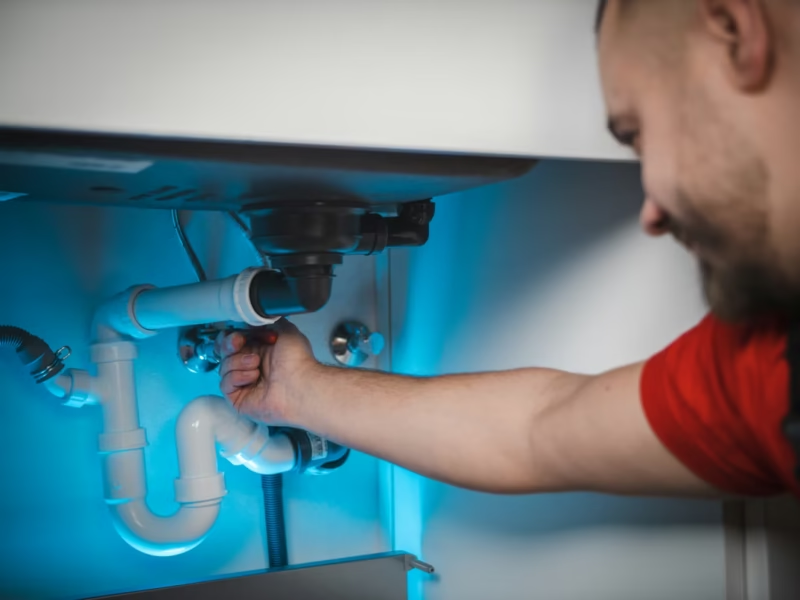
Small plumbing businesses can be highly profitable ventures, but earnings vary significantly based on several factors.
Most small owner-operator plumbing businesses earn between $70,000 and $200,000 annually, while larger operations with multiple crews can generate $300,000 to $900,000 or more in owner benefit.
Understanding what drives these numbers is essential if you’re considering starting or growing your plumbing business.
Your annual profitability depends on your revenue streams, operational expenses, and how efficiently you manage your business.
The plumbing industry offers diverse income opportunities from service calls and emergency repairs to installation projects and maintenance contracts. Each revenue type comes with different profit margins and operational requirements.
This guide breaks down the financial realities of running a small plumbing business. You’ll learn about typical income sources, the expenses that eat into your profits, and practical strategies to maximize your earnings while navigating common industry challenges.
Typical Revenue Streams for Small Plumbing Businesses
Small plumbing businesses typically generate income through four primary channels: residential service work, commercial contracts, emergency calls, and recurring maintenance agreements. Each revenue stream carries different profit margins and scheduling demands that directly impact your annual earnings.
Residential Service Calls
Residential service calls form the backbone of most small plumbing operations. These jobs include routine repairs, fixture installations, water heater replacements, and drain cleaning. You can expect to charge between $150 to $500 per service call depending on complexity and your local market.
Residential work typically delivers gross margins of 55% to 65%, making it one of your most profitable service categories. The work is predictable and allows you to build a loyal customer base through quality service.
Your residential revenue depends heavily on call volume and technician efficiency. A single plumber handling 3-5 service calls daily can generate $200,000 to $300,000 annually. Peak seasons like winter freezes and spring planting create natural demand spikes that boost your yearly intake.
Commercial Contracts
Commercial plumbing contracts provide steadier cash flow compared to residential work. These agreements cover office buildings, retail spaces, restaurants, and small industrial facilities. Your projects might include bathroom renovations, pipe replacements, or system upgrades.
Commercial projects typically yield gross margins of 50% to 60%, slightly lower than residential due to competitive bidding. However, commercial contracts often involve larger job values ranging from $5,000 to $50,000 per project.
The main advantage lies in predictable scheduling and bulk work orders. You can plan your workforce allocation weeks in advance, reducing downtime between jobs. Many commercial clients also require ongoing maintenance, creating opportunities to secure long-term relationships.
Emergency Services
Emergency plumbing commands premium rates because customers need immediate solutions. Burst pipes, sewage backups, and major leaks can’t wait for regular business hours. You can charge 1.5 to 3 times your standard rates for after-hours, weekend, and holiday calls.
Emergency service calls generate profit margins of 40% to 55%, even with higher labor costs for overtime pay. A well-promoted emergency service line can add $30,000 to $75,000 to your annual revenue.
The key is availability and response time. Customers will pay significantly more for a plumber who arrives within an hour versus waiting until the next day. This revenue stream requires strategic scheduling but delivers strong returns per job.
Maintenance Agreements
Maintenance agreements create predictable monthly revenue through scheduled inspections and preventive service. You charge customers a recurring fee, typically $15 to $50 monthly, in exchange for annual checkups, priority scheduling, and service discounts.
Multiple revenue streams help plumbing businesses weather economic uncertainty and reduce dependence on fluctuating service demand. A customer base of 100 maintenance agreements generates $18,000 to $60,000 in guaranteed annual income before any additional service calls.
These contracts also generate upsell opportunities. During routine inspections, you identify repairs and upgrades that customers might not have noticed. The combination of recurring fees and service work makes maintenance agreements particularly valuable for building sustainable business growth.
Key Expenses Impacting Net Profit
Several major expense categories directly affect how much money you keep from each job. Understanding these cost structures helps you identify where profits leak and where you can improve efficiency.
Labor Costs
Labor typically represents your largest operating expense, often accounting for 40-50% of total revenue in plumbing businesses. Monthly payroll can reach $15,833 or higher depending on your team size and service area.
You need to factor in more than just hourly wages. Payroll taxes, workers’ compensation insurance, health benefits, and paid time off add 25-40% on top of base wages. If you pay a plumber $25 per hour, your actual cost approaches $31-35 per hour when including these expenses.
Your labor efficiency directly impacts profitability. When technicians spend excessive time traveling between jobs or waiting for parts, you pay wages without generating billable hours. Most profitable plumbing businesses aim for technicians to spend at least 60-70% of their day on billable work.
Materials and Inventory
Materials and supplies constitute a variable cost that fluctuates with job volume. Pipes, fittings, fixtures, sealants, and specialized equipment can consume 20-30% of your revenue depending on the types of services you provide.
You face a balancing act with inventory management. Stocking too many materials ties up cash and risks obsolescence. Carrying too little inventory means emergency trips to suppliers that waste billable time and may force you to pay premium prices.
Common material cost challenges:
- Price fluctuations in copper, PVC, and other raw materials
- Emergency purchases at retail rather than wholesale prices
- Waste from incorrect measurements or damaged goods
- Theft or misplacement of small but expensive items
Smart purchasing strategies include establishing accounts with multiple suppliers, buying commonly used items in bulk, and implementing inventory tracking systems to reduce waste.
Insurance and Licensing
Insurance protections are non-negotiable expenses that protect your business from catastrophic losses. General liability insurance typically costs $500-1,500 annually for small plumbing operations, while professional liability adds another $400-1,000.
Commercial auto insurance for your work vehicles runs $1,200-2,400 per vehicle per year. Workers’ compensation insurance varies significantly by state but often costs $2-4 per $100 of payroll for plumbing work due to injury risks.
Licensing fees and bond requirements differ by jurisdiction. You’ll pay for master plumber licenses, business permits, contractor bonds, and ongoing continuing education to maintain certifications. These combined expenses typically total $500-2,000 annually but are essential for legal operation.
Vehicle and Transportation Expenses
Vehicle costs extend far beyond monthly payments. Fuel, maintenance, insurance, and depreciation combine to cost $0.50-0.75 per mile when you account for all factors.
A plumbing truck traveling 15,000 miles annually incurs $7,500-11,250 in total vehicle expenses. This includes oil changes, tire replacements, brake work, and eventual replacement costs. Many small plumbing businesses underestimate these expenses by tracking only fuel and major repairs.
Key vehicle-related costs:
- Fuel and routine maintenance
- Commercial vehicle insurance
- Loan or lease payments
- Equipment racks and organization systems
- Vehicle wraps and company branding
- Parking and tolls
Your vehicle serves as a mobile billboard and tool storage unit. Keeping it well-maintained and properly stocked prevents costly delays while creating a professional impression that justifies premium pricing.
Average Profit Margins in the Plumbing Industry
Plumbing businesses typically operate with net profit margins between 10% and 25%, though actual performance varies significantly based on service mix and operational efficiency. Understanding the difference between gross and net margins helps you identify where your business makes money and where costs consume revenue.
Gross Versus Net Margin
Gross profit margin measures what remains after you subtract direct job costs like labor and materials from your revenue. For plumbing businesses, residential service work generates gross margins of 55%-65% while commercial projects typically yield 50%-60%.
Net profit margin reveals your actual profitability after accounting for all expenses, including overhead, insurance, vehicle costs, and administrative expenses. This number shows the real financial health of your business. Service calls produce net margins of 40-55%, while new construction work averages just 10-18%.
The gap between your gross and net margins indicates how well you control overhead costs. If you have strong gross margins but weak net margins, your operational expenses are likely too high relative to your revenue.
Industry Benchmarks
Most plumbing businesses achieve net profit margins between 5% and 12%, while top-performing companies reach 15%-20% or higher. Your margin depends heavily on your service mix and pricing strategy.
Different job types produce different profitability levels. Emergency and service calls generate the highest margins, while competitive bidding on new construction projects typically yields the lowest returns. Labor costs represent your largest expense at 30%-40% of total revenue, making efficient scheduling and productivity critical to profitability.
Factors Influencing Annual Profitability
Your plumbing business’s profitability depends on where you operate, when customers need services, and how you’ve structured your company. These three factors create significant variations in annual earnings across the industry.
Geographic Location and Market Size
Your location directly impacts what you can charge and how much work is available. Plumbers in major metropolitan areas typically command higher rates due to increased cost of living and stronger demand for services.
Urban markets offer consistent year-round work and higher population density, which means shorter travel times between jobs. Rural areas may have less competition but also fewer potential customers and longer distances between service calls.
Local building codes and licensing requirements vary by state and municipality, affecting your operational costs. Some regions require additional certifications or insurance coverage that increase overhead expenses.
Market rates for common services like drain cleaning or water heater installation can differ by 50% or more between expensive coastal cities and smaller inland communities. Your revenue per plumber reflects these geographic pricing differences, with each technician generating between $150,000 and $250,000 annually depending on local conditions.
Seasonal Demand Fluctuations
Your revenue varies throughout the year based on weather patterns and seasonal needs. Winter months typically bring frozen pipe emergencies and heating system failures, while summer increases demand for outdoor plumbing work and air conditioning repairs.
Emergency calls during peak seasons allow you to charge premium rates for immediate service. However, slower periods require careful cash flow management to cover fixed costs like vehicle payments and insurance.
New construction projects follow seasonal patterns in most regions, with activity peaking in spring and summer. If you focus on residential new builds, you’ll need to plan for reduced work during winter months in many areas.
Smart scheduling and diversified service offerings help smooth out seasonal fluctuations. Offering both emergency repairs and planned maintenance contracts provides steadier income throughout the year.
Business Structure and Size
Your company size dramatically affects profitability potential. Owner-operator businesses keep more revenue but face capacity limits, while multi-crew operations require more management but can scale revenue significantly.
Single-operator businesses maintain lower overhead and typically see net profit margins of 20-35%. You handle all work directly and keep the full profit from each job, though your earning capacity is limited by available working hours.
Small companies with 2-5 employees can serve more customers simultaneously but face added expenses for payroll, workers’ compensation insurance, and additional vehicles. Owner-operator plumbing businesses may earn $70,000 to $200,000 annually while managing these increased costs.
Larger operations with multiple crews can generate $300,000 to $900,000 or more in owner benefit by leveraging employee productivity. However, you’ll spend more time on management and less on direct service work.
Strategies to Increase Annual Earnings
Raising your plumbing business revenue requires strategic adjustments to how you price services and what services you offer to customers.
Improving Pricing Models
Your pricing structure directly impacts profitability. Many plumbing businesses leave money on the table by underpricing services or failing to account for all costs in their estimates.
Job costing and tiered pricing models help you achieve net profit margins between 20% and 35%. You need to calculate labor costs, material expenses, overhead, and desired profit margin for each job type. Consider implementing flat-rate pricing instead of hourly rates, which gives customers price certainty and often increases your average ticket size.
Review your pricing annually against market rates and adjust for inflation, rising material costs, and increased business expenses. Add service tiers that offer basic, standard, and premium options for common repairs. This approach lets customers choose their budget level while increasing your revenue per call.
Key pricing components to track:
- Labor costs per technician hour
- Material markup percentages
- Overhead allocation
- Competitive market rates
- Profit margin targets
Diversifying Service Offerings
Expanding beyond basic repairs creates multiple revenue streams. Adding specialized services attracts new customer segments and increases revenue from existing clients.
Consider offering water heater installations, sewer line inspections with camera equipment, backflow prevention testing, or preventive maintenance contracts. Maintenance agreements provide predictable monthly income and keep you connected with customers year-round.
Emergency services command premium pricing, often 1.5 to 2 times standard rates. If you can staff evening and weekend calls, this becomes a significant profit center. Commercial contracts offer larger job values and consistent work compared to residential one-off repairs.
Training your technicians in complementary skills like gas line work or fixture upgrades makes each service call more valuable. You can complete multiple services in one visit, reducing your cost per job while increasing customer convenience.
Common Challenges Faced by Small Plumbing Owners
Small plumbing business owners face significant obstacles that directly impact their bottom line, from competing against established companies with deeper resources to navigating complex regulatory requirements that vary by jurisdiction.
Competition from Larger Companies
Larger plumbing companies have advantages that make competition difficult for small operators. They can afford extensive advertising campaigns, maintain multiple service vehicles, and offer 24/7 availability that smaller businesses struggle to match.
Big companies often secure commercial contracts and property management deals through established relationships and bulk pricing. You may find yourself competing on price alone, which erodes your profit margins. Many plumbing businesses stall between $500K and $1.5M in revenue because adding capacity feels risky when larger competitors dominate the market.
Your advantage lies in personalized service and local reputation. Building strong customer relationships and specializing in residential work or niche services can help you carve out sustainable market share. However, you must maintain consistent quality and response times to retain clients who might otherwise choose larger firms for perceived reliability.
Regulatory Compliance Issues
Plumbing businesses must comply with licensing requirements, permit processes, and safety regulations that vary by state and municipality. You need to maintain proper insurance coverage, worker’s compensation policies, and bonding requirements to operate legally.
Code compliance adds complexity to every job. You must stay current on changing building codes, water conservation standards, and environmental regulations. Failing to pull proper permits or meet inspection requirements can result in fines, project delays, and liability issues.
Documentation requirements consume time that could be spent on revenue-generating activities. You need to track licenses, certifications, continuing education credits, and employee qualifications while maintaining detailed records for warranty and liability purposes.
Long-Term Outlook and Growth Opportunities
The plumbing industry shows strong growth potential for your business. The U.S. plumbing and HVAC market reached $252.8 billion in 2023 and is projected to grow to $366.3 billion by 2028, indicating sustained demand for plumbing services.
You can capitalize on several growth opportunities as a small plumbing business owner:
Emerging Market Opportunities
- Smart home technology integration and installation services
- Water conservation system installations
- Energy-efficient fixture upgrades
- Preventive maintenance contracts for recurring revenue
The plumbing industry in the United States is estimated to generate $169.8 billion in total revenue in 2026, creating substantial opportunities for you to increase your market share.
Your ability to scale operations directly impacts your earning potential. Small owner-operator businesses typically earn $70,000 to $200,000 annually, while larger companies with multiple crews can generate $300,000 to $900,000 or more in owner benefit.
Key Growth Strategies
- Adding licensed plumbers to increase capacity
- Expanding service offerings beyond basic repairs
- Building commercial client relationships
- Implementing digital marketing to reach more customers
Each additional plumber you hire can generate between $150,000 and $250,000 in annual revenue, making strategic hiring a powerful growth lever for your business. The increasing demand for plumbing services positions your business well for long-term profitability and expansion.
Financial Management and Success Metrics
Sound financial management forms the foundation that supports your plumbing business growth and long-term sustainability. You need to track specific metrics beyond total revenue to understand whether your business is actually profitable.
Core KPIs You Should Monitor
Tracking revenue alone means you’re flying blind. You need to measure whether your technicians are efficient, whether your marketing works, and whether you’ll have cash for payroll.
The most critical metrics include:
- Gross profit margin after parts and materials
- Revenue per technician to measure productivity
- Labor cost percentage to identify inefficiencies
- Job contribution margin for each service call
- EBITDA trends to track profitability over time
Regular monitoring of these financial metrics helps you make informed decisions that drive growth and increase profitability. You should review your dashboard weekly or monthly rather than waiting until year-end.
Implementing Effective Tracking Systems
The best approach involves setting up systems that notify you when metrics fall outside acceptable ranges. This allows you to address problems quickly before they impact your bottom line.
Measuring and managing key performance indicators separates plumbing businesses that grow consistently from those that struggle. You need both the tracking system and the discipline to act on what the data tells you about your operations.


