
Lexus RX 350 vs Acura MDX: Which SUV Costs Less to Own? A Complete Ownership Cost Comparison
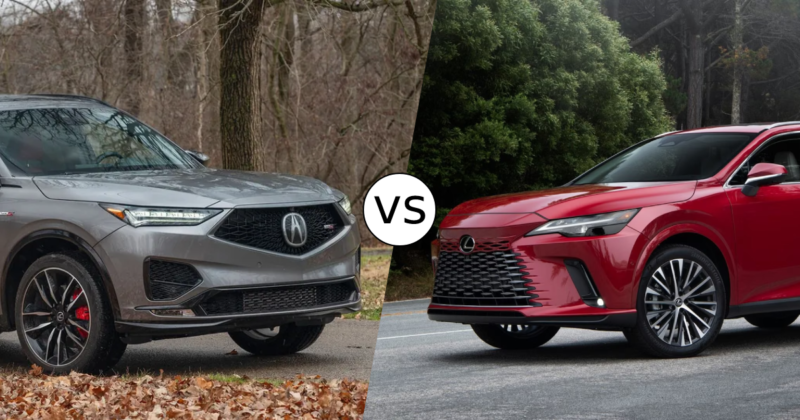
The luxury SUV market presents tough choices, and the 2026 Lexus RX 350 versus the 2026 Acura MDX comparison reveals two compelling options with different ownership costs.
The Lexus RX 350 starts at $60,885 while the Acura MDX begins at $68,380, creating a $7,495 price difference before you consider long-term ownership expenses like fuel, maintenance, and depreciation.
Understanding which vehicle delivers better value requires looking beyond the sticker price. Your total cost of ownership depends on multiple factors that vary between these two Japanese luxury SUVs.
The RX 350 offers 275 horsepower and achieves 24 MPG, while the MDX provides 290 horsepower but gets 21 MPG according to detailed specification comparisons. These differences in power and efficiency directly impact your wallet over the years you own the vehicle.
Choosing between these models means weighing upfront savings against ongoing expenses. Your decision should account for how each SUV holds its value, what you’ll spend at the pump, and how maintenance costs accumulate. This analysis breaks down every major cost category to show you which SUV truly costs less to own over time.
Purchase Price Comparison
The 2026 Lexus RX 350 starts at a lower price point than the 2026 Acura MDX, with a gap of several thousand dollars between their base models. Both vehicles offer multiple trim levels that can significantly affect the final purchase price, and incentives vary by region and timing.
Base MSRP Differences
The 2026 Lexus RX 350 starts at $60,885, while the 2026 Acura MDX begins at $68,380. This represents a price difference of $7,495 in favor of the Lexus.
The RX 350 offers seating for five passengers in its standard configuration. The MDX provides three rows and seating for up to seven passengers as standard equipment, which partially explains the higher entry price.
Your choice between these base models depends on whether you need the additional seating capacity. The MDX delivers more utility for families requiring third-row access, while the RX 350 appeals to buyers prioritizing a lower initial investment.
Trim Levels and Pricing Options
Both manufacturers offer multiple trim configurations that increase prices substantially above base models. The Lexus RX 350 lineup includes Premium, Luxury, and F Sport variants, each adding features like upgraded audio systems, enhanced safety technology, and premium materials.
The Acura MDX range spans from the base model through Technology, A-Spec, Advance, and Type S trims. Higher trims incorporate features such as adaptive suspension, premium leather, advanced driver assistance, and performance upgrades in the Type S model.
Fully loaded versions of either vehicle can exceed $70,000 to $75,000 depending on selected options. You’ll find that comparable trim levels between the two models often narrow the price gap seen at the base level.
Available Incentives and Discounts
Manufacturer incentives fluctuate throughout the model year and vary by geographic location. Acura and Lexus typically offer lease deals, financing rates, and occasional cash rebates during specific promotional periods.
You may find better lease rates on the RX 350 due to its historically stronger residual values. The MDX sometimes receives more aggressive cash incentives to offset its higher base price. Regional dealers may provide additional discounts beyond manufacturer programs, particularly on outgoing model year inventory.
Depreciation Rates
Both vehicles retain value differently over time, with the Lexus RX 350 generally maintaining a stronger position in the resale market compared to the Acura MDX. Understanding these depreciation patterns helps you predict your ownership costs more accurately.
Expected Resale Value
The Lexus RX 350 typically depreciates at a slower rate than the Acura MDX, which means you’ll recover more of your initial investment when you sell. Industry data shows that luxury SUVs lose approximately 40-50% of their value within the first five years, but the RX 350 consistently performs better than this average.
Your MDX will likely depreciate faster, particularly in the first three years of ownership. This gap in resale value retention can amount to thousands of dollars depending on your model year and mileage.
When you compare the two vehicles, the RX 350 often maintains 5-8% more of its original value after five years. This advantage translates to lower total ownership costs even if the initial purchase price is higher.
Brand Reputation and Value Retention
Lexus benefits from a stronger reputation for reliability and longevity, which directly impacts your vehicle’s resale value. Buyers in the used market are willing to pay more for the RX 350 because of the brand’s track record for dependability.
Acura offers solid build quality, but the brand doesn’t command the same premium in the resale market. Your MDX will face more competition from other luxury brands, which puts downward pressure on prices.
The comparison between these luxury SUVs shows that brand perception plays a significant role in depreciation rates. Consumer confidence in Lexus translates to better value retention across all model years.
Fuel Efficiency Analysis
The Lexus RX 350 generally delivers better fuel economy than the Acura MDX, with the RX 350 hybrid variant offering the most significant advantage. Both vehicles require premium fuel, but their tank capacities and real-world consumption patterns differ based on driving conditions and powertrain choices.
EPA Ratings for City and Highway Driving
The Lexus RX 350 with front-wheel drive achieves an EPA-estimated 22 mpg city and 29 mpg highway, with a combined rating of 25 mpg. When you opt for all-wheel drive, those numbers drop slightly to 21 mpg city and 28 mpg highway for a 24 mpg combined rating.
The Acura MDX delivers 19 mpg city and 26 mpg highway with its standard all-wheel drive system, resulting in a combined 22 mpg. This difference in fuel efficiency gives the RX 350 a clear advantage for daily commuting costs.
If you choose the Lexus RX 350h hybrid, you’ll see a substantial improvement with EPA ratings of 37 mpg city and 34 mpg highway for a combined 36 mpg. The MDX doesn’t currently offer a hybrid variant, limiting your efficiency options.
Real-World Fuel Consumption
Your actual fuel consumption will vary from EPA estimates depending on driving habits and conditions. The RX 350 typically performs close to its EPA ratings in mixed driving, with owners reporting averages between 23-26 mpg combined.
The MDX’s larger engine and heavier curb weight generally result in slightly lower real-world numbers than its EPA ratings. You can expect around 20-22 mpg in combined driving under normal conditions.
Highway driving favors both vehicles, where you’ll likely achieve or exceed the EPA highway estimates. City driving with frequent stops will push both SUVs toward the lower end of their efficiency ranges, though the RX 350h maintains superior economy in all conditions.
Fuel Type and Tank Capacity
Both the Lexus RX 350 and Acura MDX require premium unleaded gasoline, which adds to your ownership costs compared to vehicles running on regular fuel. This requirement is consistent across all trim levels for both models.
The RX 350 features a 17.2-gallon fuel tank, giving you a theoretical range of approximately 412 miles combined on a single tank. The MDX comes with a larger 19.5-gallon tank, providing roughly 429 miles of combined range despite its lower fuel economy.
Your fuel stops will be less frequent with the MDX due to its larger tank, but you’ll spend more per fill-up and make more visits to the pump over time. The RX 350h offers the best range potential with its efficient hybrid powertrain paired with its fuel capacity.
Maintenance and Reliability
The Lexus RX 350 typically costs less to maintain over time and experiences fewer repair issues than the Acura MDX. Both vehicles offer competitive warranty protection, though their coverage terms differ in key areas.
Scheduled Service Costs
Lexus dealerships charge approximately $120-150 for routine oil changes and basic service appointments for the RX 350. The Acura MDX has similar service pricing, ranging from $110-140 per visit for standard maintenance.
Your RX 350 requires synthetic oil changes every 10,000 miles under normal driving conditions. The MDX follows a 7,500-mile service interval for oil changes. Over five years, you’ll spend roughly $600-750 on routine maintenance for the Lexus versus $800-1,000 for the Acura due to more frequent service visits.
Major services at 30,000 and 60,000 miles cost between $400-600 for the RX 350. The MDX’s comparable service intervals run $450-650. Brake fluid, transmission fluid, and coolant changes add similar costs to both vehicles around these mileage markers.
Common Repair Expenses
Which vehicle ages better shows the RX 350 maintains better resale value partly due to lower repair costs. Transmission-related repairs on the MDX can reach $3,000-4,500, while the RX 350’s transmission issues are less frequent and typically cost $2,500-3,500 when they occur.
Suspension components wear differently between these models. Your RX 350 may need shock absorber replacements around 80,000-100,000 miles at $800-1,200 per pair. The MDX often requires suspension work earlier, around 60,000-80,000 miles, with similar pricing.
Electronics and infotainment repairs cost $500-1,500 for both vehicles. The MDX’s more complex all-wheel-drive system can require repairs costing $1,200-2,000, while the RX 350’s simpler AWD setup typically needs less frequent attention.
Warranty Coverage Details
Both manufacturers provide a 4-year/50,000-mile basic warranty and 6-year/70,000-mile powertrain coverage. Lexus includes complimentary maintenance for the first 2 years or 25,000 miles, while Acura does not offer free scheduled maintenance.
Your Acura comes with roadside assistance for 4 years with unlimited miles. Lexus matches this with 4-year roadside assistance but limits it to the basic warranty mileage. Extended warranty options cost $1,500-3,000 for either brand, depending on coverage level and deductible amount.
Insurance Premiums
Insurance costs differ notably between these two luxury SUVs, with the Acura MDX typically commanding higher premiums than the Lexus RX 350. Your annual insurance expenses will vary based on several vehicle-specific and personal factors.
Factors Affecting Insurance Costs
Your insurance rates depend on repair costs, safety features, and the typical driver profile for each model. The MDX generally faces higher premiums because it costs more to repair and replace parts compared to the RX 350.
Both vehicles come equipped with advanced safety technologies that can help reduce your rates. Features like automatic emergency braking, lane departure warning, and adaptive cruise control may qualify you for discounts with many insurers.
Your personal factors play an equally important role. Your age, driving record, location, and credit score all influence your final premium. Teen drivers will see significantly higher rates, making model-year specificity crucial for accurate insurance quotes.
The SUV classification affects both models similarly, as SUVs cost more to insure due to higher repair costs and accident severity.
Typical Annual Rates
The Acura MDX Type S Advance AWD costs an average of $2,586 per year to insure, making it the most expensive variant. Base MDX models typically cost less but still exceed RX 350 rates.
The Lexus RX 350 generally offers lower insurance premiums across its trim levels. The RX ranks 118th out of 256 SUVs for insurance affordability, placing it in the middle tier range.
Your specific rate will vary by insurer and trim level. Comparing quotes from multiple insurance companies is essential, as rates can differ by hundreds of dollars annually for the same coverage.
Financing and Leasing Options
Both the Lexus RX 350 and Acura MDX offer competitive financing programs through their respective captive lenders, though rates and lease terms vary based on creditworthiness and regional incentives. The manufacturers periodically adjust their promotional offers to remain competitive in the luxury SUV segment.
Interest Rates and Terms
Lexus Financial Services and Acura Financial Services both provide financing options with terms typically ranging from 36 to 72 months. Your actual interest rate depends on your credit score, down payment, and the specific promotional period when you purchase.
Lexus frequently offers special APR financing on the RX 350, with qualified buyers sometimes accessing rates as low as 2.9% to 4.9% APR on select terms. Acura similarly provides competitive rates on the MDX, often matching or closely aligning with Lexus offerings during major sales events.
The longer 72-month terms reduce your monthly payment but increase total interest paid over the loan period. Shorter 36 or 48-month terms result in higher monthly payments but less interest overall. Both manufacturers allow early payoff without penalties, giving you flexibility if your financial situation changes.
Lease Deals and Residual Values
The RX 350 typically commands higher residual values than the MDX, which translates to lower monthly lease payments for comparable trim levels. Lexus vehicles historically retain 45-50% of their value after a standard 36-month lease, while the MDX typically retains 42-47%.
Your lease payment calculations depend on the residual value, money factor (interest rate), and capitalized cost. Lexus often advertises lease deals on the RX 350 starting around $500-600 per month with approximately $3,500-4,000 due at signing. Acura’s MDX lease programs typically require similar down payments but may run $50-100 higher monthly due to lower residuals.
Mileage allowances for both manufacturers standard at 10,000 or 12,000 miles annually, with excess mileage charges ranging from $0.15 to $0.25 per mile.
Taxes and Registration Fees
When you purchase either the Lexus RX 350 or Acura MDX, you’ll face similar tax obligations based on your local sales tax rate and the vehicle’s purchase price. The exact amount depends on your state and municipality.
Registration fees vary significantly by state and are typically calculated based on the vehicle’s value, weight, or a combination of factors. Both SUVs fall into similar weight classes, so registration costs should be comparable in most jurisdictions.
Key Cost Factors:
- Sales tax – Applied to the full purchase price
- Annual registration – Renews yearly in most states
- Title fees – One-time charge when you take ownership
- License plate fees – Initial issuance costs
The Lexus RX 350 generally has a slightly lower starting MSRP than the three-row Acura MDX, which means you’ll pay less in sales tax upfront. This difference can amount to several hundred dollars depending on your local tax rate.
Some states assess annual registration fees based on vehicle value. In these locations, the lower-priced RX 350 may cost less to register each year. However, states that use weight-based systems will charge similar amounts since both vehicles weigh approximately the same.
You should also consider that luxury vehicles sometimes face higher registration fees in certain states. Both the 2026 Acura MDX and 2026 Lexus RX are classified as luxury SUVs, so this factor affects them equally.
Contact your local DMV to get precise registration costs for your specific location before making your final purchase decision.
Cost of Ownership Over Time
The Acura MDX and Lexus RX 350 differ significantly in their long-term financial impact, with maintenance expenses and depreciation patterns varying between the two luxury SUVs.
Five-Year Total Cost Estimates
When you calculate maintenance costs over a five-year period, the MDX averages $5,471 compared to $6,617 for the Lexus RX. This gives the Acura a notable advantage of roughly $1,146 in savings during this timeframe.
Your routine service visits will cost less with the MDX initially. However, Acura’s warranty coverage period is shorter than Lexus, which means you’ll start paying for maintenance out of pocket sooner.
The MDX’s consistent reliability and lower baseline repair costs can balance out the warranty difference over a 5-7 year ownership period. Your actual costs will depend heavily on your driving habits and whether you keep the vehicle beyond the warranty period.
Long-Term Value Assessment
The Lexus RX demonstrates superior aging characteristics with better depreciation curves and lower long-term maintenance expenses. You’ll experience fewer expensive repairs and better interior longevity with the RX.
Depreciation particularly favors the Lexus brand. Your RX 350 will retain more of its original value when you decide to sell or trade it in.
The interior materials in the RX hold up better over time, maintaining a more premium feel years into ownership. You won’t see the same wear patterns that can appear in the MDX after extended use.
Summary of Key Findings
The 2026 Acura MDX and Lexus RX comparison reveals important cost differences you should consider. The base MDX starts at a higher price point than the RX 350, with a price gap of approximately $14,775 according to trim comparison data.
Fuel Economy Differences
The RX 350 offers better fuel efficiency at 24 MPG combined compared to the MDX’s 21 MPG. This translates to lower annual fuel costs over the life of your vehicle.
Seating and Space
The MDX provides three rows of seating, accommodating up to seven passengers. The RX 350 is a two-row SUV designed for five occupants, which affects its positioning in the midsize luxury SUV segment.
Performance Specifications
You get 290 horsepower with the MDX’s standard engine versus 275 horsepower in the RX 350. Both vehicles deliver adequate power for daily driving and highway merging.
Market Position
These two models dominate luxury crossover sales, ranking as top sellers in their class. Your choice depends on whether you need third-row seating and can manage slightly higher fuel costs, or prefer better efficiency with a lower entry price. The vehicles serve different family sizes and budgets despite competing in adjacent market segments.


