Tesla Model S vs BMW 5 Series: Which Is Better for Daily Driving? Comparison of Comfort, Cost, and Performance
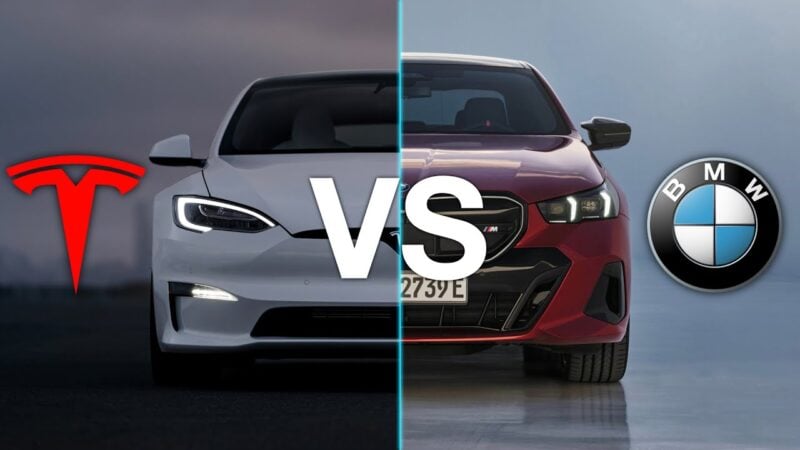
The electric sedan market has evolved dramatically, and choosing between a luxury performance sedan and a cutting-edge electric vehicle no longer means sacrificing practicality.
Both the Tesla Model S and BMW 5 Series rank among the top executive sedans, but they take fundamentally different approaches to delivering a premium daily driving experience.
For most daily drivers, the Tesla Model S offers superior efficiency and lower operating costs, while the BMW 5 Series provides more powertrain flexibility and a traditional luxury car experience.
The Tesla Model S achieves 127 MPGe in city driving compared to the BMW 5 Series’ 28 MPG, making it significantly more economical for regular commuting. However, your choice depends on your specific priorities, charging infrastructure access, and what you value most in a daily driver.
Understanding how these vehicles perform in real-world conditions requires looking beyond basic specifications. Your decision should account for comfort during rush hour traffic, technology that simplifies your routine, long-term ownership costs, and how each vehicle fits into your lifestyle.
This comparison examines both sedans across the factors that matter most for everyday use. Which car will we choose? Let’s find out!
Daily Commuting Comfort and Convenience
The Tesla Model S offers a minimalist interior with a 17-inch touchscreen and spacious seating for five, while the BMW 5 Series provides traditional luxury materials and ergonomic design rooted in decades of sedan refinement.
Seating Ergonomics and Cabin Space
The BMW 5 Series delivers highly adjustable front seats with multiple power settings, lumbar support, and optional massage functions that reduce fatigue during long commutes. You’ll find the seat bolstering strikes a balance between support and comfort for various body types.
The Tesla Model S provides vegan leather seating as standard with heated front and rear seats. The front seats are comfortable but offer less adjustment range compared to the BMW. You get more headroom in the Tesla due to its liftback design, and the lack of a transmission tunnel creates additional foot space for rear passengers.
Both vehicles seat five adults, though the BMW 5 Series offers 520 liters of boot capacity compared to the Model S’s 793 liters. The Tesla’s front trunk adds extra storage for daily items like gym bags or groceries.
Climate Control Performance
The Model S uses a heat pump system with tri-zone climate control managed through the central touchscreen. You can precondition the cabin remotely through the Tesla app before you enter the vehicle, which proves useful during extreme weather.
The BMW 5 Series features four-zone automatic climate control on higher trims with physical buttons and dials for quick adjustments. You don’t need to navigate through screen menus to change temperature settings while driving. The system maintains consistent cabin temperatures efficiently.
Both systems perform well, but the BMW’s physical controls allow you to make changes without taking your eyes off the road.
Infotainment Systems and Connectivity
The Tesla Model S centers everything around its 17-inch vertical touchscreen running proprietary software. You access nearly all vehicle functions through this display, including adjusting mirrors, opening the glovebox, and changing drive modes. The system includes navigation with real-time traffic, streaming services like Spotify and Netflix, and arcade games. Over-the-air updates add new features regularly.
The BMW 5 Series uses the iDrive 8 system with a curved display housing a 12.3-inch instrument cluster and 14.9-inch touchscreen. You can control functions through the touchscreen, physical iDrive controller, or voice commands. The system supports wireless Apple CarPlay and Android Auto, which the Tesla does not offer.
Both vehicles provide premium sound systems, though the Model S achieves better efficiency ratings at 127 MPGe city versus the BMW’s 28 MPG in traditional combustion variants.
Driving Experience and Ride Quality
The Tesla Model S delivers instant electric torque and a tech-focused cabin, while the BMW 5 Series offers traditional performance dynamics with refined comfort. Your choice depends on whether you prioritize futuristic acceleration or classic driving engagement.
Handling in Urban and Highway Settings
The Tesla Model S provides immediate throttle response thanks to its electric motors, making it exceptionally quick in urban traffic. You can merge onto highways with confidence as the acceleration is instantaneous across all speed ranges.
The BMW 5 Series uses traditional combustion engines that deliver power differently, with a more gradual buildup that some drivers find more predictable. Its steering offers better road feedback compared to the Model S, which uses an electrically assisted system that feels lighter and less communicative.
On highways, the BMW 5 Series maintains stability at high speeds with its balanced chassis tuning. The Model S excels at effortless cruising with its one-pedal driving mode, which lets you slow down by lifting off the accelerator. Both vehicles handle well in city environments, though the BMW’s more direct steering may give you better control in tight situations.
Suspension and Noise Isolation
The Tesla Model S gets 127 MPGe in efficiency but also benefits from its electric powertrain’s quiet operation. You won’t hear engine noise, though wind and tire sounds become more noticeable at highway speeds.
The BMW 5 Series features adaptive suspension options that adjust damping based on road conditions and your selected drive mode. You can choose between comfort-oriented settings for daily commutes or sportier configurations for more engaging drives.
Road imperfections are absorbed well by both vehicles. The Model S uses air suspension on higher trims, which smooths out bumps effectively. The BMW’s suspension tuning leans slightly toward sportiness while maintaining comfort for long drives.
Maneuverability and Parking
The Tesla Model S measures over 196 inches long, which can make tight parking spots challenging. Its large turning radius requires more space for U-turns compared to smaller sedans.
The BMW 5 Series is similarly sized but includes standard parking sensors and available camera systems that help you navigate cramped spaces. Both vehicles offer automated parking features on certain trims, though the Tesla’s Autopilot-related parking assistance is more advanced.
Your rearward visibility in the Model S benefits from its camera system, while the BMW provides better traditional sightlines. The Model S’s lighter steering makes low-speed maneuvering easier despite its size.
Performance and Powertrain Choices
The Tesla Model S delivers pure electric power with instant torque, while the BMW 5 Series offers multiple engine configurations including traditional gasoline and diesel options. Your choice depends on whether you prioritize immediate acceleration or prefer a conventional powertrain experience.
Acceleration and Responsiveness
The Tesla Model S base engine makes 670 horsepower, dwarfing the BMW 5 Series’ base engine output of 255 horsepower. This massive power advantage translates to significantly quicker acceleration in the Tesla, with instant torque delivery the moment you press the accelerator pedal.
The BMW 5 Series provides a more traditional performance feel with gradual power buildup. You’ll notice engine noise and vibration that many drivers find engaging, especially in performance-oriented M variants. The 5 Series requires time for turbochargers to spool up and reach peak power.
Key Performance Differences:
- Tesla Model S: Instant torque, silent acceleration, single-speed transmission
- BMW 5 Series: Progressive power delivery, engine feedback, traditional acceleration characteristics
Your daily commute in the Tesla feels effortless with rapid overtaking capability. The BMW offers a more connected driving experience through audible and tactile feedback from its internal combustion engine.
Transmission Options and Drive Modes
The Tesla Model S uses a single-speed direct-drive transmission that eliminates gear changes entirely. You won’t feel any shift points or transmission hunting during acceleration or highway cruising. The all-wheel-drive system distributes power between front and rear motors electronically.
The BMW 5 Series comes with an 8-speed automatic transmission that adapts to your driving style. You can select different drive modes that adjust throttle response, transmission shift points, and steering weight. Manual shifting via paddle shifters gives you direct control over gear selection when desired.
Both vehicles offer customizable driving modes for various conditions. The Tesla adjusts regenerative braking strength and acceleration responsiveness through its touchscreen interface. The BMW’s drive mode selector changes multiple vehicle parameters simultaneously, from suspension stiffness to transmission behavior.
Technology and Driver Assistance Features
Both vehicles offer sophisticated technology packages, but they take different approaches to driver assistance and connectivity. The Tesla emphasizes over-the-air updates and autonomous driving capabilities, while the BMW focuses on refined traditional features with modern enhancements.
Advanced Safety Technologies
The Tesla Model S comes standard with eight cameras, twelve ultrasonic sensors, and forward-facing radar that enable automatic emergency braking, collision warning, and blind spot monitoring. You get lane departure avoidance, obstacle-aware acceleration, and emergency lane departure avoidance as part of the basic package.
The BMW 5 Series offers a comprehensive safety suite that includes forward collision warning, automatic emergency braking, and lane departure warning as standard equipment. You can upgrade to the Driver Assistance Professional Package for features like active lane keeping, extended traffic jam assistant, and evasive aid that helps you steer around obstacles.
Autopilot vs Driving Assistance Systems
Tesla’s Autopilot handles highway driving with adaptive cruise control and lane centering, though you must keep your hands on the wheel and remain attentive. The comparison of driver assist systems shows varying performance across manufacturers. Full Self-Driving capability costs extra and adds features like automatic lane changes, navigate on autopilot, and traffic light recognition.
BMW’s Driving Assistant Professional provides similar functionality with active steering and lane control on highways. The system uses a driver-facing camera to monitor attention levels and will disengage if you don’t respond to prompts. You get smoother lane centering and more natural steering inputs compared to earlier systems, though the technology requires similar driver engagement as Tesla’s Autopilot.
Operating Costs and Fuel Efficiency
The Tesla Model S delivers significantly lower operating expenses compared to the BMW 5 Series, primarily through reduced energy and maintenance costs. The difference in five-year operating costs can exceed $24,000 between these vehicles.
Charging vs Refueling Convenience
You’ll find distinct differences in how you power each vehicle. The Tesla Model S charges at home overnight using a standard 240-volt outlet or dedicated wall connector, allowing you to start each day with a full battery. Public charging networks provide additional options during longer trips.
The BMW 5 Series requires regular gas station visits, typically every 400-500 miles depending on your driving habits. While refueling takes only 5 minutes compared to 30-45 minutes for DC fast charging, you’ll need to factor in dedicated trips to gas stations. Home charging eliminates this inconvenience for most daily driving scenarios with the Tesla.
Your lifestyle determines which approach works better. If you have consistent access to home charging, the Tesla offers superior convenience for daily commutes.
Electricity Costs vs Gasoline Expenses
The cost difference between electricity and gasoline creates substantial savings over time. Charging a Tesla Model S typically costs $0.04-$0.06 per mile based on average residential electricity rates, while the BMW 5 Series costs $0.12-$0.18 per mile with current gasoline prices.
For a 100-mile daily commute, you’ll spend approximately $150-$180 monthly on electricity versus $360-$540 on gasoline. These figures translate to annual fuel savings of $2,500-$4,300 with the electric vehicle.
Your actual costs vary based on local electricity rates and driving conditions. Time-of-use utility plans can reduce charging costs further if you charge during off-peak hours.
Routine Maintenance Requirements
The Tesla Model S requires minimal routine maintenance. You’ll need tire rotations, brake fluid checks, and cabin air filter replacements. Regenerative braking extends brake pad life significantly, often lasting over 100,000 miles.
The BMW 5 Series demands more frequent attention. You’ll schedule regular oil changes every 10,000 miles, transmission service, spark plug replacements, and more frequent brake servicing. The Tesla Model S has a reliability rating of 8.2 out of 10 compared to the BMW’s lower score.
Your maintenance budget differs substantially between these vehicles. The electric drivetrain eliminates most wear items found in traditional engines, reducing both service frequency and costs.
Practicality for Everyday Needs
The Tesla Model S offers a boot capacity of 793 liters, while the BMW 5 Series provides 520 liters of standard trunk space. Both vehicles accommodate rear passengers comfortably, though they differ in how you access and configure the rear seating area.
Cargo Capacity and Storage Solutions
The Model S gives you significantly more cargo space with its 793-liter capacity compared to the 5 Series’ 520 liters. Tesla’s hatchback design provides a major advantage when loading larger items like golf clubs, luggage, or equipment. You can fold down the rear seats for even more flexibility.
The BMW follows a traditional sedan layout with a separate trunk opening. This configuration limits what you can fit through the opening, even though the depth is reasonable. However, the 5 Series makes up some ground with better small-item storage throughout the cabin, including larger door pockets and a more conventional center console.
Both vehicles offer front trunk storage, though the Model S provides a larger frunk since it lacks a traditional engine. You’ll find this extra compartment useful for storing charging cables or items you want separated from your main cargo area.
Rear Seat Access and Usability
The BMW 5 Series provides easier rear seat entry thanks to its traditional door configuration and slightly higher roofline. Your rear passengers will appreciate the simple ingress and egress.
The Model S features a lower, more streamlined roofline that can make getting in and out slightly more challenging for taller passengers. Once seated, both vehicles offer comparable legroom and headroom for adults. The Tesla’s glass roof creates an airier feeling, while the BMW’s rear climate controls give passengers more direct control over their comfort settings.
Ownership Experience and Longevity
Tesla offers a 4-year/50,000-mile basic warranty and an 8-year/150,000-mile battery and drive unit warranty, while BMW provides a 4-year/50,000-mile comprehensive warranty with no separate powertrain coverage beyond that period.
Warranty Coverage and Support
Tesla’s extended battery and drive unit warranty gives you significantly more peace of mind for the most expensive components of the vehicle. This 8-year coverage applies regardless of which Model S variant you choose.
BMW’s warranty matches Tesla for basic coverage at 4 years or 50,000 miles. However, once that period expires, you’re responsible for all repairs including engine and transmission work on traditional models. The 5 Series does include complimentary scheduled maintenance for 3 years or 36,000 miles, which Tesla doesn’t offer.
For service, BMW has an extensive dealer network with trained technicians familiar with decades of vehicle engineering. Tesla relies on fewer service centers and mobile technicians, though the electric drivetrain requires less frequent maintenance overall. You’ll find BMW parts more readily available through third-party suppliers, while Tesla parts typically come directly from the manufacturer.
Long-Term Reliability
The Model S has fewer mechanical components than the 5 Series, eliminating common failure points like transmissions, exhaust systems, and timing belts. However, Tesla owners report concerns about build quality issues and electronic glitches that can affect the ownership experience.
BMW has established reliability data spanning decades, though the 5 Series shows average reliability compared to luxury competitors. You’ll face higher maintenance costs with oil changes, brake replacements, and engine servicing. The Model S battery degradation typically ranges from 5-10% over the first 100,000 miles, maintaining most of its range capacity well into its lifespan.
Resale Value and Depreciation Factors
When you’re considering long-term ownership costs, depreciation plays a major role in your total investment. The Tesla Model S has experienced significant value loss over time, with studies showing it had the third-highest depreciation of all cars after five years at 65.2%. This translates to an average loss of over $52,000.
The BMW 5 Series follows a different depreciation pattern. Traditional luxury sedans like the 5 Series typically lose value at a steadier, more predictable rate compared to the Model S.
Key factors affecting resale value include:
- Battery degradation concerns for the Model S
- Range anxiety in the used electric vehicle market
- Rapid technological updates making older Tesla models feel outdated
- BMW’s established dealer network and certified pre-owned programs
- Tesla’s frequent price adjustments on new models
You can compare specific depreciation curves to see how each vehicle performs against industry averages. The data shows distinct patterns for both models across different ownership periods.
Your location matters too. Market demand for electric vehicles varies by region, which directly impacts what you’ll receive when selling your Tesla. The BMW 5 Series maintains more consistent values across different markets due to its conventional powertrain.
If you plan to keep your vehicle for three to five years, you should budget for substantial depreciation with either choice. However, the Model S typically loses more value during this period than its BMW counterpart.
Conclusion
Both vehicles excel in different areas, making your choice dependent on specific priorities. The Tesla Model S delivers superior efficiency with 127 MPGe city and 116 MPGe highway compared to the BMW 5 Series’ 28 city and 35 highway MPG.
If you prioritize cutting-edge technology and minimal fuel costs, the Model S provides substantial long-term savings on energy expenses. The electric powertrain eliminates traditional maintenance needs like oil changes and timing belt replacements.
The BMW 5 Series offers a more traditional luxury experience with established dealer networks and conventional refueling. You’ll find this appealing if you prefer proven reliability and a familiar driving dynamic. The available trims and configurations provide flexibility in choosing features that match your preferences.
Key Decision Factors:
- Budget: Consider upfront costs versus long-term operating expenses
- Charging access: Evaluate your home charging capability and local infrastructure
- Driving range: Assess your daily mileage requirements
- Performance preferences: Determine if instant electric torque or traditional engine response suits you better
Your driving patterns matter significantly. Daily commuters with reliable charging access benefit most from the Model S. Those who frequently take long trips without planning charging stops may find the BMW 5 Series more convenient.
Test drive both vehicles to experience their distinct characteristics firsthand. Your personal comfort with electric vehicle technology and charging logistics will ultimately guide your decision more than specifications alone.