
The Cost to Maintain a Mercedes G-Wagon Per Year: Ownership Expense Breakdown
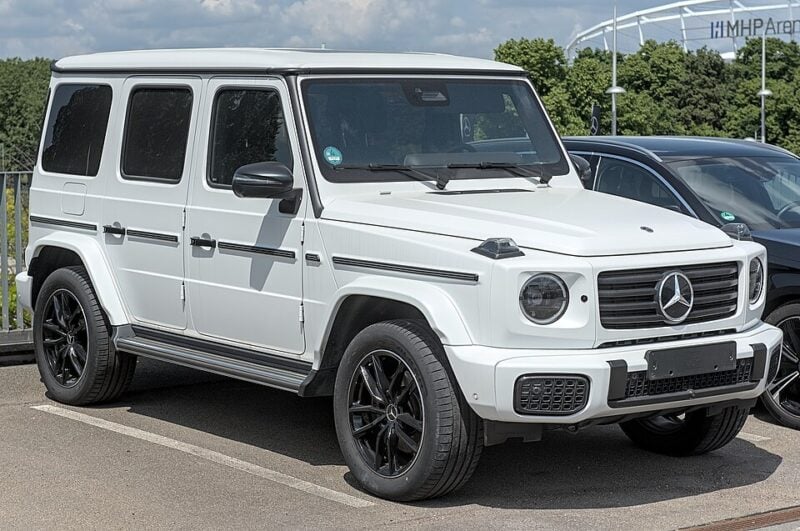
The Mercedes G-Wagon commands attention on the road, but its maintenance costs deserve equal consideration before you make a purchase.
The average annual maintenance cost for a G-Wagon ranges from $1,500 to $2,000 per year for recent models, which is higher than most luxury SUVs.
This figure covers routine maintenance, though your actual costs will vary based on driving habits, mileage, and whether you choose dealer or independent service.
Understanding what drives these costs helps you budget accurately for ownership. Oil changes alone can run $200 to $350 at the dealer, while Mercedes-Benz models average around $12,942 for maintenance and repair costs during their first 10 years of service.
The G-Wagon’s unique design and luxury components contribute to both its premium price tag and ongoing expenses.
This guide breaks down what you’ll actually spend on maintaining your G-Wagon, from routine oil changes to major repairs.
You’ll learn how warranty coverage affects your costs, where to find savings without compromising quality, and how the G-Wagon compares to other luxury SUVs in terms of long-term maintenance expenses.
Ready to get out your wallet? Let’s go!
Average Annual Cost to Maintain a Mercedes G-Wagon
Maintaining a Mercedes G-Wagon typically costs between $1,400 and $2,500 annually, depending on the model year and how you use the vehicle. The expense reflects the vehicle’s luxury status and specialized components that require premium parts and expert service.
Breakdown of Yearly Maintenance Expenses
Your annual G-Wagon maintenance costs average $1,500 to $2,000 for 2019 and newer models. Oil changes represent a significant portion of this expense, running $240 to $300 per service when you factor in parts and labor.
You’ll need to budget for routine services that include brake inspections, tire rotations, and fluid replacements. Air filter changes, cabin filter replacements, and battery checks add to your annual expenses.
Wear items like brake pads and rotors require replacement more frequently than economy vehicles due to the G-Wagon’s weight.
The 2025 G-Class maintenance costs run about $2,500 per year as of March 2026. This figure sits considerably higher than the $908 average for all Mercedes-Benz models, making the G-Wagon one of the most expensive Mercedes vehicles to maintain.
Typical Maintenance Schedule
You should schedule oil and filter changes every 7,500 to 10,000 miles or 12 months, whichever comes first. Mercedes-Benz recommends synthetic oil, which costs more but provides better protection for your engine.
Your G-Wagon requires Service A at 10,000 miles and Service B at 20,000 miles, alternating throughout ownership. Service A includes oil changes, fluid level checks, and tire inspections. Service B adds brake inspections, transmission fluid checks, and more comprehensive system diagnostics.
Major services occur at 40,000, 80,000, and 120,000-mile intervals. These involve spark plug replacements, coolant flushes, and differential service. You’ll also need to replace your air filters, cabin filters, and perform brake fluid exchanges at specified intervals.
Factors Influencing Yearly Costs
Your driving habits significantly impact maintenance expenses. Off-road use accelerates wear on suspension components, undercarriage parts, and protective systems. City driving with frequent stops wears brakes faster than highway cruising.
Where you get service matters substantially. Dealerships charge $200 to $350 for oil changes, while independent shops charge $120 to $250. Your local labor rates and regional cost of living affect service pricing.
The model year you own influences costs. Newer models may have warranty coverage reducing out-of-pocket expenses, while older G-Wagons might need more frequent repairs. Your mileage accumulation rate also determines how quickly you reach service intervals and when components need replacement.
Routine Maintenance Costs
Regular service on a G-Wagon demands a premium budget compared to standard luxury SUVs. Maintenance costs for Mercedes-Benz models run higher than industry averages, and the G-Class sits at the top of that scale.
Oil Changes and Fluid Services
Your G-Wagon requires synthetic oil changes every 10,000 miles or once per year, whichever comes first. Expect to pay between $300 and $500 per oil change at a Mercedes dealership. This price includes the oil filter, high-grade synthetic oil, and a multi-point inspection.
Fluid services extend beyond engine oil. Transmission fluid changes cost $400 to $600 and should occur every 40,000 miles. Coolant flushes run $200 to $300, while brake fluid replacement adds another $150 to $250 every two years.
Differential fluid changes are necessary for your G-Wagon’s three differentials. Each service costs $150 to $200, totaling $450 to $600 when all three are serviced together around the 40,000-mile mark.
Brake System Maintenance
Brake pad replacement on your G-Wagon costs significantly more than average vehicles. Front brake pads range from $400 to $600 for parts and labor, while rear pads run $350 to $500. The heavy weight of the vehicle accelerates brake wear, typically requiring replacement every 30,000 to 40,000 miles.
Brake rotor replacement adds substantial expense. Front rotors cost $800 to $1,200 per axle, and rear rotors run $700 to $1,000. You’ll likely need rotors replaced every other brake pad change.
A complete brake system flush costs $150 to $250 and should be performed every two years to maintain optimal braking performance.
Tire Replacement and Alignment
Your G-Wagon requires specialized high-performance tires that cost $400 to $600 each. A full set of four tires ranges from $1,600 to $2,400 before installation. Tire replacement represents a significant maintenance expense for G-Wagon owners.
Tire life varies based on driving habits, but expect replacement every 30,000 to 40,000 miles. Aggressive off-road use shortens this interval considerably.
Four-wheel alignment costs $200 to $300 and should be performed annually or whenever you notice uneven tire wear. The G-Wagon’s complex suspension geometry requires precision alignment equipment, driving up service costs compared to standard SUVs.
Major Repairs and Long-Term Wear Items
Beyond routine maintenance, G-Wagon owners face significant expenses from major component replacements and systems that degrade over time. Suspension work, drivetrain repairs, and electronic system updates represent the bulk of these costs, often running into thousands of dollars per repair.
Transmission and Drivetrain Repairs
The G-Wagon’s 9-speed automatic transmission typically lasts 100,000 to 150,000 miles with proper fluid changes. When it fails, you’re looking at $5,000 to $8,000 for a rebuild or $8,000 to $12,000 for a complete replacement at a Mercedes dealer.
The all-wheel-drive system includes three locking differentials that can develop issues. Front differential repairs run $2,000 to $3,500, while rear differential work costs $1,800 to $3,200. Transfer case problems, though less common, start at $3,000 for repairs and can exceed $6,000 for replacement.
Four-wheel-drive actuators and sensors fail more frequently, costing $400 to $900 per repair. Driveshaft issues typically cost $800 to $1,500 to fix.
Suspension System Components
Your G-Wagon’s adaptive suspension uses sophisticated components that wear faster than conventional systems. Each air strut replacement costs $1,200 to $2,000, and you’ll likely need all four replaced by 80,000 miles for a total of $5,000 to $8,000.
Control arms and bushings wear out every 60,000 to 80,000 miles. Expect to pay $600 to $1,200 per corner for these repairs. Stabilizer links and bushings need replacement around the same interval at $300 to $600 per axle.
The steering damper requires replacement every 50,000 miles at $400 to $700. Ball joints last slightly longer but cost $800 to $1,400 per pair when they fail.
Electronics and Software Updates
The G-Wagon’s COMAND infotainment system occasionally requires software updates costing $200 to $400 at the dealership. More complex electronic issues can run significantly higher.
The AIRMATIC suspension control module fails in some models, requiring a $1,500 to $2,500 replacement. Display screens develop pixel issues or complete failures, costing $1,200 to $2,800 to replace.
Battery replacement for the advanced electrical system runs $300 to $500 for premium AGM batteries. Alternator failures cost $800 to $1,400 for parts and labor.
Warranty Coverage and Extended Service Plans
New G-Wagons come with a four-year factory warranty that covers most mechanical issues, while certified pre-owned models offer additional peace of mind with their own warranty structure. Once factory coverage expires, extended warranty options can help manage the high repair costs associated with this luxury SUV.
Original Mercedes Warranty Period
Your new Mercedes G-Wagon includes a 4-year/50,000-mile limited warranty that covers most defects in materials and workmanship. This factory coverage protects major components including the engine, transmission, electrical systems, and other mechanical parts.
The original warranty also includes 24-hour roadside assistance for the full four years regardless of mileage. However, routine maintenance items like oil changes, brake pads, and tires are not covered under the basic warranty.
Mercedes doesn’t include complimentary scheduled maintenance with new G-Wagons, unlike some competitors. You’ll need to pay for oil changes and other routine services out of pocket or purchase a separate prepaid maintenance plan.
Certified Pre-Owned Benefits
Mercedes-Benz Certified Pre-Owned G-Wagons must pass a rigorous 165-point inspection and meet specific age and mileage requirements. These vehicles come with an extended limited warranty that adds 1 year of unlimited-mileage coverage beyond the original 4-year/50,000-mile factory warranty.
If significant factory warranty time remains, you’ll benefit from both the remaining original coverage and the additional certified pre-owned warranty. All certified vehicles also include 24-hour roadside assistance, trip interruption coverage up to $300 per day for five days, and the assurance that any necessary repairs were completed using genuine Mercedes-Benz parts.
The certified pre-owned warranty is transferable to subsequent owners during its coverage period, which can boost resale value.
Extended Warranty Options
Mercedes-Benz Extended Limited Warranties cost between $1,500 to $3,000 per year of added coverage, which is expensive even among luxury brands. You can purchase these plans anytime before your factory warranty expires, choosing from one, two, or three years of additional protection.
The extended coverage includes protection for the powertrain, fuel delivery system, electrical components, and most mechanical breakdowns. Your vehicle must be serviced at an authorized Mercedes dealer for the warranty to remain valid.
Third-party extended warranty providers often offer more affordable alternatives with varying coverage levels. These plans may provide more flexibility in where you can have repairs completed, though they may not require the use of genuine Mercedes-Benz parts.
Dealer vs. Independent Mechanic Maintenance Costs
G-Wagon owners face significantly different price points depending on where they service their vehicle, with dealerships charging substantially more for labor while independent shops offer cost savings that may come with specific trade-offs.
Cost Differences and Considerations
Dealerships typically charge between $150 and $250 per hour for labor on your G-Wagon, while independent shops specializing in European vehicles often charge roughly half that amount. This pricing gap can result in hundreds or even thousands of dollars in savings over the course of ownership, particularly for major repairs.
However, you need to weigh these savings against potential warranty concerns. If your G-Wagon is still under factory warranty or an extended service contract, using an independent mechanic could void coverage for certain repairs. Mercedes-Benz dealerships have factory-trained technicians with direct access to manufacturer technical support and proprietary diagnostic equipment.
Independent mechanics specializing in Mercedes-Benz vehicles often provide comparable quality work at lower rates. You’ll find that many independent shops have technicians who previously worked at dealerships or who maintain Mercedes-Benz certifications. The key is finding a reputable shop with specific G-Wagon experience rather than a general mechanic.
Availability of G-Wagon Parts
Your choice between dealer and independent service affects parts availability and pricing. Mercedes-Benz dealerships stock OEM parts specifically for the G-Class, though these components typically carry premium pricing compared to aftermarket alternatives.
Independent mechanics can source both OEM and high-quality aftermarket parts, giving you more flexibility in balancing cost and quality. For routine maintenance items like oil filters and brake pads, aftermarket options can reduce your expenses without compromising performance.
The G-Wagon’s specialized components sometimes require dealer ordering regardless of where you get service. Certain suspension parts, differential components, and electrical modules may only be available through Mercedes-Benz channels, which means independent shops will still need to procure these from dealer networks.
Service Record Implications
Maintaining comprehensive service records matters significantly for your G-Wagon’s resale value. Dealership service records are automatically logged in Mercedes-Benz’s national database, providing verifiable documentation that future buyers and dealers can access.
When you use an independent mechanic, you’re responsible for maintaining detailed service receipts and records. Potential buyers often prefer dealership service history, particularly for high-value vehicles like the G-Wagon. You should request itemized invoices that specify parts used, services performed, and dates for every maintenance visit.
Some independent shops now use digital record-keeping systems that can help establish credible service history. Ask your chosen mechanic about their documentation practices and whether they provide detailed maintenance logs you can present during resale.
Additional Ownership Expenses
Beyond routine maintenance and repairs, G-Wagon ownership brings substantial recurring costs including premium insurance rates, annual registration fees, and considerable fuel expenses that can add thousands to your yearly budget.
Insurance Premiums for G-Wagon Owners
Your insurance premiums for a Mercedes G-Wagon typically range from $3,000 to $5,500 annually, depending on your location, driving history, and coverage levels. The vehicle’s high replacement value, expensive parts, and luxury classification push rates significantly above average SUV premiums.
Comprehensive and collision coverage costs more due to the G-Wagon’s MSRP starting around $140,000 for base models and exceeding $200,000 for AMG variants. If you’re financing or leasing, your lender requires full coverage, which increases your costs further.
Your age, credit score, and ZIP code heavily influence your final premium. Urban areas with higher theft rates and accident frequencies result in steeper insurance bills. Some insurers offer discounts for safety features, but these savings rarely offset the base premium for a vehicle in this price category.
Registration and Taxes
Annual registration fees vary by state but expect to pay $500 to $2,000 or more based on your vehicle’s value and local tax structures. States like California and Nevada use percentage-based registration fees tied to the purchase price, resulting in higher costs for luxury vehicles.
Property taxes on vehicles apply in certain states, adding another $1,000 to $3,000 annually depending on your jurisdiction and the G-Wagon’s assessed value. These taxes typically decrease as your vehicle ages and depreciates.
Some states charge additional fees for luxury or heavy vehicles, and the G-Wagon’s weight classification can trigger supplemental charges in specific regions.
Fuel Costs
The G-Wagon delivers 13-14 MPG city and 16-18 MPG highway with its twin-turbocharged V8 engine, requiring premium gasoline. If you drive 12,000 miles annually at a combined 15 MPG with premium fuel averaging $4.50 per gallon, you’ll spend approximately $3,600 on fuel.
Higher mileage dramatically increases this expense. Driving 15,000 miles yearly raises your fuel costs to $4,500, while 20,000 miles pushes the total near $6,000. The G-Wagon’s 28-gallon tank means each fill-up costs $125 to $140 at current premium fuel prices.
Your driving habits and environment affect consumption significantly. City driving, aggressive acceleration, and cold weather operation all reduce efficiency below EPA estimates.
Cost Comparison With Other Luxury SUVs
The G-Wagon sits at the higher end of luxury SUV maintenance expenses, with annual costs between $1,500 and $2,000. Other premium SUVs from Mercedes, Range Rover, and BMW offer varying cost profiles that can help you understand what you’re paying for with G-Wagon ownership.
Mercedes GLE and GLS
The GLE and GLS represent Mercedes’ more mainstream luxury SUV offerings with significantly lower maintenance costs than the G-Wagon. You can expect to pay approximately $900 to $1,200 annually for routine maintenance on these models. Both vehicles share many components with Mercedes’ sedan lineup, making parts more readily available and less expensive.
The GLE uses a unibody construction versus the G-Wagon’s body-on-frame design, resulting in fewer specialized mechanical components. GLS maintenance costs remain comparable despite the larger size. Your service intervals align with standard Mercedes maintenance schedules, typically requiring visits every 10,000 miles. These models don’t require the specialized off-road components that drive up G-Wagon expenses.
Range Rover
Range Rover maintenance costs rival or exceed G-Wagon expenses, with annual costs ranging from $1,400 to $2,200. You’ll face higher repair frequencies due to the vehicle’s complex air suspension systems and electronic components. Parts availability can be more limited than Mercedes, potentially extending repair times.
The Range Rover’s reliability ratings typically fall below Mercedes standards, meaning you may encounter more unexpected repairs. Your 10-year ownership costs can reach $20,000 to $25,000 for maintenance alone. The vehicle’s sophisticated terrain response systems require specialized diagnostic equipment, limiting your service options to authorized dealers or specialty shops.
BMW X7
The BMW X7 offers a middle ground with annual maintenance costs between $1,100 and $1,500. You’ll benefit from BMW’s widespread dealer network and parts availability. The X7 shares components with the 7 Series sedan, keeping replacement costs more reasonable than dedicated off-road platforms.
Your maintenance intervals occur every 10,000 miles with BMW’s condition-based servicing system. The X7 requires less frequent brake service than the G-Wagon due to its lighter curb weight. You won’t need specialized off-road equipment maintenance, but the X7’s complex infotainment and driver assistance systems can generate expensive electronic repairs as the vehicle ages.
Tips to Reduce Maintenance Expenses
Maintaining a G-Wagon doesn’t have to drain your budget if you approach ownership strategically. By focusing on preventive care, selecting the right service providers, and making informed decisions about parts, you can significantly lower your annual maintenance costs.
Regular Preventive Care
Preventive maintenance services are your best defense against expensive repairs down the road. Staying on top of routine tasks like oil changes, fluid checks, and filter replacements helps identify potential issues before they become major problems.
Following your vehicle’s manufacturer-recommended service intervals prevents premature wear on critical components. Skipping scheduled maintenance might save money short-term, but it typically leads to more costly repairs later.
Simple tasks you can monitor include checking tire pressure monthly, inspecting brake pads for wear, and watching for fluid leaks. These basic checks take minutes but can alert you to issues early.
Keeping detailed maintenance records also helps you track patterns and plan for upcoming services. You’ll know exactly when your next major service is due and can budget accordingly.
Choosing Authorized Service Centers
Working with technicians who specialize in Mercedes-Benz vehicles ensures your G-Wagon receives proper care from qualified professionals. These mechanics understand the specific requirements and common issues of your vehicle.
Authorized service centers use diagnostic equipment designed specifically for Mercedes systems. This specialized technology identifies problems more accurately than generic tools, reducing guesswork and unnecessary repairs.
While independent shops may offer lower hourly rates, they might lack the expertise to handle complex G-Wagon systems efficiently. This can result in longer repair times and potentially incorrect diagnoses that cost more in the long run.
Certified mechanics also stay current with technical service bulletins and recall information specific to your model year. This knowledge helps them address known issues proactively.
Sourcing OEM Versus Aftermarket Parts
Original Equipment Manufacturer (OEM) parts are designed specifically for your G-Wagon and typically offer the best fit and performance. They come with warranties and meet Mercedes-Benz quality standards, but they cost more upfront.
Aftermarket parts can reduce immediate expenses by 20-50% compared to OEM alternatives. However, quality varies significantly between manufacturers, and some cheaper options may fail prematurely.
For critical safety components like brakes, suspension parts, and engine components, OEM parts provide better reliability and longevity. For less critical items like air filters or wiper blades, quality aftermarket options can deliver acceptable performance at lower prices.
Consider the total cost of ownership rather than just the purchase price. A cheaper part that needs replacement twice as often ultimately costs more than a durable OEM component.


