
Honda Accord Hybrid vs Toyota Camry Hybrid: Which Is Better for Families? A Comprehensive Comparison
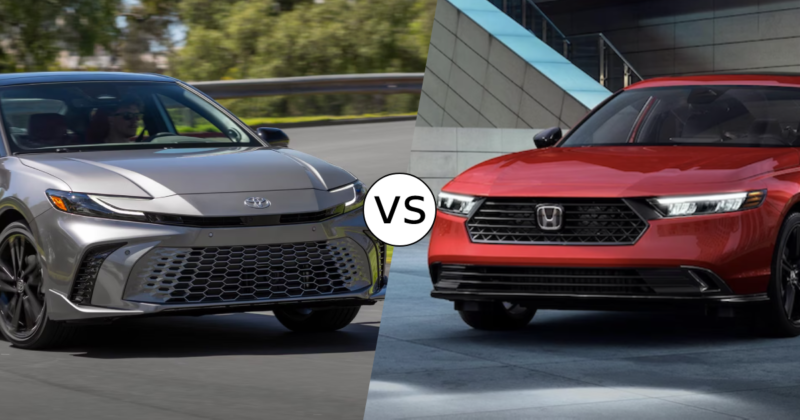
When choosing between hybrid sedans for your family, the Honda Accord Hybrid and Toyota Camry Hybrid stand out as two of the most practical options available.
Both vehicles deliver excellent fuel economy, spacious cabins, and modern safety technology that families need for daily commutes and road trips.
For most families, the Honda Accord Hybrid offers slightly more interior space and cargo versatility, while the Toyota Camry Hybrid provides available all-wheel drive and a proven track record for long-term reliability.
The decision between these two leading hybrid sedans ultimately depends on which features matter most to your household. This comparison examines everything from seating comfort and storage capacity to safety ratings and ownership costs.
You’ll learn about the real-world differences that impact family life, helping you determine which hybrid sedan best fits your needs and budget.
Family-Oriented Interior Comfort
The Accord Hybrid provides more rear seat space and a larger trunk, while the Camry Hybrid delivers comprehensive safety features and comfortable seating for daily family use.
Seating Space and Passenger Accommodation
The Honda Accord Hybrid offers class-leading rear seat and trunk space, giving your family extra room for passengers and cargo. The Accord’s wider body translates to better shoulder room across both rows, which matters when you have three passengers in the back seat.
The Camry Hybrid provides adequate seating for five adults but doesn’t match the Accord’s spaciousness. Both sedans feature supportive front seats with good bolstering, though the Accord’s seats tend to accommodate a wider range of body types more comfortably. You’ll find quality materials in both cabins, with soft-touch surfaces and available leather upholstery that can withstand the wear and tear of family life.
Child Seat Compatibility and Flexibility
When comparing child-safety seat fitment between the Camry Hybrid and Accord Hybrid, both vehicles accommodate multiple car seats without major issues. The Accord Hybrid’s wider rear doors and additional shoulder room make it easier to install rear-facing infant seats and access the LATCH anchors.
Both sedans feature clearly marked LATCH connectors on the outboard rear seats, plus tether anchors for all three rear positions. The Accord’s extra few inches of rear legroom help when you need to push the front seats back while still maintaining space for rear-facing child seats behind them.
Rear Legroom and Headroom
The Accord Hybrid delivers approximately 40.4 inches of rear legroom, providing noticeably more space than the Camry’s 38 inches. This difference becomes apparent on longer trips when your teenagers or taller passengers need to stretch out.
Headroom measurements favor the Accord as well, particularly for passengers who sit upright. The Camry’s slightly lower roofline can feel restrictive for taller rear passengers, though most adults will find it acceptable. Both vehicles feature rear air vents to keep back-seat passengers comfortable during summer drives.
Cargo Capacity and Storage Practicality
The Honda Accord Hybrid offers 16.7 cubic feet of trunk space, while the Toyota Camry Hybrid provides 15.1 cubic feet. Beyond raw trunk volume, you’ll find differences in how each sedan accommodates daily family needs through cabin storage and cargo accessibility.
Trunk Space and Layout
The Accord Hybrid’s trunk gives you 1.6 cubic feet more cargo room than the Camry Hybrid. This translates to about one extra grocery bag or a small piece of luggage when you’re loading up for family trips.
Both sedans feature pass-through rear seats for longer items like skis or lumber. The Accord’s trunk opening sits slightly wider, making it easier to slide in bulky items without angling them through the opening.
The hybrid battery placement affects trunk floor height in both vehicles. You’ll notice the Camry Hybrid has a slightly higher load floor due to its battery pack positioning. The Accord’s engineers placed the battery under the rear seats, which creates a flatter, more usable trunk floor for stacking items.
In-Cabin Storage Solutions
Your front cabin storage needs determine daily convenience. The Accord Hybrid includes a deep center console bin that fits a large purse or small diaper bag. Door pockets on both vehicles accommodate water bottles, though the Accord’s pockets stretch slightly deeper.
The Camry Hybrid compensates with a larger smartphone storage area near the wireless charging pad. You’ll find more cubby storage throughout the Camry’s dashboard, giving you extra spots for sunglasses, hand sanitizer, and small toys.
Both sedans offer rear seat pockets and cup holders for passengers. The Accord provides slightly more rear door pocket space for sippy cups and snacks during longer drives.
Usability with Strollers and Family Gear
Standard strollers fit in both trunks without folding the rear seats. You can load a full-size stroller plus two grocery bags in the Accord Hybrid’s trunk, while the Camry Hybrid accommodates the same stroller with less room to spare.
Jogging strollers or double-wide models require you to fold down the rear seats in either vehicle. The 60/40 split-folding seats in both sedans let you carry longer items while keeping two rear passengers seated.
Car seats install easily in both back rows, and you won’t lose access to trunk space when rear-facing seats are installed. The Accord’s extra trunk depth helps when you need to pack a weekend bag alongside sports equipment or a cooler.
Ride Quality and Cabin Quietness
The Toyota Camry Hybrid emphasizes plush seating and a quieter cabin, while the Accord Hybrid delivers a more engaging driving experience with competent comfort levels. Both sedans handle daily family duties well, but they take different approaches to passenger comfort.
Suspension Performance on Daily Drives
The Honda Accord Hybrid uses a sport-tuned suspension that provides responsive handling without sacrificing ride comfort. You’ll notice the Accord feels more connected to the road, which translates to confident cornering and highway stability. The suspension absorbs most bumps effectively, though sharper impacts can filter through to the cabin.
The Toyota Camry Hybrid prioritizes comfort with a softer suspension setup that smooths out road imperfections. According to a comparison between the Toyota Camry Hybrid and Honda Accord Hybrid, the Toyota has a more comfortable ride. This makes the Camry particularly well-suited for families who spend significant time on rough pavement or longer road trips where comfort matters most.
Noise Insulation for Family Trips
The Camry Hybrid excels in cabin quietness with additional sound-dampening materials across its trim levels. Road noise, wind noise, and engine intrusion remain minimal even at highway speeds, creating a peaceful environment for conversations or sleeping children.
The Accord Hybrid delivers acceptable noise insulation but doesn’t match the Camry’s refinement. The Camry features a quieter cabin compared to the Accord. You’ll hear more road texture and wind noise during highway driving, though it’s not disruptive for most families. The hybrid powertrain operates quietly in both vehicles during electric-only operation.
Safety Features and Crash Ratings
Both sedans deliver comprehensive protection through advanced driver assistance technologies and reinforced structural designs. The 2025 Honda Accord Hybrid and Toyota Camry earn top crash-test ratings, achieving five stars from NHTSA and Top Safety Pick+ recognition from IIHS.
Active Driver Assistance Systems
The Honda Accord Hybrid includes Honda Sensing as standard equipment. This suite features adaptive cruise control, lane keeping assist, road departure mitigation, and collision mitigation braking. You also get traffic sign recognition and automatic high beams.
The Toyota Camry Hybrid comes with Toyota Safety Sense 3.0. Your vehicle includes pre-collision warning with pedestrian detection, dynamic radar cruise control, and lane departure alert with steering assist. The system adds lane tracing assist and road sign assist.
Both vehicles offer blind spot monitoring, though availability varies by trim level. The Accord provides rear cross-traffic alert on most configurations, while the Camry includes it on higher trims. Neither vehicle charges extra for their base safety packages, making these features accessible across their lineups.
Child Safety Technologies
You’ll find LATCH connectors on both outboard rear seats in each sedan. The Accord provides easy access to these anchors with clearly marked locations. The Camry offers similar accessibility with labeled attachment points.
Both vehicles accommodate rear-facing and forward-facing car seats without significant issues. The Accord’s rear seat offers 40.4 inches of legroom, providing space for larger car seats. The Camry delivers 38 inches of rear legroom, which still accommodates most child safety seats comfortably.
Rear door child safety locks come standard on both models. You can manually engage these locks to prevent doors from opening from inside.
NHTSA and IIHS Ratings
The National Highway Traffic Safety Administration awards both the 2026 Honda Accord Hybrid and Toyota Camry Hybrid five-star overall safety ratings. Each vehicle receives five stars in side crash protection and four stars in frontal crash tests.
The 2023 Toyota Camry Hybrid earned the Top Safety Pick+ designation from IIHS, the highest award for crashworthiness and crash avoidance. The Accord Hybrid also holds Top Safety Pick+ status with good ratings across all crash tests.
Both sedans receive good scores in moderate overlap front, side, roof strength, and head restraint evaluations. Their headlight systems earn acceptable or good ratings depending on trim level.
Fuel Efficiency and Operating Costs
Both hybrids deliver impressive fuel economy that significantly reduces your fuel spending compared to traditional sedans, though the Toyota Camry Hybrid achieved 43 mpg at highway speeds while the Accord Hybrid reached 39 mpg in the same test.
Real-World MPG Comparisons
The Toyota Camry Hybrid consistently outperforms the Honda Accord Hybrid in real-world fuel economy testing. In a 75-mph highway test, the Camry Hybrid XSE AWD achieved 43 mpg while the Accord Hybrid Touring reached 39 mpg.
This 4 mpg difference translates to meaningful savings over time. If you drive 15,000 miles annually at $3.50 per gallon, the Camry Hybrid saves you approximately $120 per year compared to the Accord Hybrid.
Both vehicles use Atkinson-cycle inline 4-cylinder engines paired with electric motors, but they employ different hybrid architectures. Toyota uses a parallel hybrid system where both the gas engine and electric motor drive the wheels, while Honda’s two-motor system can function differently depending on driving conditions.
Your actual fuel economy will vary based on driving habits, traffic patterns, and climate conditions. City driving typically favors hybrid systems more than highway cruising, where both vehicles rely more heavily on their gasoline engines.
Hybrid System Reliability
Toyota’s hybrid technology has been in production longer than Honda’s system, giving it an extensive track record. Toyota introduced hybrid technology in the late 1990s and has refined it across millions of vehicles worldwide.
Honda entered the hybrid market later but has developed a sophisticated system. The company’s two-motor setup offers a different approach to efficiency and performance compared to Toyota’s parallel configuration.
Both manufacturers back their hybrid components with 8-year/100,000-mile warranties on the battery and hybrid system. This coverage provides peace of mind for your family’s long-term ownership.
Battery degradation remains minimal in both vehicles when properly maintained. You can expect the hybrid battery to last the lifetime of the vehicle in most cases, though extreme climates may accelerate wear.
Maintenance and Repair Expectations
Hybrid vehicles require less frequent maintenance than conventional cars because regenerative braking reduces brake wear. You’ll replace brake pads less often, typically every 60,000 to 80,000 miles instead of every 30,000 to 40,000 miles.
Oil changes follow similar intervals to non-hybrid versions. Both vehicles typically require service every 7,500 to 10,000 miles depending on driving conditions and oil type.
Honda and Toyota both have extensive dealer networks, making service convenient regardless of where you live. Parts availability is excellent for both brands, and many independent mechanics can service these vehicles.
Repair costs for hybrid-specific components remain higher than conventional parts, but failures are rare. The warranty coverage protects you during the most vulnerable years of ownership.
In-Car Technology and Family Connectivity
The Accord Hybrid features a 12.3-inch touchscreen with wireless Apple CarPlay and Android Auto, while the Camry Hybrid includes a standard 12.3-inch display with the same wireless smartphone integration across most trims.
Infotainment System Usability
The Honda Accord Hybrid uses Google Built-In integration, which provides access to Google Maps, Google Assistant, and the Google Play Store directly through the infotainment system. You can access streaming apps and navigation without connecting your phone. The interface responds quickly to inputs and offers customizable home screens.
The Toyota Camry Hybrid runs on Toyota’s Audio Multimedia system with cloud-based navigation and voice recognition. The system includes over-the-air update capability to keep software current. Both vehicles offer physical volume knobs and climate controls, which makes adjustments easier while driving.
Key Interface Features:

Device Charging and Connectivity
The Accord Hybrid includes multiple USB-C ports throughout the cabin, with two in the front center console and two more for rear passengers. Wireless charging is standard on Sport and above trims. You get a total of four USB-C ports, which accommodates multiple devices simultaneously.
The Camry Hybrid provides five USB ports total across the cabin, mixing USB-A and USB-C connections depending on the trim level. Wireless charging appears on XSE and above models. The variety of port types helps if you have older devices with USB-A cables, though USB-C delivers faster charging speeds.
Both sedans offer sufficient connectivity for family needs, with rear passengers able to charge tablets and phones during longer trips.
Rear Seat Entertainment Options
Neither the Accord Hybrid nor the Camry Hybrid offers factory-installed rear-seat entertainment systems with built-in screens. You’ll need to bring your own tablets or portable DVD players if you want dedicated rear entertainment.
Both vehicles provide rear USB ports that let children charge devices while streaming content. The wireless smartphone integration means you can easily control audio playback from the back seat if passengers want to share music or podcasts.
The spacious rear seating in both models accommodates tablet holders and portable entertainment devices comfortably. You can mount aftermarket headrest tablet holders to create a rear entertainment setup if needed for longer family road trips.
Purchase Value and Trim Level Options
Both sedans offer competitive pricing structures, but their approaches to standard equipment and family-friendly upgrades differ significantly. The way each manufacturer packages features across trim levels affects the overall value proposition for families shopping in this segment.
Standard Equipment for Price
The 2025 Honda Accord Hybrid starts at a lower base price than the Camry Hybrid, but the Camry Hybrid comes standard with more safety features. The Toyota includes Toyota Safety Sense 3.0 as standard equipment across all trims, while Honda’s base model requires stepping up to access certain advanced driver-assist technologies.
The Camry Hybrid’s standard package includes adaptive cruise control, lane departure warning, and automatic high beams on every trim level. Honda’s Accord Hybrid base trim includes Honda Sensing, but some families may find the standard feature set less comprehensive. Both vehicles come with touchscreen infotainment systems, though screen sizes vary by trim level.
For families prioritizing immediate value without upgrades, the Camry Hybrid delivers more standard safety equipment despite its slightly higher starting price. The efficiency advantage goes to Toyota with better combined fuel economy ratings in base trims.
Upgrade Packages for Families
The Honda Accord Hybrid offers Sport and Touring trim levels that add features like heated seats, wireless charging, and premium audio systems. The higher trim levels of both hybrids experience lower fuel economy ratings, with the Camry Hybrid SE, XSE, and XLE rated at 47 mpg combined and Accord Hybrid Sport and Touring trims at 44 mpg combined.
The Camry Hybrid’s XLE and XSE trims add family-oriented features like power-adjustable front seats, upgraded climate control, and enhanced connectivity options. One significant advantage for the Toyota is its available all-wheel drive system, which the Accord Hybrid doesn’t offer. This makes the Camry Hybrid more versatile for families in regions with challenging weather.
For families seeking premium features, both sedans offer top-tier trims with leather seating, advanced audio systems, and comprehensive driver-assist packages. Your choice depends on whether you prioritize Honda’s slightly more upscale interior materials or Toyota’s all-wheel drive capability.
Long-Term Ownership Considerations
Both sedans offer strong warranty coverage and manufacturer support, though they differ in their backup plans. The Toyota Camry takes the win in predicted long-term reliability according to Consumer Reports, which may influence resale values down the road.
Warranty and Support Programs
Honda provides a 3-year/36,000-mile basic warranty and a 5-year/60,000-mile powertrain warranty for the Accord Hybrid. The hybrid components receive an 8-year/100,000-mile warranty, which covers the battery pack and related systems.
Toyota matches these figures with a 3-year/36,000-mile basic warranty and 5-year/60,000-mile powertrain coverage. The hybrid battery also gets 8-year/100,000-mile protection. Toyota adds complimentary maintenance for the first 2 years or 25,000 miles, which includes oil changes and tire rotations—a feature Honda doesn’t offer.
Both manufacturers provide 24-hour roadside assistance during the basic warranty period. Your actual coverage costs remain similar between the two brands for extended warranty options.
Resale Value Projections
Toyota vehicles historically maintain stronger resale values than Honda models, though the gap has narrowed in recent years. The Camry’s reputation for durability and Toyota’s brand recognition contribute to higher demand in the used car market.
The Accord Hybrid typically depreciates slightly faster than the Camry Hybrid over a five-year period. However, both sedans retain value better than most competitors in the midsize sedan segment. Your choice between the two won’t dramatically impact your wallet when it’s time to sell or trade, with typical five-year depreciation rates hovering around 40-45% for both models.
Model Updates and Reliability Records
Both sedans received significant updates for 2025, making them strong contenders for family transportation. The 2025 Toyota Camry underwent a full redesign with new styling and a major powertrain change: all Camry models now come standard as hybrids. This eliminates the traditional gas-only option entirely.
The Honda Accord Hybrid continues with refinements to its existing platform. Your 2025 Accord Hybrid Sport-L starts at $43,730, while the top Touring trim reaches $47,505 before tax.
Reliability Comparison
When it comes to long-term dependability, Consumer Reports gives Toyota the edge in predicted reliability. Both vehicles are well-engineered, but the Camry narrowly wins this category.
The Camry and Accord have earned trust over decades as practical and reliable family vehicles. You’ll find both models offer proven hybrid technology with established track records.
Key 2025 Updates:
- Toyota Camry: Full redesign, hybrid-only lineup, updated technology features, available AWD across trim range
- Honda Accord: Refined cabin design, enhanced driving dynamics, updated infotainment system
For families prioritizing reliability history, Toyota’s slight advantage matters. However, Honda’s reputation remains strong, and both sedans deliver the dependability you need for daily family use.
Styling and Curb Appeal
Both sedans offer distinct design philosophies that appeal to different tastes. The Honda Accord features a sportier, more aggressive stance with sharp body lines and a wider grille that gives it a muscular presence on the road.
The Toyota Camry takes a more conservative approach with smoother contours and flowing lines. Its front fascia is less dramatic but maintains an elegant, refined appearance that many families appreciate for its timeless quality.
Key Styling Differences:
- Accord Hybrid: Angular headlights, bold front grille, coupe-like roofline
- Camry Hybrid: Sleek LED headlights, subdued grille design, traditional sedan proportions
When it comes to visual impact, the Honda Accord and Toyota Camry deliver different aesthetics that cater to varying preferences. The Accord’s sporty character makes it stand out in parking lots, while the Camry’s understated elegance appeals to families seeking a professional appearance.
Both sedans sit on 18-inch wheels in their upper trims, providing a substantial road presence. The Accord’s lower, wider stance gives it a performance-oriented look, whereas the Camry maintains proportions that emphasize comfort and practicality.
Your choice between these two hybrid sedans may come down to whether you prefer the Accord’s bold, athletic styling or the Camry’s refined, classic design language. Neither choice disappoints in terms of modern sedan aesthetics.
Environmental Impact
Both sedans deliver strong environmental credentials through their hybrid powertrains. The 2025 Toyota Camry now comes exclusively as a hybrid, eliminating traditional gasoline-only options entirely.
When you choose either vehicle, you’re selecting options that reduce emissions and fuel consumption compared to conventional sedans. Both the Accord Hybrid and Camry Hybrid offer fuel-efficient and environmentally conscious transportation for families looking to minimize their carbon footprint.
Key Environmental Benefits:
- Lower CO2 emissions than gas-only vehicles
- Reduced fuel consumption through electric motor assistance
- Regenerative braking that captures energy
- Decreased air pollution in urban environments
The Toyota Camry Hybrid’s decision to make hybrid technology standard across all trim levels signals a commitment to environmental responsibility. You won’t find a non-hybrid option, which pushes the entire model lineup toward greener operation.
Honda’s approach differs slightly, offering the Accord in both traditional and hybrid configurations. However, the Accord Hybrid accounts for more than half of total Accord sales, showing strong consumer preference for the eco-friendly version.
Your choice between these vehicles won’t create a significant environmental difference. Both manufacturers have built reliable hybrid systems that help families reduce their environmental impact during daily commutes, school runs, and weekend trips.
Conclusion
Both the 2026 Honda Accord Hybrid and Toyota Camry Hybrid offer families strong hybrid efficiency and reliability. Your choice depends on what matters most to your household.
The Accord Hybrid delivers more engaging driving dynamics and a sportier feel behind the wheel. It provides 204 horsepower from its hybrid system and offers families a more connected driving experience. You’ll appreciate the responsive handling if you value a sedan that feels athletic.
The Camry Hybrid prioritizes comfort and predictability. Toyota’s longtime experience with hybrid technology means you get a proven system that emphasizes smooth, quiet operation. Families seeking maximum peace of mind often lean toward Toyota’s established hybrid reputation.
Key Decision Factors:
- Driving preference: Accord for sport, Camry for comfort
- Technology: Compare infotainment systems in person
- Interior space: Test rear seat room with car seats installed
- Fuel economy: Both deliver excellent efficiency
- Resale value: Toyota historically holds value well
You should test drive both sedans with your family to evaluate cargo space, rear seat comfort, and tech features. Bring car seats if applicable to check installation ease. The best midsize hybrid sedan for your family depends on your specific priorities rather than one being objectively superior.
Consider dealer inventory, current incentives, and local service quality when making your final decision. Both sedans will serve families well for years.


