
The Best SUVs for Families That Are Reliable and Affordable: Top Picks for 2026
Finding the right SUV for your family involves balancing three critical factors: space, dependability, and cost. With new vehicle prices averaging over $50,000, choosing a model that won’t drain your budget through purchase price or maintenance becomes essential for long-term satisfaction.
The best family SUVs combine proven reliability ratings, comprehensive safety features, spacious interiors, and reasonable pricing to deliver years of trouble-free service.
Whether you’re considering a compact model for city driving or a three-row vehicle for larger families, multiple categories of SUVs offer reliable and affordable options that meet diverse needs.
This guide examines the most dependable and budget-conscious family SUVs available, breaking down what makes them worth your consideration.
You’ll discover specific models across different size categories, understand which features matter most, and learn how to maximize value whether buying new or used.
Key Criteria for Family-Friendly SUVs
When selecting a family SUV, you need to evaluate crash test performance, interior dimensions, and operating costs. These factors directly impact your family’s safety, comfort, and long-term budget.
Safety Ratings and Features
Your family’s protection starts with comprehensive safety ratings from the National Highway Traffic Safety Administration (NHTSA) and the Insurance Institute for Highway Safety (IIHS). Look for SUVs with five-star NHTSA ratings and IIHS Top Safety Pick designations.
Modern family SUVs should include automatic emergency braking, blind-spot monitoring, and rear cross-traffic alert as standard equipment. Lane departure warning and adaptive cruise control add extra protection during highway driving. Rear-seat reminder systems help prevent hot car tragedies.
Advanced features like 360-degree cameras make parking and maneuvering easier in tight spaces with kids aboard. Rear automatic braking can prevent collisions when backing out of driveways or parking lots. These technologies reduce accident risks in scenarios where families are most vulnerable.
Interior Space and Cargo Capacity
You need adequate room for car seats, passengers, and gear without compromising comfort. Three-row SUVs provide seating for seven or eight, while two-row models offer more cargo space behind the second row.
Measure the second-row legroom and width to ensure your children won’t be cramped as they grow. Captain’s chairs in the second row make accessing the third row easier than bench seats. Sliding second-row seats let you balance passenger comfort with cargo needs.
Cargo capacity matters for strollers, sports equipment, and groceries. Look for at least 30 cubic feet behind the second row and 70 cubic feet with seats folded. Flat-folding seats, low lift-over heights, and power liftgates simplify loading heavy items.
Fuel Efficiency Considerations
Your fuel costs add up quickly with daily school runs and weekend activities. Hybrid family SUVs offer improved reliability and reduced operating expenses compared to traditional gas-only models.
Expect non-hybrid family SUVs to deliver 20-25 mpg combined, while hybrid versions achieve 30-35 mpg. Plug-in hybrids can handle short trips on electric power alone, saving gas for longer journeys. Full electric SUVs eliminate fuel costs entirely but require charging infrastructure.
Calculate your annual mileage to determine potential savings. A hybrid costing $2,000 more but saving 10 mpg could pay for itself within three to four years at current gas prices.
Top-Rated Models for Reliability
Toyota and Lexus vehicles consistently earn top marks for dependability, while certain Honda and Mazda SUVs also deliver exceptional long-term performance. These brands have established track records that translate into lower repair costs and better resale values for family buyers.
Best Long-Term Maintenance Records
The Toyota Highlander stands out with minimal repair needs over its first decade of ownership. Its proven powertrain and simple construction mean fewer unexpected shop visits and lower annual maintenance costs compared to competitors.
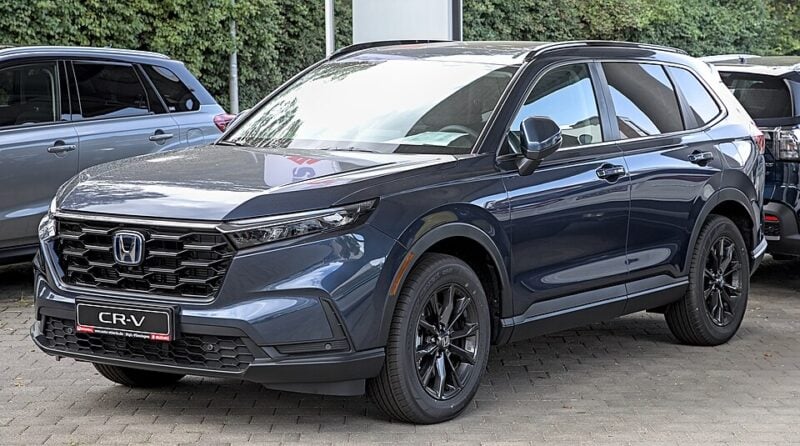
Honda’s CR-V maintains its reputation with predictable maintenance schedules and widely available parts. You’ll find that routine services remain affordable, and major components like the transmission and engine rarely require attention before 150,000 miles.
Mazda CX-5 models demonstrate impressive durability despite their more engaging driving dynamics. The brand’s commitment to quality control shows in their warranty claim rates, which remain among the industry’s lowest.
Key maintenance advantages include:
- Extended intervals between major services
- Lower costs for replacement parts
- Fewer recalls and technical service bulletins
- Better protection against rust and corrosion
User Reviews and Satisfaction
Consumer Reports identifies Toyota and Lexus as leading reliability performers based on subscriber data. Owners report high satisfaction with their SUVs’ ability to handle daily family duties without unexpected breakdowns.
The most reliable SUVs according to automotive testing perform well across multiple evaluation criteria. Real-world owners emphasize that these vehicles start reliably in all weather conditions and maintain their functionality over many years of use.
Family buyers particularly value the peace of mind that comes with dependable transportation. You won’t deal with the stress of wondering whether your vehicle will make it to school pickups or weekend activities without incident.
Affordability Breakdown
Budget-conscious families need to look beyond sticker prices when evaluating SUVs. The true cost includes financing, maintenance, fuel, insurance, and depreciation over several years of ownership.
Purchase Price Comparison
The Honda CR-V remains a popular choice for families seeking affordability with a starting price typically below $30,000. The Mazda CX-5 and Subaru Forester occupy similar price points, offering three-row competitors like the Kia Sorento and Hyundai Palisade in the $35,000 to $40,000 range.
You’ll find significant variation even within the same model depending on trim levels and options. Base models of compact SUVs like the Toyota RAV4 start around $28,000, while fully loaded versions can exceed $40,000.
With the average American now spending over $50,000 on a new car, these family SUVs offer meaningful savings. Shopping for previous model years can reduce your purchase price by 10-20% while still providing warranty coverage and modern safety features.
Cost of Ownership
Fuel efficiency directly impacts your monthly budget. The RAV4 Hybrid achieves up to 40 mpg combined, saving you roughly $600 annually compared to non-hybrid competitors averaging 28 mpg.
Maintenance costs vary significantly by brand. Honda and Toyota models typically require $300-500 annually for routine maintenance during the first five years. European brands can cost twice that amount for similar service intervals.
Insurance premiums depend on safety ratings and theft rates. You can expect to pay $1,200-1,800 yearly for comprehensive coverage on mainstream SUVs like the CR-V or CX-5. Models with advanced safety features often qualify for insurance discounts that offset 5-10% of your premium.
Resale Value Trends
Toyota and Honda SUVs retain 55-60% of their original value after five years, outperforming most competitors by 5-10 percentage points. The RAV4 and CR-V consistently rank among the highest resale values in the compact SUV segment.
Subaru models also hold value well due to their all-wheel-drive systems and loyal customer base. The Forester typically retains 52-55% of its value over the same period.
Three-row SUVs depreciate faster than compact models, but the Kia Telluride and Hyundai Palisade buck this trend. Their strong warranties and growing brand reputation help them maintain 50-53% residual values after five years.
Notable Options in the Compact SUV Segment
Compact SUVs deliver practical fuel economy for daily driving while offering flexible interior configurations that adapt to changing family needs. These vehicles balance size and functionality without the premium price tags of larger models.
Efficient Urban Commuters
Compact SUVs excel at city driving thanks to their manageable dimensions and impressive fuel efficiency ratings. You’ll find that models like the Honda CR-V and Toyota RAV4 consistently rank among the top performers in this segment for their combination of reliability and economy.
These vehicles typically achieve 28-32 mpg combined, which translates to substantial savings over time compared to larger SUVs. The smaller footprint makes parking in tight spaces significantly easier while maintaining enough cargo room for weekly grocery runs or sports equipment.
Key Benefits:
- Lower fuel costs than midsize or full-size SUVs
- Easier maneuverability in urban environments
- Reduced insurance and maintenance expenses
- Adequate space for small to medium families
Many compact SUVs now include advanced safety technology as standard equipment rather than optional upgrades. You get features like automatic emergency braking and lane-keeping assist without paying premium prices.
Versatile Seating Arrangements
The interior flexibility of compact SUVs makes them particularly suitable for families who need adaptable cargo space. You can fold down the rear seats to accommodate larger items like furniture or camping gear, then quickly reconfigure for passenger seating.
Most models offer 60/40 split-folding rear seats as standard, allowing you to carry both passengers and long items simultaneously. Some vehicles provide sliding rear seats that let you prioritize either legroom or cargo space depending on your immediate needs.
Common Configurations:
- Standard five-passenger seating
- Fold-flat rear seats for maximum cargo capacity
- Adjustable rear seat positions
- Hidden storage compartments under cargo floors
The elevated seating position gives you better visibility compared to traditional sedans while maintaining car-like handling characteristics. Your passengers benefit from easier entry and exit, which proves especially helpful for older family members or young children in car seats.
Recommended Midsize Family SUVs
Midsize SUVs strike an ideal balance between interior space and manageability, offering families room to grow without the bulk of larger vehicles. These models typically provide flexible seating configurations and composed handling that makes daily driving less stressful.
Spaciousness for Growing Families
Midsize SUVs deliver the cargo capacity and passenger room your family needs as children grow and activities multiply. Most family midsize SUVs for 2026 offer three rows of seating, accommodating up to seven or eight passengers depending on the configuration.
The second row typically provides around 38-40 inches of legroom, enough space for teenagers or adults on longer trips. Third-row access varies significantly between models, with some offering power-folding second rows that make it easier to reach the rear seats.
Cargo space behind the third row ranges from 10-20 cubic feet in most midsize SUVs. When you fold the third row flat, you gain 40-50 cubic feet for groceries, sports equipment, or luggage. Many models include underfloor storage compartments for smaller items you want to keep secure.
Key Space Features:
- Adjustable second-row seats that slide forward and back
- Split-folding rear seats for cargo flexibility
- Roof rails for additional storage options
- Multiple cupholders and storage cubbies throughout the cabin
Balanced Performance and Comfort
Midsize SUVs prioritize ride comfort over sporty handling, which benefits families on both short commutes and road trips. Most models use four-cylinder or V6 engines that provide adequate acceleration without excessive fuel consumption.
You can expect fuel economy between 22-28 mpg combined in non-hybrid models. The suspension tuning in these vehicles absorbs road imperfections effectively, reducing fatigue during longer drives. Cabin noise levels remain subdued at highway speeds in well-designed midsize SUVs.
All-wheel drive is available on most models, improving traction in rain or light snow. The added capability typically reduces fuel economy by 1-2 mpg compared to front-wheel-drive versions. Towing capacity ranges from 3,500 to 5,000 pounds, sufficient for small trailers or campers.
Standout Full-Size SUV Picks
Full-size SUVs deliver maximum passenger and cargo space for larger families, with three rows of seating and robust capabilities that handle everything from daily commutes to weekend adventures. These vehicles excel at towing heavy loads while providing the power options families need.
Towing Capacity and Powertrain Options
Full-size SUVs typically offer towing capacities between 7,000 and 9,000 pounds, making them suitable for hauling campers, boats, and trailers. The Chevrolet Tahoe and GMC Yukon can tow up to 8,400 pounds when properly equipped, while the Ford Expedition maxes out at approximately 9,300 pounds with its available twin-turbo V6 engine.
Most full-size SUVs for families come standard with V6 or V8 engines ranging from 355 to 420 horsepower. You’ll find turbocharged V6 options in several models that balance power with improved fuel efficiency compared to traditional V8s.
Common Powertrain Configurations:
- Standard naturally aspirated V6 engines (290-310 hp)
- Turbocharged V6 options (375-400 hp)
- Traditional V8 engines (355-420 hp)
- Available diesel options for enhanced towing and fuel economy
These powertrains typically pair with 10-speed automatic transmissions that optimize performance and efficiency across different driving conditions.
Essential Features for Family Convenience
Modern family SUVs integrate technology and practical design elements that simplify daily routines, from school drop-offs to weekend road trips. Safety technology and kid-focused amenities have become standard expectations rather than luxury add-ons.
Advanced Driver-Assistance Systems
You need blind-spot monitoring and rear cross-traffic alert when navigating crowded parking lots with kids in tow. These systems alert you to vehicles approaching from the sides or rear, preventing collisions during everyday maneuvers.
Lane departure warning and lane-keeping assist help maintain your position during long highway drives, especially valuable when fatigue sets in. Adaptive cruise control adjusts your speed automatically based on traffic ahead, reducing the constant braking and accelerating that wears you down on family trips.
Automatic emergency braking detects potential frontal collisions and applies brakes if you don’t react quickly enough. This feature provides crucial backup protection when distractions occur. Parking sensors and 360-degree cameras eliminate guesswork when backing out of tight driveways or fitting into compact spaces with precious cargo aboard.
Child-Friendly Amenities
Rear climate controls let passengers adjust their own temperature settings, ending disputes about cabin comfort. Multiple USB ports throughout the vehicle keep tablets and devices charged during extended drives.
LATCH systems for car seats should be easy to access and use in all three rear positions if you have multiple young children. Wide-opening rear doors and flat floor surfaces make buckling kids into their seats less of a wrestling match.
Rear entertainment systems with screens, wireless headphones, and streaming capability keep children occupied on longer journeys. Sunshades for rear windows protect sensitive skin while maintaining visibility. Built-in storage compartments, cup holders, and door pockets give kids designated spots for snacks, toys, and drinks without cluttering the cabin floor.
New vs. Used: Making the Right Choice
Certified pre-owned programs offer manufacturer-backed quality assurance that bridges the gap between new and used vehicles, while warranty coverage and financing terms significantly impact your total ownership costs.
Benefits of Certified Pre-Owned SUVs
Certified pre-owned (CPO) SUVs undergo rigorous multi-point inspections, typically ranging from 100 to 200 checkpoints depending on the manufacturer. You get a vehicle that meets specific age and mileage requirements, usually under six years old with fewer than 80,000 miles.
CPO programs include extended warranty coverage beyond the original factory warranty. Most manufacturers provide at least one year of additional bumper-to-bumper coverage and up to seven years of powertrain protection.
The depreciation advantage is substantial. New vehicles lose 20-30% of their value within the first year, but you avoid this steep initial drop with a CPO purchase. Experts evaluate reliability, safety, space, and features when identifying top family vehicles under $40,000.
You also receive benefits like roadside assistance, loaner vehicles during repairs, and trip interruption coverage that mirror new car ownership perks.
Warranty and Financing Factors
Factory warranties on new SUVs typically provide three years or 36,000 miles of comprehensive coverage and five years or 60,000 miles of powertrain coverage. Used vehicles may have remaining factory warranty coverage depending on their age and mileage.
Interest rates differ significantly between new and used financing. New vehicles often qualify for promotional rates as low as 0-3%, while used SUVs typically carry rates between 5-8%. CPO vehicles may qualify for special financing rates that fall between these ranges.
Key warranty considerations:
- Transferability of remaining factory coverage
- Gap coverage for loan protection
- Extended warranty costs and coverage limits
- Deductibles for repairs
Your monthly payment depends on the purchase price, interest rate, loan term, and down payment. A $35,000 CPO SUV financed at 5% for 60 months costs approximately $660 monthly, compared to $850 monthly for a $45,000 new model at 3%. Calculate the total interest paid over the loan term, not just the monthly payment amount.
Ownership Experiences and Real-World Tips
Regular maintenance doesn’t have to drain your wallet, and preparing your SUV correctly can transform family road trips from stressful to enjoyable.
Cost-Saving Maintenance Strategies
You can significantly reduce ownership costs by following your manufacturer’s maintenance schedule rather than dealership recommendations that often suggest unnecessary services. Check your owner’s manual for actual service intervals, which are typically less frequent than what service advisors propose.
Key Money-Saving Practices:
- Replace cabin and engine air filters yourself (takes 5-10 minutes and costs $15-30 versus $80-120 at dealerships)
- Buy tires from warehouse clubs or online retailers with free installation
- Learn to rotate your own tires every 5,000-7,000 miles using a basic jack and stands
- Use manufacturer-approved oil that meets specifications rather than premium synthetic when regular synthetic suffices
You should also join owner forums specific to your SUV model. Members share detailed maintenance guides, identify common issues before they become expensive repairs, and recommend trusted independent mechanics who charge 30-50% less than dealerships for routine work.
Consider purchasing extended warranties only after researching reliability ratings for your specific model year. Vehicles with proven track records rarely justify the additional cost.
Packing and Road Trip Advice
Maximize your SUV’s cargo capacity by investing in a roof box or cargo carrier for bulky items like camping gear and luggage. This keeps the interior accessible for frequently needed items and improves passenger comfort on long drives.
Essential Organization Tips:
- Use collapsible bins to separate snacks, entertainment, and emergency supplies
- Keep a dedicated car cleaning kit with wipes, trash bags, and stain remover
- Install seat-back organizers for tablets, books, and small toys within kids’ reach
- Store a compact first-aid kit and emergency supplies under seats or in side pockets
Plan fuel stops every 200-250 miles even if your tank isn’t empty. This gives children bathroom breaks and prevents the stress of searching for gas stations in unfamiliar areas. Download offline maps for your route since cell service can be unreliable in rural areas between major highways.


_hybrid_1X7A0866.jpg)