Is the BMW 5 Series Worth Buying Used in 2026? A Comprehensive Value Analysis
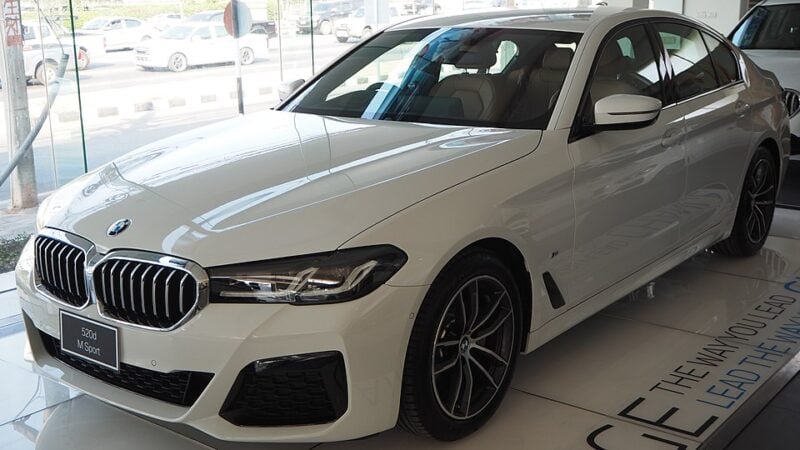
The BMW 5 Series has long been a benchmark in the luxury sedan segment, but potential buyers in 2026 face an important decision about whether a used model makes financial and practical sense.
For most buyers, a used BMW 5 Series from recent model years can be a worthwhile purchase if you select the right generation, understand the maintenance requirements, and factor in the higher ownership costs compared to mainstream brands.
The 2026 BMW 5 Series has a predicted reliability score of around 70 out of 100, which sits in the middle range for luxury vehicles. Your decision will depend on several factors beyond just the purchase price.
The total cost of ownership, including maintenance and repairs, plays a significant role in whether a used 5 Series fits your budget. Additionally, the driving experience, available technology, and how different model years compare in terms of dependability all contribute to making an informed choice.
This guide examines the key considerations for buying a used BMW 5 Series in 2026, from reliability patterns across recent generations to ownership expenses and how the 5 Series stacks up against competing luxury sedans. You’ll learn which model years offer the best value and what potential issues to watch for before making your purchase.
Let’s find out if a used 5 series is the right choice…..
Evaluating BMW 5 Series Reliability in Recent Years
The BMW 5 Series has shown varying reliability across different model years, with newer generations generally performing better than their predecessors. Recent models from 2019 onward demonstrate improved build quality, while certain years between 2011-2013 present mixed feedback from owners.
Common Issues and Recalls
The best and worst years for the BMW 5-Series show that models from 2008, 2011, 2012, and 2013 experienced the most problems. You should be aware that these years had issues with timing chain failures, oil leaks, and electronic malfunctions.
Common problems across various model years include failures in the cooling system, particularly water pumps and thermostats. The VANOS system, which controls variable valve timing, can develop issues requiring costly repairs. Electronic components like the iDrive system and various sensors may also malfunction as vehicles age.
If you’re considering a 2020-2024 model, you’ll find fewer widespread issues compared to earlier generations. However, you should still check for any outstanding recalls on specific VIN numbers before purchasing. The valve cover gaskets and oil filter housing gaskets remain wear items that typically need replacement around 80,000-100,000 miles.
Engine and Transmission Durability
The inline-six engines from the mid-2000s to early 2010s have earned a reputation for being robust and durable. These powertrains can easily exceed 200,000 miles with proper maintenance. You’ll find that the turbocharged four-cylinder engines introduced in later models offer better fuel economy but may require more frequent maintenance intervals.
The ZF eight-speed automatic transmission used in most recent 5 Series models proves highly reliable. This transmission requires fluid changes every 50,000-60,000 miles despite BMW’s initial “lifetime fluid” claims. Regular transmission service significantly extends component life.
Diesel variants, when available, demonstrated excellent longevity but came with emissions system complexity. The B58 inline-six engine introduced in 2017 models shows strong early reliability indicators with fewer reported issues than predecessor engines.
Longevity Compared to Competitors
The BMW 5-Series averages 66/100 reliability across all model years, placing it in the middle range compared to competitors. Mercedes-Benz E-Class and Audi A6 models typically score similarly in reliability metrics.
You can expect a well-maintained 5 Series to reach 150,000-200,000 miles before requiring major component replacements. This matches or slightly trails competitors like the Lexus GS, which generally offers superior reliability but less engaging driving dynamics. Japanese luxury brands consistently outperform German manufacturers in long-term dependability ratings.
Maintenance costs for the 5 Series run higher than mass-market sedans but remain competitive within the luxury segment. You should budget approximately $1,200-1,500 annually for routine maintenance on models outside warranty coverage.
Ownership Costs and Value Over Time
The BMW 5 Series experiences significant depreciation in its early years, with the steepest value loss occurring during the first three years of ownership. Beyond the purchase price, you’ll need to budget for higher-than-average maintenance costs and premium insurance rates that reflect the vehicle’s luxury status.
Depreciation Rates for 5 Series Models
Depreciation represents the largest factor in your total cost of owning a 5 Series. The model loses approximately 40-50% of its original value within the first three years.
By year five, you can expect the vehicle to retain roughly 35-45% of its initial purchase price. This means a 5 Series that cost $60,000 new will typically be worth $21,000 to $27,000 after five years of ownership.
The rate of depreciation slows considerably after the first three years. Later model years from 2020-2023 generally hold their value better than older generations due to improved technology and design updates.
Expected Maintenance and Repair Expenses
BMW maintenance costs run higher than non-luxury brands due to specialized parts and required dealer servicing. You should budget $1,200 to $1,800 annually for routine maintenance including oil changes, brake service, and filter replacements.
Major service intervals occur at 30,000, 60,000, and 90,000 miles, with costs ranging from $800 to $2,500 per service. Common repair items include cooling system components, electronic modules, and suspension parts that can cost $500 to $3,000 depending on the issue.
Models outside their factory warranty will require you to pay out-of-pocket for repairs. Consider purchasing an extended warranty or setting aside $150-$250 monthly for unexpected repairs.
Insurance Considerations
Insurance premiums for the 5 Series typically cost 15-25% more than average sedans due to higher repair costs and replacement values. Your annual premium will likely range from $1,800 to $3,200 depending on your driving record, location, and coverage levels.
Comprehensive and collision coverage costs more because parts and labor rates at BMW-certified shops exceed those of mainstream brands. Your age, credit score, and chosen deductible will significantly impact your final premium.
Driving Experience and Performance Factors
The BMW 5 Series delivers a refined driving experience with confident handling and multiple powertrain options. The latest generations emphasize comfort without sacrificing the sporty characteristics BMW is known for.
Handling and Ride Comfort
The 5 Series strikes a balance between athletic handling and daily comfort that makes it practical for various driving situations. You’ll notice precise steering feedback and composed body control when navigating corners, while the suspension absorbs road imperfections without feeling floaty or disconnected.
Recent model years offer adaptive suspension systems that let you adjust the ride characteristics based on your preferences. Sport mode firms up the damping for more direct road feel, while Comfort mode prioritizes a smoother ride for highway cruising or city commuting.
The sedan’s weight distribution and chassis tuning provide stable highway manners at speed. You won’t experience the harsh, punishing ride some performance sedans deliver, making the 5 Series suitable for long trips or daily use.
Engine Variants and Powertrains
BMW offers several engine choices across different 5 Series model years. The turbocharged four-cylinder engines in 530i models produce adequate power for most drivers while maintaining reasonable fuel economy. Six-cylinder engines in 540i variants deliver stronger acceleration and a smoother power delivery.
Performance-oriented M550i models feature turbocharged V8 engines that provide significantly more power for enthusiasts. Plug-in hybrid variants combine electric motors with gasoline engines for improved efficiency and local emission-free driving capability.
Transmission options typically include eight-speed automatic gearboxes that shift smoothly and respond quickly to throttle inputs. The powertrain choices you encounter depend on the specific model year and trim level you’re considering.
Technology and Infotainment Updates
The 5 Series features BMW’s iDrive infotainment system, which has evolved considerably across different generations. Newer models include larger touchscreens with improved graphics and faster processing speeds compared to older versions.
You’ll find standard features like Apple CarPlay and Android Auto integration on recent model years. The digital gauge cluster replaces traditional analog instruments, providing customizable displays for navigation, performance data, and vehicle information.
Driver assistance technologies vary by year and package, but many used 5 Series models include adaptive cruise control, lane keeping assist, and parking sensors. The system interfaces respond intuitively through the rotary controller, touchscreen, or voice commands.
Comparing Model Years and Trims
The G30 generation brought significant technological upgrades over the F10, while certain trims offer better value retention and feature sets for used buyers. Facelift models added refinements worth considering depending on your budget.
Differences Between G30 and F10 Generations
The F10 5 Series ran from 2011 to 2016, while the G30 took over from 2017 to 2023. The G30 introduced a completely redesigned platform with improved handling dynamics and a lighter chassis construction.
Interior technology represents the most dramatic difference. The G30 features the iDrive 6.0 and later 7.0 systems with larger touchscreens, gesture controls, and wireless Apple CarPlay. The F10 uses the older iDrive 4.0 system with a smaller screen and physical controls only.
Safety equipment varies considerably between generations. Standard driver assistance features on G30 models include forward collision warning and automatic emergency braking, which were optional or unavailable on most F10 variants. The G30 also offers semi-autonomous driving capabilities through the Driving Assistant Plus package.
Engine options evolved with both generations offering inline-six and V8 choices, though the G30’s B58 inline-six proves more efficient than the F10’s N55 engine.
Recommended Trims for Used Buyers
The 530i provides the best balance of performance and running costs for most buyers. This trim delivers adequate power from its turbocharged four-cylinder while avoiding the premium fuel requirements and higher maintenance costs of M Sport variants.
For those wanting more performance without M5 pricing, the 540i offers a smooth inline-six with 335 horsepower. The xDrive all-wheel-drive option adds approximately $2,000 to $3,000 to used prices but provides better traction in adverse conditions.
Trim recommendations by priority:
- Best value: 530i with Premium Package
- Best performance value: 540i rear-wheel drive
- Best features: 540i with Executive Package
- Best fuel economy: 530e plug-in hybrid (2018+)
M Sport packages add visual appeal but come with firmer suspension that some buyers find uncomfortable for daily driving. The 5 Series has historically depreciated faster than competitors, making higher trims more accessible on the used market.
Facelift Versus Pre-Facelift Models
BMW refreshed the G30 for the 2021 model year with revised front and rear styling, updated headlights, and a simplified grille design. The facelift models received iDrive 7.0 as standard, replacing the previous 6.0 system with enhanced voice commands and cloud-based navigation.
Interior updates included a revised digital gauge cluster with sharper graphics and new trim materials. The center console was redesigned with fewer buttons and a larger gear selector.
Pre-facelift G30 models (2017-2020) typically cost $5,000 to $8,000 less than equivalent facelift versions. You’ll sacrifice the latest software and slightly updated styling but gain essentially the same mechanical components and driving experience. For F10 models, the 2014-2016 facelift versions added LED headlights as standard and revised the iDrive interface, making them preferable to 2011-2013 models at similar price points.
Safety and Features Overview
The BMW 5 Series delivers comprehensive safety technology and a well-appointed interior that competes strongly in the luxury sedan segment. These elements contribute significantly to the vehicle’s overall value proposition in the used market.
Standard and Optional Safety Technologies
The 5 Series comes equipped with essential safety features including forward collision warning, automatic emergency braking, and lane departure warning as standard equipment. Blind spot monitoring and rear cross-traffic alert are typically included on most trims.
Higher trim levels and optional packages add advanced driver assistance features. Adaptive cruise control with stop-and-go functionality helps manage highway driving, while parking assistance systems simplify maneuvering in tight spaces. The available Driving Assistant Professional package bundles additional technologies like active lane keeping and evasive steering assist.
When shopping for a used 5 Series, you should verify which safety features are included on your specific vehicle. Equipment varies based on the original buyer’s selections and trim level. The technology offerings have evolved across model years, so newer examples typically include more advanced systems.
Interior Quality and Space
The cabin features high-quality materials including leather upholstery, real wood or aluminum trim, and solid construction throughout. Front seats provide excellent support and generous adjustment ranges for finding your optimal driving position.
Rear seat passengers get adequate legroom for adults on shorter trips, though the 5 Series prioritizes front occupant comfort. Trunk space measures approximately 18 cubic feet, which handles luggage for extended trips without issue.
The interior design and build quality represent key strengths that hold up well over time. You’ll find the iDrive infotainment system controls most vehicle functions through a central display, with physical controls retained for climate and volume adjustments.
Market Analysis for 2026 Buyers
Used BMW 5 Series prices in 2026 reflect broader market dynamics including inventory levels and seasonal demand patterns, while your purchase method significantly impacts long-term value and warranty protection.
Pricing Trends and Best Times to Buy
The 2026 car market continues to experience pricing pressure from elevated interest rates and shifting inventory levels. Used BMW 5 Series models typically see price reductions during specific periods throughout the year.
Optimal buying windows include:
- Late fall to early winter (November-January) when dealers clear inventory for new model years
- End of financial quarters (March, June, September, December) when dealerships push to meet sales targets
- Mid-summer (July-August) when buyer traffic traditionally slows
Recent generations like the 2023-2026 G60 5 Series entering the used market create downward pressure on older model pricing. You can expect 2019-2022 models to offer better value as newer inventory increases. Geographic location also affects pricing, with higher concentrations of luxury vehicles in metropolitan areas typically offering more competitive rates.
Certified Pre-Owned Versus Private Sale Options
BMW’s Certified Pre-Owned (CPO) program provides extended warranty coverage and rigorous inspection standards, but commands a premium over private sales. CPO vehicles include up to 6 years/100,000 miles of limited warranty coverage from the original in-service date.
Alternatives to the Used BMW 5 Series
The used luxury sedan market offers several compelling alternatives to the 5 Series, each with distinct advantages in reliability, value, and driving experience. Understanding whether to buy used or lease new also impacts your decision-making process.
Competing Midsize Luxury Sedans
The Mercedes-Benz E-Class stands as the most direct competitor to the BMW 5 Series, featuring an elegant design and similar performance characteristics. You’ll find comparable luxury appointments and technology features across both model lines.
The Audi A6 provides quattro all-wheel drive as standard on most trims, giving you enhanced traction in poor weather conditions. Its interior typically offers more modern infotainment interfaces than comparable-year 5 Series models.
Genesis G80 delivers luxury sedan features at a lower price point than German competitors. You get generous standard equipment and longer warranty coverage even on certified pre-owned models.
Lexus ES prioritizes reliability over sporty handling, making it an excellent choice if you want lower maintenance costs. Toyota’s luxury division consistently ranks higher in dependability surveys than BMW.
The BMW 6 Series Gran Turismo offers more cargo versatility with its hatchback design and slightly elevated seating position while maintaining the 5 Series driving dynamics.
Pros and Cons of Leasing New Versus Buying Used
Buying a used 5 Series means you avoid the steepest depreciation hit, as these vehicles can lose 45-70% of their value in the first five years. You’ll own the vehicle outright once paid off and face no mileage restrictions.
However, you should expect approximately $13,500 in service costs over the first ten years of ownership. Older models may lack modern safety features and require more frequent repairs as components age.
Leasing new provides warranty coverage for the entire lease term, eliminating unexpected repair costs. You’ll drive the latest technology and safety features with lower monthly payments than financing a purchase.
The downside is you’re always making payments without building equity. You must stay within mileage limits and return the vehicle in good condition to avoid fees.
Conclusion
The used BMW 5 Series presents a compelling option if you prioritize driving dynamics and premium features in a midsize luxury sedan. You get access to advanced technology, comfortable interiors, and the brand’s reputation for engaging performance at a lower price point than buying new.
However, you need to factor in higher maintenance costs compared to non-luxury alternatives. BMW repairs and parts command premium pricing, and you should budget accordingly for routine service and potential repairs as the vehicle ages.
The 2023-2026 generation offers modern conveniences like improved interior space and updated tech systems, though some reviews note over-engineered controls that may require an adjustment period. Your decision should weigh these considerations:
Key factors to consider:
- Your budget for ongoing maintenance
- Warranty coverage availability
- Your driving priorities (performance vs. practicality)
- Tolerance for technology complexity
If you value driving engagement and don’t mind the premium ownership costs, a used 5 Series delivers the luxury sedan experience BMW is known for. The model remains a reliable daily driver when properly maintained.
Your best approach involves thorough inspection, reviewing complete service records, and potentially securing an extended warranty. This minimizes risk while letting you enjoy the benefits of BMW’s engineering at a more accessible price point than new models command.