Peacefully Frolicking from Reykjavik to Southampton on Oceania Marina
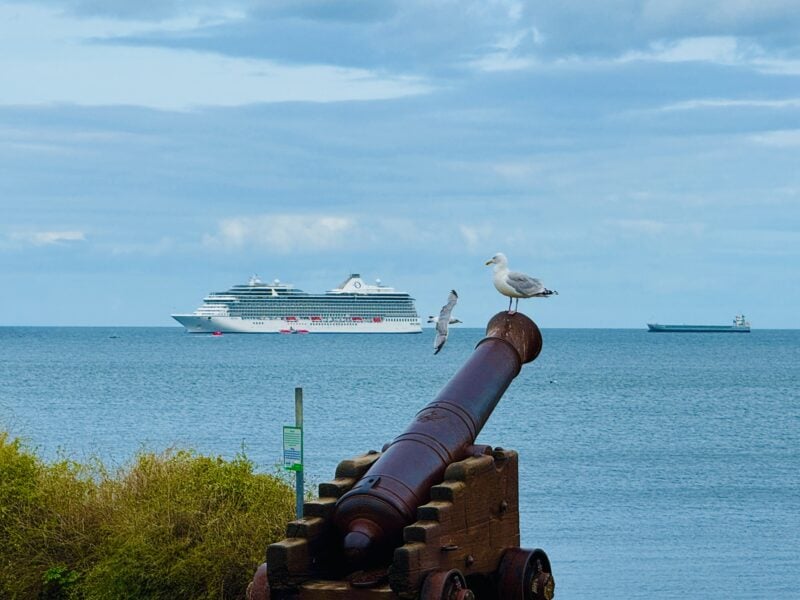
Recalling Homer’s Odyssey, and the basis of Hollywood’s recent blockbuster starring Matt Damon, this classic story reflects the pressured tension between the allure of adventure on one hand, and the desire for the comforts of home and meaningful relationships on the other. An enigma literally for the ages.
Traveling recently on Oceania Cruise’s Marina from Reykjavik, Iceland to Southampton, England on a 12-night voyage, it became clear again that Oceania somehow takes that friction and seamlessly removes it, thus granting guests the luxurious gift of experiencing the joy of travel. Stated so eloquently by Daniel Mendelsohn, “Who among us does not simultaneously dream of travel, exposure to new places and ideas, while simultaneously craving the stability that comes with having a home and security?” Indeed, Oceania may be the ultimate home away from home, albeit on the high seas providing the pearls of the world’s many oysters to those wishing to experience it.
In today’s often tumultuous world replete with stress, angst, and chaos, travel has become so much more than a voyage, and far more than experiencing a new city, culture, or cuisine. Certainly, more than revisiting a known one. Travel is now better understood as resting in its rightful place as much needed emotional currency, for which there is truly no substitute. For me, this concept pumps directly into the very heartbeat of my life.
In my first career, and again in my second career as a journalist, I lived abroad twice and traveled to 123 countries. Yet inexplicably, I somehow managed never to visit Ireland or Scotland. One of biggest appeals of this particular itinerary was that embarkation would be in Reykjavik, a charming, spotless city I had visited twice before, but would head along Iceland’s remote northern coast to Denmark’s Faroe Islands, before making stops in Scotland, and Ireland, with disembarkation in Southampton. Thus, Oceania Marina would correct this dastardly personal deficit of mine with style and panache.
Oceania Marina: The Perfect Match of Class and Comfort
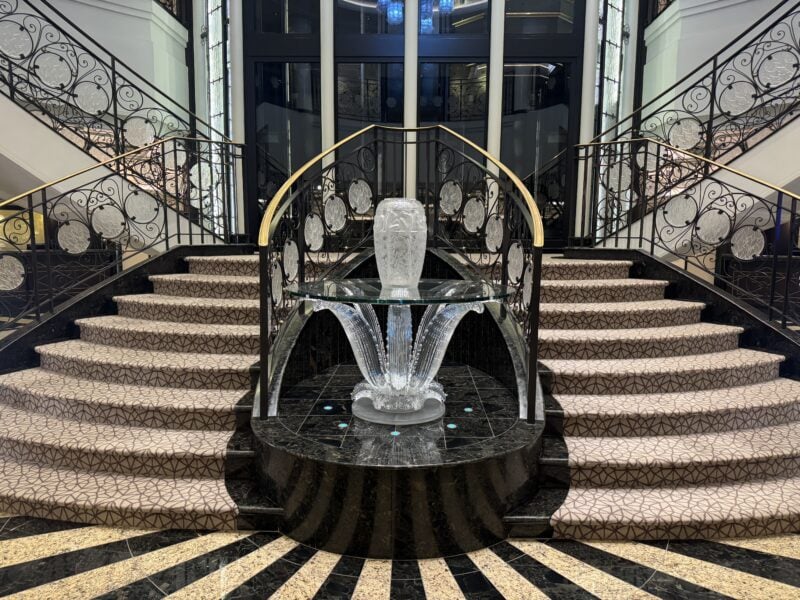
The Marina is an adults-only O-class ultra-premium ship holding 1,250 passengers and 750 delightful crew from 50 nations. It was built in 2011 and fully refurbished in 2024. It’s at the same time an elegant, high-end ship with a top-notch art collection – including several Picasso and Miro pieces – the full service Aquamar Spa, casino, excellent cuisine for which it’s well-known, inspired culinary classes, an enrichment program buttressing the itinerary’s destinations, all while maintaining a friendly, relaxed atmosphere.
On this voyage there were 1,062 guests from 32 countries with about half from North America, and most were in the 50-75 age range. Public areas are spacious, comfortable, and so well-designed, it felt as though there were far fewer guests onboard, even on sea days.
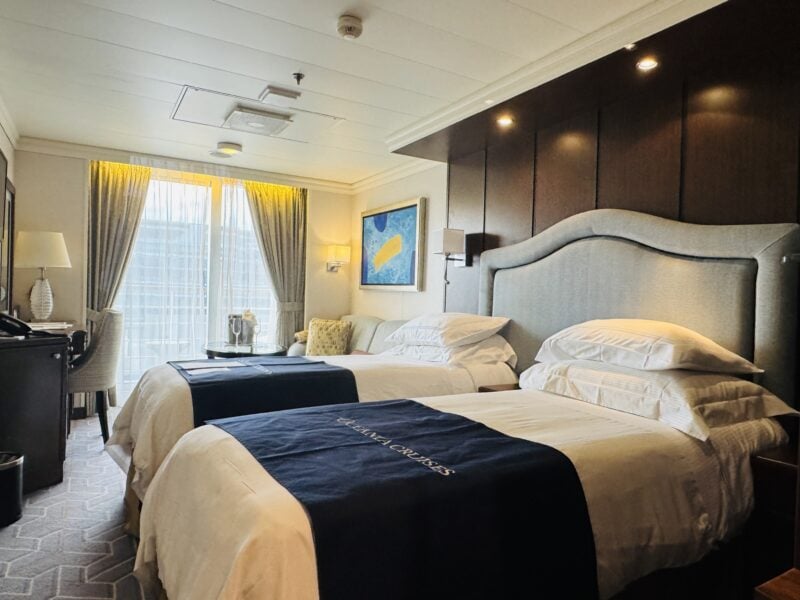
My Deck 9 Concierge stateroom had excellent twin bedding with high-count cotton sheets ensuring delightful slumber, a comfortable sofa, coffee table, working desk, plenty of USB ports and outlets, a stocked, daily replenished mini refrigerator, flat screen television, and plenty of closet space and drawers.
The large bathroom had a wonderful deep soaking bathtub, a separate stall shower, granite vanity, thick towels and bathrobes, Aquamar amenities, and an abundance of storage. Our kind butler and his assistant kept our stateroom impeccable in twice daily service.
Foodies Rejoice

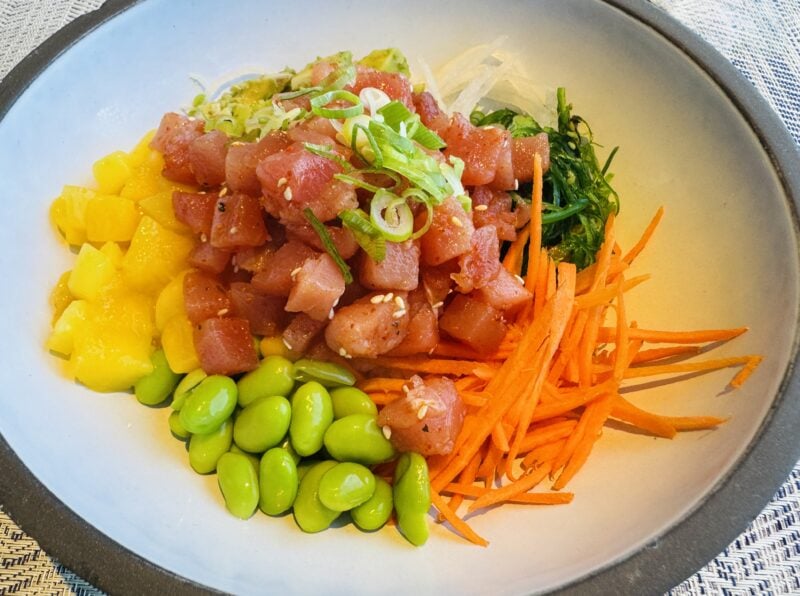
Oceania Cruises is known for having some of the finest cuisine at sea and the Marina is no exception. The high ratio of chefs to guests explains in part why the food onboard is so consistently marvelous.
Oceania’s signature restaurants are the Italian Toscana with its olive oil sommelier, the pan-Asian Red Ginger with new Japanese-Peruvian dishes known as Nikkei, and the Polo Grill classic steakhouse. There are also Oceania’s staple favorites: the Grand Dining Room which now boasts dozens of new recipes, the Terrace Café buffet, Waves Grill with light breakfasts, grilled items during the day, and pizza by night, and the innovative Aquamar Kitchen healthy concept eatery.
The afternoon tea is not to be missed, because who doesn’t enjoy warm scones, clotted cream, and preserves, with a side of live classical music quartet? Keep in mind that calorie counting, especially during dessert may result in felony charges, and be forewarned that dieting generally is considered an illegal onboard activity.
Scotland Bound
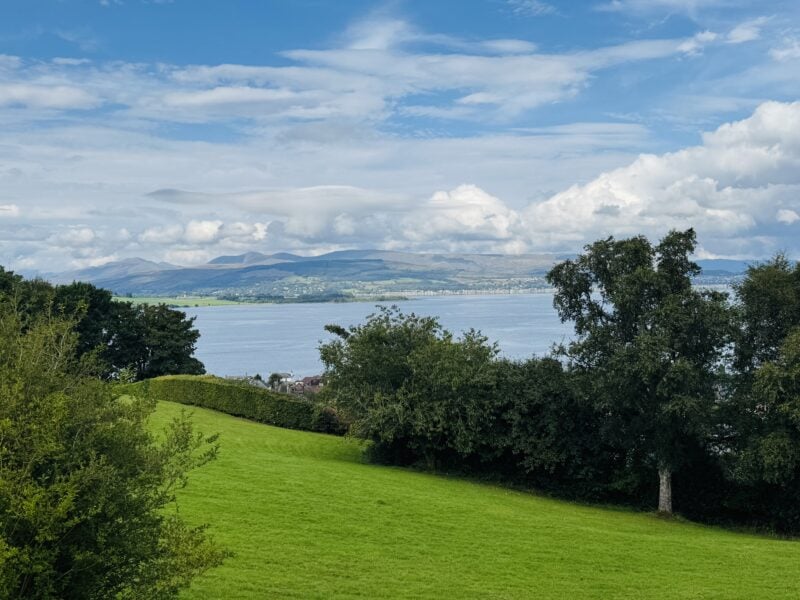
After leaving Reykjavik we sailed along Iceland’s northern coast and ethereal fjords, making full day stops in the fishing and whaling towns of Isafjörður, Húsavík, and Djúpivogur. Here life has remained relatively unchanged except of course for technology that brings Netflix and other entertainment to households everywhere on planet earth.
Arriving in Greenock, the port for Glasgow, I thought of Jerri Neilsen’s words. Neilsen was a physician stuck midwinter in Antarctica who was diagnosed with cancer but unable due to long winter conditions to depart for treatment. Later, while in remission she became a ship doctor and said, “I believe in geographic cures – they allow you to throw all of your cards in the air and see where they land, then pick them back up and deal with them again.” Anyone with an adventurous, traveling spirit could appreciate those words.
In Greenock, there are several architecturally significant Victorian buildings, including the Sheriff’s and Justice of the Peace Courthouse. The Westburn Parish Church on Nelson Street, once known as The Old Kirk, was built in 1840, though the spire was added 15 years later.
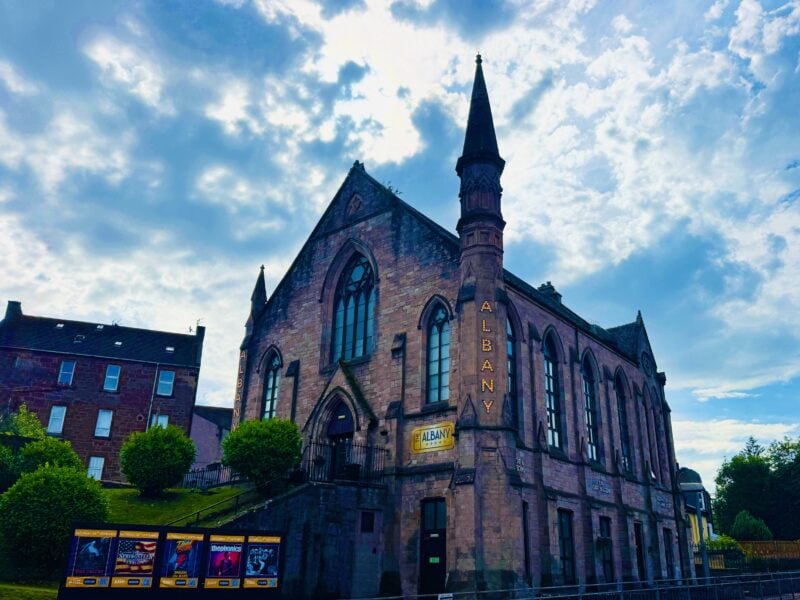
Particularly interesting in Greenock is that a number of gorgeous local churches have been repurposed and are now thriving in new uses as theaters, event spaces, creative studios, and brasseries, such as The Albany. A pleasant walk up to Lyle Hill Viewpoint offered breathtaking, panoramic views of the Firth of Clyde and surrounding areas. Afterwards, experiencing “Hole in the Wa” on W. Black Street with its hometown conviviality was akin to being in a Scottish version of the sitcom Cheers.
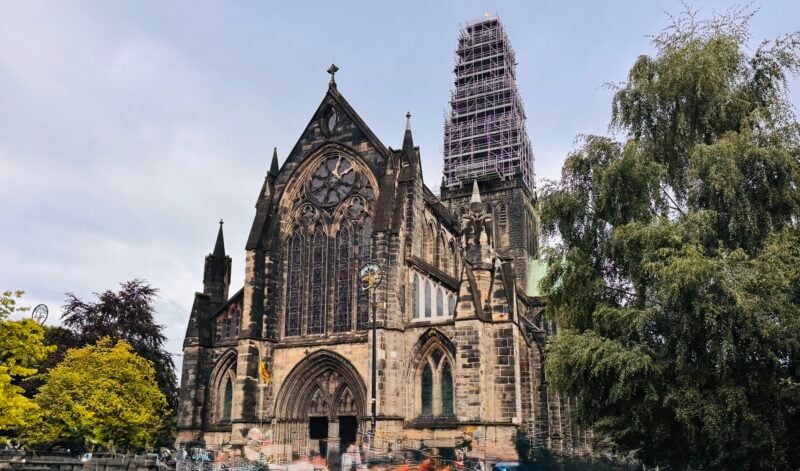
Glasgow, an 851-year-old city, is an architectural wonderland with over 1,800 buildings of note and perhaps more importantly, 271 pubs. Construction of the medieval Gothic Glasgow Cathedral commenced in 1136 and took 350 years to complete. It’s only one of two Scottish cathedrals to have survived the Reformation intact.
One could spend many days at Kelvingrove Art Gallery and Museum in its 22 galleries. Salvador Dali’s Christ of the St. John of the Cross is here though notably missing any melting paraphernalia. Also here, Vincent Van Gogh’s portrait of Alexander Reid who looks remarkably like the painter himself. There was so much to see in Glasgow, clearly a return trip to the ‘Dear Green Place’ as its affectionately known would happily be necessary.
Finally, the Luck of the Irish
It’s difficult, if not impossible to contemplate American history without simultaneously considering Irish history: the potato famine, mass immigration, and more recently, the Irish civil war known as the Troubles. Of course, the American experiment shaped notably by many of those immigrants, including the Kennedys and countless others, is defined by the profoundly rich history and legacy that has defined it.
In an interesting twist, many Americans with ancestral roots to Ireland are now seeking and obtaining Irish citizenship for EU member status and a residential insurance policy of sorts given the current U.S. political climate, thus presenting an interesting socio-political juxtaposition.
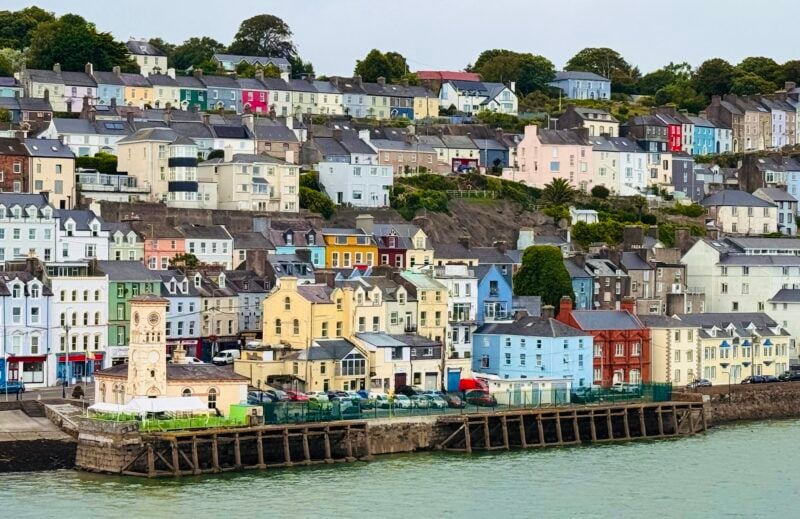
Without personal ties to Ireland and already possessing an EU passport, I was able to view Ireland as a traveler with few preconceived notions. What I found was natural beauty second to none, emerald greenery as far as the eye could see, and a seemingly endless supply of sheep, all coupled with incredibly hospitable people.
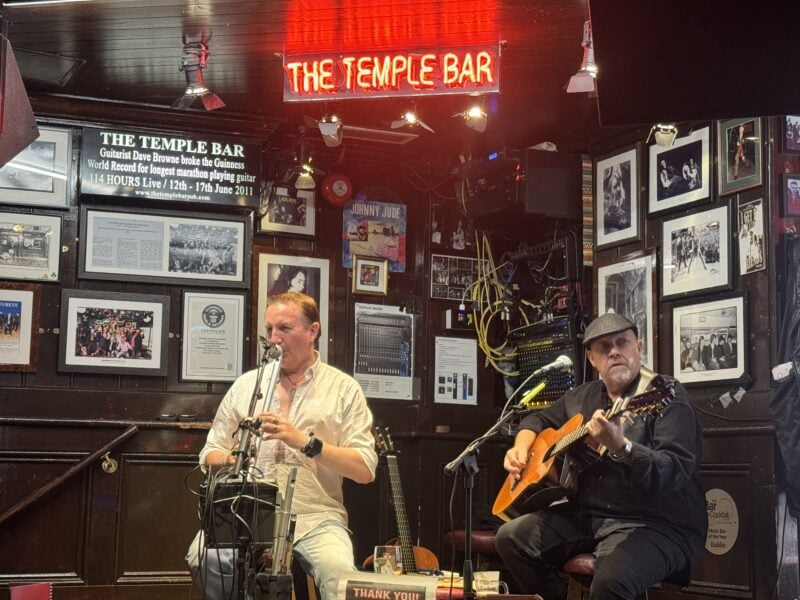
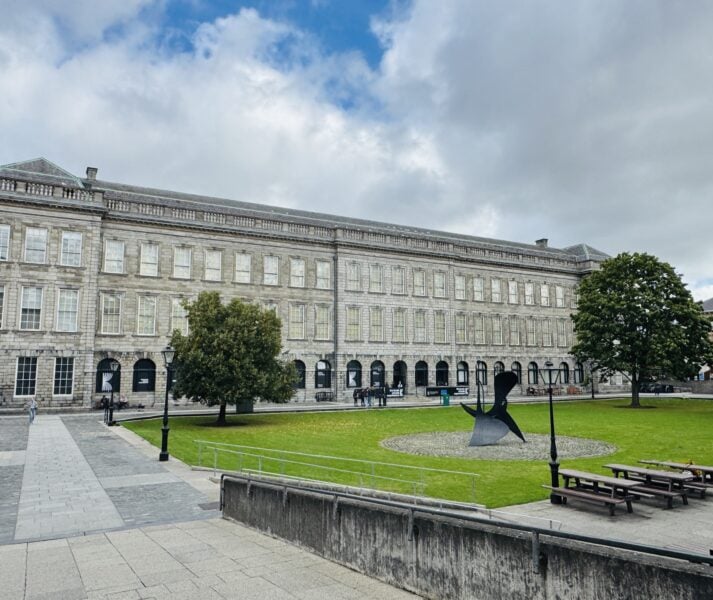
Docking in Dún Laoghaire, Dublin’s gateway, we walked along the iconic East Pier, then it was only a 15-minute coastal train ride to Dublin’s heart, Trinity College. After meandering the campus and Book of Kells, and St. Stephen’s Cathedral, we fortified at the iconic Temple Bar, with an obligatory – and wonderful – Irish Coffee, while listening to live music.

Ireland’s National Gallery has a great collection of paintings by Jack Yeats’ younger brother, poet William Butler Yeats, and of course Irish stained glass. For those who miss their four-legged friends while traveling and wish to also see St. Stephen’s Green Park, the city’s expansive lungs while visiting more of Dublin by foot can get their canine fix by joining the Irish wolfhound walking tour providing 90-minute tours with gorgeous well-trained Irish wolfhounds and a great guide.

In Cork, we naturally went to Blarney Castle and meandered its expansively beautiful grounds, though I didn’t dare kiss the Blarney Stone because rumor has it my “gift of gab” is quite stellar enough. In Cork City, the covered Victorian English Market has since 1788 been a focal food point. Glorious baked goods, charcuterie, cheeses, and all manner of ethnic foods items to tempt into submission. Nearby, the French Neo-Gothic-style Saint Fin Barre’s Cathedral boasts incredible architecture, statuary, and gargoyles.

Back on the Marina, we were treated to a marvelous performance by a local Celtic dance troupe. As they tapped, clicked, and tip-toed across the stage, we were reminded of our good fortune to be aboard Oceania Marina. Finally experiencing the newest additions to my personal atlas, Oceania proved once again, in a concerto-like symphony that world travel and the luxurious comforts of home on the high seas can very peacefully coexist. Happy travels!