Porsche Cayenne vs Range Rover Sport: Comparison of Performance, Luxury, and Value
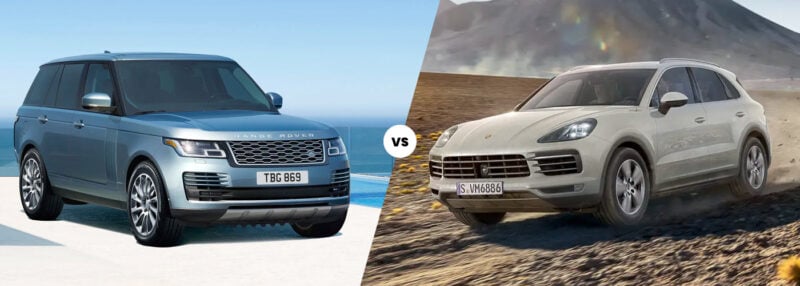
The luxury SUV segment presents two formidable contenders that consistently attract discerning buyers seeking both performance and prestige. When comparing these vehicles, you’ll find that each excels in different areas, making your choice dependent on your specific priorities and driving preferences.
The Porsche Cayenne typically offers superior on-road performance and handling dynamics at a lower starting price, while the Range Rover Sport provides greater off-road capability and a more commanding road presence.
The Cayenne starts at $65,700, positioning it as the more accessible option from a pricing standpoint. Both vehicles deliver the refinement and luxury features expected in this segment, though they achieve these goals through distinctly different approaches.
Your decision between these two luxury SUVs will depend on factors including powertrain preferences, technology expectations, planned usage scenarios, and long-term ownership considerations.
Understanding how each vehicle performs across key areas like comfort, safety, customization options, and resale value will help you determine which model aligns best with your needs.
Powertrain and Performance
Both SUVs deliver substantial power through multiple engine configurations, with the Cayenne emphasizing sporty precision and the Range Rover Sport balancing performance with off-road capability. Your choice depends on whether you prioritize track-ready handling or versatile capability.
Engine Options
The 2026 Porsche Cayenne offers several powertrain choices starting with a turbocharged 3.0-liter V6 producing 348 horsepower in the base model. You can upgrade to the Cayenne S with a twin-turbo 4.0-liter V8 generating 468 horsepower, or select the Cayenne Turbo with the same V8 tuned to 591 horsepower.
The Range Rover Sport also provides multiple engines, beginning with a turbocharged 3.0-liter inline-six producing 355 horsepower. The P400 variant pairs this engine with mild-hybrid technology for 395 horsepower. At the top sits the Range Rover Sport SV with a twin-turbo 4.4-liter V8 delivering 543 horsepower.
Both manufacturers offer plug-in hybrid variants. The Cayenne E-Hybrid combines a turbocharged V6 with an electric motor for 463 horsepower total output. All models come standard with all-wheel drive and eight-speed automatic transmissions.
Acceleration and Top Speed
The Porsche Cayenne demonstrates superior acceleration in comparable trim levels. The Cayenne Turbo reaches 60 mph in just 3.7 seconds with a top speed of 177 mph. Even the base Cayenne completes the sprint in 5.7 seconds.
The Range Rover Sport P400 reaches 60 mph in 5.7 seconds, matching the base Cayenne’s performance. The top-tier Sport SV accelerates to 60 mph in 3.6 seconds with a top speed electronically limited to 180 mph. These figures place both vehicles among the fastest SUVs available, though the Porsche maintains an edge across most comparable configurations.
Handling and Driving Dynamics
The Cayenne prioritizes on-road agility with sport-tuned suspension, precise steering, and active roll stabilization. You’ll experience minimal body roll through corners and sharp turn-in response. The chassis feels more connected to the road, delivering feedback typical of Porsche’s sports car heritage.
The Range Rover Sport offers adaptive air suspension that adjusts ride height and damping for different conditions. While capable through corners, it feels less sharp than the Cayenne but provides superior comfort over rough surfaces. You get configurable terrain response systems that optimize performance for sand, mud, rock crawling, and snow, capabilities the Porsche doesn’t match.
Luxury and Comfort Features
Both SUVs deliver premium cabin experiences with high-quality materials and advanced comfort technologies, though they take different approaches to luxury execution and spatial design.
Interior Design and Materials
The Porsche Cayenne features a driver-focused cockpit with a curved digital display and minimalist design philosophy. You’ll find standard leather upholstery, brushed aluminum trim, and optional carbon fiber accents throughout the cabin. The dashboard layout emphasizes functionality with clearly organized controls and a 12.6-inch touchscreen infotainment system.
The Range Rover Sport offers a more traditional luxury approach with its Pivi Pro dual-screen setup and extensive wood veneer options. You get standard Windsor leather seats and can upgrade to semi-aniline leather with contrast stitching. The cabin design prioritizes elegance over sportiness, with softer lines and more ornate detailing.
Both vehicles offer ambient lighting systems, heated and ventilated front seats, and premium sound systems. The Cayenne and Range Rover Sport comparison shows distinct interior philosophies that cater to different preferences.
Seating and Space
The Cayenne provides comfortable seating for five passengers with 27.2 cubic feet of cargo space behind the rear seats. Rear passengers get 35.4 inches of legroom, which is adequate but not exceptional for this segment. You can configure the Cayenne with 18-way power-adjustable front seats and four-zone climate control.
The Range Rover Sport offers slightly more rear legroom at 37.6 inches and comparable cargo capacity. You’ll notice the rear bench sits higher, providing better visibility for passengers. Optional second-row captain’s chairs are available, reducing capacity to four passengers but increasing individual comfort.
Both SUVs offer panoramic sunroofs and heated rear seats as options. The Range Rover Sport’s cabin feels more spacious due to its taller roofline and larger greenhouse.
Noise Insulation
The Cayenne uses acoustic glass and extensive sound deadening materials to create a quiet cabin at highway speeds. You’ll experience minimal wind noise thanks to frameless door designs and tight panel gaps. Engine noise is well-controlled, even in sportier variants.
The Range Rover Sport employs active noise cancellation technology alongside traditional insulation methods. You benefit from triple-sealed doors and laminated glass that effectively block road and wind noise. The air suspension system also contributes to a quieter ride by absorbing road imperfections before they generate cabin noise.
Technological Innovations
Both the Porsche Cayenne and Range Rover Sport integrate advanced digital systems that prioritize connectivity and safety. The Cayenne emphasizes performance-oriented technology while the Range Rover Sport focuses on luxury convenience and terrain management.
Infotainment Systems
The Porsche Cayenne features the Porsche Communication Management (PCM) system with a 12.3-inch touchscreen display. The interface responds quickly to inputs and includes navigation, audio controls, and vehicle settings in a straightforward layout. You can customize the home screen to prioritize frequently used functions.
The Range Rover Sport equips the Pivi Pro system with dual 13.1-inch curved displays for the driver and infotainment. This setup provides separate screens for instrumentation and media controls. The system boots up in seconds and maintains responsive performance during operation. Both vehicles offer premium sound systems, with the Cayenne providing Burmester audio and the Range Rover Sport featuring Meridian options.
Connectivity and Integration
Both SUVs include wireless Apple CarPlay and Android Auto as standard features. The Cayenne offers wireless charging and multiple USB-C ports throughout the cabin. You can connect your smartphone to access apps, messages, and navigation through either system.
The Range Rover Sport adds Amazon Alexa integration for voice commands beyond basic phone functions. Both vehicles support over-the-air software updates to add features and improvements without dealer visits. Wi-Fi hotspot capability comes standard in both models, allowing passengers to connect multiple devices during travel.
Driver Assistance Features
The Cayenne and Range Rover Sport comparison shows both vehicles include adaptive cruise control, lane keeping assist, and automatic emergency braking. The Cayenne adds Night Vision Assist as an available option, using thermal imaging to detect pedestrians and animals in low-light conditions.
The Range Rover Sport includes Clear Exit Monitor that alerts occupants to approaching vehicles before opening doors. Both SUVs offer 360-degree camera systems with multiple viewing angles. Parking assistance features guide you into spaces with steering inputs, though you control acceleration and braking. The Range Rover Sport’s Terrain Response 2 system automatically adjusts vehicle settings based on detected surface conditions.
Ride Quality and Off-Road Capability
The Cayenne delivers a sport-tuned ride focused on handling precision, while the Range Rover Sport balances luxury comfort with genuine off-road prowess through advanced suspension and terrain systems.
Suspension Systems
The Porsche Cayenne uses an adaptive air suspension system that adjusts damping forces in milliseconds. This setup prioritizes minimal body roll during cornering and responsive handling on paved roads. You get three-chamber air springs that can lower the vehicle for improved aerodynamics at highway speeds or raise it slightly for rough pavement.
The Range Rover Sport features Dynamic Air Suspension with Adaptive Dynamics that focuses on absorbing impacts while maintaining composure. The system provides up to 11.7 inches of ground clearance in its highest setting. You’ll notice softer damping calibration compared to the Cayenne, which translates to better isolation from road imperfections and superior wheel articulation on uneven terrain.
Both systems offer multiple ride height settings, but the Range Rover emphasizes off-road capability with terrain modes and an air suspension, while the Cayenne prioritizes on-road dynamics.
Terrain Management Technology
The Cayenne includes Porsche Traction Management with optional off-road packages that add specific driving modes. Your options include Gravel, Mud, Sand, and Rocks settings that adjust throttle response, stability control, and differential locking. However, these features serve as occasional-use tools rather than primary capabilities.
The Range Rover Sport provides Terrain Response 2 with automatic surface detection. The system recognizes what you’re driving on and configures eight different vehicle parameters accordingly. You get dedicated modes for grass/gravel/snow, mud/ruts, sand, and rock crawl. The Sport also includes wade sensing for water crossings up to 35.4 inches deep and ClearSight Ground View technology that displays the area directly in front of your vehicle.
Safety Ratings and Features
Both the Porsche Cayenne and Range Rover Sport prioritize occupant protection through advanced safety technologies and robust structural engineering. Each vehicle offers comprehensive active safety systems and has undergone rigorous crash testing to validate their protective capabilities.
Active Safety Systems
The Porsche Cayenne comes standard with automatic emergency braking, lane departure warning, and adaptive cruise control across most trim levels. You’ll find additional features like lane keeping assist and blind spot monitoring available on higher trims or as part of optional packages.
The Range Rover Sport similarly equips you with autonomous emergency braking and lane keep assist as standard features. Its ClearSight Ground View technology provides a virtual view beneath the vehicle, helping you navigate challenging terrain and tight parking situations.
Both SUVs offer 360-degree camera systems and rear cross-traffic alert in their upper trims. The Cayenne’s optional Night Vision Assist uses thermal imaging to detect pedestrians and animals beyond headlight range. The Range Rover Sport counters with Driver Condition Monitor that alerts you to signs of drowsiness or distraction.
Parking assistance systems are available on both vehicles, with the Range Rover Sport offering remote parking capability through its smartphone app.
Crash Test Performance
Neither the 2026 Porsche Cayenne nor the 2026 Range Rover Sport has received complete crash test ratings from NHTSA or IIHS at this time. Previous model years of both vehicles have demonstrated strong structural integrity in testing, though specific scores vary by year and testing organization.
The Cayenne’s high-strength steel safety cage and eight standard airbags provide multilayer protection. You’ll benefit from automatic post-collision braking that applies brakes after an initial impact to prevent secondary collisions.
The Range Rover Sport features an aluminum monocoque body structure designed to absorb and distribute crash forces. Its airbag system includes curtain airbags that extend to third-row passengers when equipped.
Ownership Costs
The Porsche Cayenne and Range Rover Sport differ significantly in their pricing structures and long-term ownership expenses. Both vehicles command premium prices, but the Range Rover Sport typically starts at a lower base price while the Cayenne offers better fuel efficiency and potentially lower maintenance costs.
Pricing and Trims
The 2026 Range Rover Sport generally starts at a lower MSRP than the Cayenne, with base models beginning around $83,000 compared to the Cayenne’s starting price near $76,000. However, when you compare pricing across trim levels, the gap narrows considerably.
The Cayenne offers multiple configurations including the base model, S, GTS, Turbo, and Turbo GT variants. The Range Rover Sport provides similar variety with SE, Dynamic SE, Autobiography, and SVR trims. Your final cost will vary dramatically based on which powertrain and luxury features you select, with top-tier models exceeding $150,000 for both vehicles.
Fuel Efficiency
The 2024 Porsche Cayenne delivers better fuel economy than the Range Rover Sport in most configurations. The base Cayenne with its 3.0L turbocharged V6 achieves approximately 19 mpg city and 23 mpg highway, while the Range Rover Sport’s inline-six returns similar numbers but typically falls slightly behind.
If you prioritize efficiency, both manufacturers offer plug-in hybrid variants that significantly reduce fuel consumption. The Cayenne E-Hybrid and Range Rover Sport PHEV provide electric-only range for short commutes and substantially improved combined fuel economy ratings.
Maintenance and Reliability
Porsche has established a stronger reputation for reliability compared to Land Rover. You can expect the Cayenne to require fewer unscheduled repairs and experience lower long-term maintenance costs. Land Rover vehicles historically rank lower in dependability surveys, which translates to higher ownership expenses over time.
Both vehicles require premium fuel and specialized service from certified technicians. Warranty coverage is similar, with both manufacturers offering four-year/50,000-mile basic warranties. Your maintenance costs will include expensive parts and labor rates that reflect the luxury segment positioning of both brands.
Brand Prestige and Heritage
Both manufacturers bring distinct legacies to the luxury SUV market, with Porsche rooted in motorsport excellence and Range Rover established through decades of off-road innovation and British refinement.
Porsche’s Legacy
Porsche’s reputation stems from over 75 years of engineering sports cars that dominate racetracks worldwide. The brand earned its prestige through countless victories at Le Mans, creating the iconic 911, and delivering precise German engineering across every model.
When Porsche introduced the Cayenne in 2002, it faced skepticism from purists. The company proved critics wrong by applying its sports car DNA to an SUV platform, creating a vehicle that could handle like a sports car while offering practical utility. This track-inspired performance and first-class comfort combination became the benchmark for the segment.
You get a brand synonymous with performance credentials and motorsport heritage. Porsche’s badge carries weight among driving enthusiasts who value dynamic handling and engineering precision above all else.
Range Rover’s Reputation
Range Rover has spent over 50 years defining British luxury in the SUV segment. The brand built its name on genuine off-road capability combined with aristocratic refinement, serving everyone from British royalty to Hollywood celebrities.
Land Rover created the original Range Rover in 1970 as the world’s first luxury 4×4. The Range Rover Sport arrived in 2005, blending the brand’s traditional capability with sportier styling and road manners. You benefit from a nameplate that represents adventure, exploration, and sophisticated elegance.
The brand maintains its position as a status symbol particularly valued for its commanding presence and distinctive British character. When you choose Range Rover, you align yourself with a heritage of expedition-ready vehicles wrapped in upscale appointments.
Resale Value and Longevity
The Porsche Cayenne maintains stronger resale values compared to the Range Rover Sport. Luxury SUV buyers should expect the Cayenne to retain approximately 50-55% of its original value after five years, while the Range Rover Sport typically holds 45-50% during the same period.
Reliability plays a significant role in these depreciation rates. The Cayenne has a good safety rating and is one of the most reliable cars in the luxury SUV segment. Range Rovers have historically struggled with reliability concerns, which directly impacts their long-term value retention.
Key Resale Factors:
- Porsche Cayenne: Consistent build quality, lower maintenance costs, strong brand reputation for reliability
- Range Rover Sport: Higher repair expenses, more frequent service needs, mixed reliability history
Your ownership costs extend beyond the purchase price. The Cayenne typically requires less frequent repairs and has lower annual maintenance expenses. Range Rover Sport owners often face higher service bills, particularly after the warranty period expires.
Market demand favors the Cayenne when you decide to sell. Buyers willing to purchase used luxury SUVs prefer vehicles with proven reliability records. The Range Rover Sport’s reputation for mechanical issues makes it a harder sell on the secondary market.
If you plan to keep your luxury SUV for seven years or more, the Cayenne offers better financial value. Your total cost of ownership will likely be lower despite the comparison between these luxury vehicles showing similar starting prices.
Customization and Personalization Options
Both the Porsche Cayenne and Range Rover Sport offer extensive personalization programs that allow you to create a truly unique vehicle. Your choices extend far beyond simple color selection.
Porsche provides its exclusive Porsche Exclusive Manufaktur program, which enables you to customize nearly every aspect of your Cayenne. You can select from extended leather options, unique paint finishes, custom interior trims, and specialized equipment packages. The program includes options like painted brake calipers, carbon fiber accents, and personalized stitching patterns.
Land Rover counters with its own comprehensive customization suite for the Range Rover Sport. You gain access to multiple design packages, premium paint options including SV Bespoke colors, and various wheel designs ranging from 21 to 23 inches. The configurator lets you choose between different interior themes, seating materials, and veneer finishes.
Key Customization Features:
- Porsche Cayenne: Exclusive Manufaktur program, custom leather configurations, painted exterior trim, personalized treadplates
- Range Rover Sport: SV Bespoke options, extended leather packages, multiple interior themes, contrast roof options
Your budget significantly impacts your customization possibilities. Porsche’s Exclusive Manufaktur options can add substantial cost to your base price, while Land Rover’s premium packages similarly increase your total investment. Both manufacturers allow you to build your ideal luxury SUV, though the specific aesthetic direction differs between German precision and British luxury design philosophy.
Final Considerations
When choosing between these two luxury SUVs, you need to evaluate what matters most in your daily driving experience. The Porsche Cayenne delivers track-inspired performance that prioritizes handling and sporty dynamics. The Range Rover Sport emphasizes traditional luxury and refined comfort.
Your budget plays a significant role in this decision. The Cayenne typically offers a more accessible entry price point while maintaining premium features. You should factor in long-term ownership costs including maintenance, insurance, and depreciation when making your choice.
Key Decision Factors:
- Performance priority – Cayenne excels in sporty handling and road dynamics
- Off-road capability – Range Rover Sport provides superior ground clearance and terrain management
- Interior refinement – Both offer high-end materials but with different design philosophies
- Technology features – Each brand brings distinct infotainment and driver assistance systems
- Brand heritage – Porsche emphasizes racing legacy while Land Rover focuses on adventure capability
Your intended use matters considerably. If you spend most time on paved roads and value driving engagement, the Cayenne aligns with those needs. The Range Rover Sport suits you better if off-road adventures and commanding presence are priorities.
Test driving both vehicles remains essential before making your final decision. You’ll experience firsthand how each SUV’s steering feel, ride quality, and seating position match your preferences. Your personal connection with either vehicle will ultimately guide you toward the right choice for your lifestyle and driving requirements.