
BMW 5 Series vs Mercedes E-Class: Which Luxury Sedan Is Better for Daily Driving?
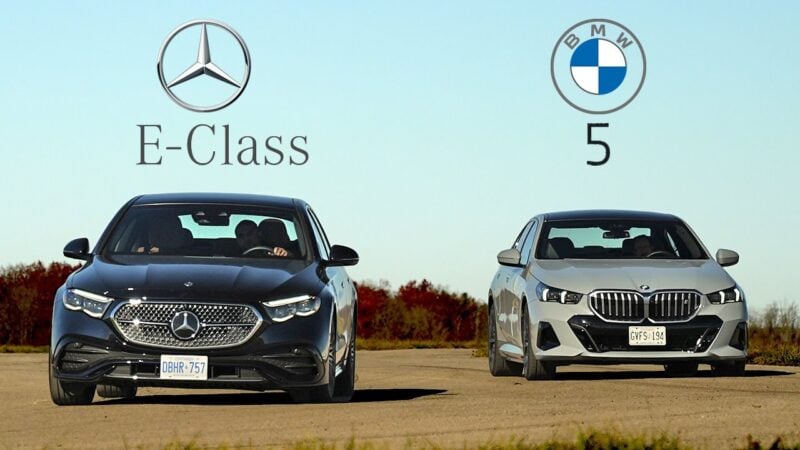
The BMW 5 Series and Mercedes E-Class rivalry has defined the luxury sedan segment for decades, with both manufacturers targeting business professionals and families who demand premium quality.
These German sedans offer similar price points and equipment levels, making your choice between them dependent on specific priorities rather than clear superiority.
For daily driving, the BMW 5 Series typically delivers a more engaging and dynamic experience behind the wheel, while the Mercedes E-Class excels in comfort and refinement for those who prioritize a relaxed commute.
The 5 Series maintains its reputation as the better driving machine, offering sharper handling and more responsive steering that makes even mundane trips feel rewarding.
Your decision ultimately depends on whether you value spirited driving dynamics or serene luxury. This comparison examines performance capabilities, daily comfort, running costs, interior technology, safety systems, and ownership considerations to help you determine which sedan aligns with your lifestyle and driving preferences.
Performance and Powertrain
Both sedans deliver strong performance credentials with turbocharged engines, smooth automatic transmissions, and quick acceleration that makes merging and highway passing effortless. The BMW 5 Series offers sportier dynamics while the Mercedes E-Class prioritizes refined power delivery.
Engine Options and Output
The 2025 BMW 5 Series base model comes with a turbocharged 2.0-liter four-cylinder engine producing 255 horsepower and 295 lb-ft of torque. You can upgrade to the 540i, which features a turbocharged 3.0-liter inline-six that generates 375 horsepower and 383 lb-ft of torque.
The 2025 Mercedes-Benz E-Class starts with a turbocharged 2.0-liter four-cylinder making 255 horsepower and 273 lb-ft of torque in the E 300. The E 450 upgrades to a turbocharged 3.0-liter inline-six with a 48-volt mild-hybrid system, delivering 375 horsepower and 369 lb-ft of torque. Both manufacturers also offer plug-in hybrid variants for improved fuel efficiency.
Transmission Performance
Both sedans use eight-speed automatic transmissions as standard equipment. The BMW transmission delivers quicker, more responsive shifts that emphasize driving engagement. You’ll notice the gearbox holds lower gears longer during spirited driving.
The Mercedes transmission prioritizes smoothness over speed, with nearly imperceptible gear changes during normal driving. Its nine-speed automatic in certain trims provides closer gear ratios for improved efficiency. Both systems include manual shift modes when you want more control.
0-60 Acceleration Times
The BMW 530i reaches 60 mph in approximately 5.8 seconds, while the 540i accomplishes the sprint in about 4.3 seconds. The Mercedes E 300 achieves 0-60 mph in roughly 6.2 seconds.
The E 450 matches the 540i’s performance with a 0-60 time around 4.4 seconds. These acceleration figures place both sedans among the quickest in the luxury midsize segment, providing more than enough power for daily driving situations.
Driving Experience and Comfort
The BMW 5 Series delivers a sportier driving character, while the Mercedes E-Class prioritizes a serene, cushioned ride that excels in daily commuting scenarios.
Ride Quality and Suspension
The Mercedes E-Class focuses on comfort-oriented suspension tuning that absorbs road imperfections with minimal cabin disruption. You’ll notice the E-Class glides over bumps and rough pavement with a floating sensation that reduces fatigue during long drives.
The BMW 5 Series uses a firmer suspension setup that maintains better body control through corners. This setup transmits more road feedback to you as the driver, creating a more connected feel. Your passengers may notice slightly more motion over uneven surfaces compared to the Mercedes.
Both sedans offer adaptive suspension systems that adjust damping based on driving mode and road conditions. The E-Class remains softer even in its sportiest setting, while the 5 Series maintains its athletic character across all modes.
Noise Isolation
Both sedans provide excellent sound insulation that keeps wind, tire, and engine noise to a minimum. The Mercedes E-Class typically achieves marginally better noise suppression at highway speeds, creating a quieter cabin environment for conversations and audio listening.
The BMW 5 Series delivers near-identical acoustic performance, though you may detect slightly more engine sound during hard acceleration. This characteristic aligns with BMW’s sportier personality rather than indicating inferior insulation quality.
Seating Comfort
The Mercedes E-Class offers deeply cushioned seats with thick padding that cradles your body during extended drives. The front seats include multiple adjustment points, heating, ventilation, and massage functions depending on trim level. Your back and shoulders receive substantial support that reduces strain on commutes exceeding an hour.
The BMW 5 Series provides firmer seats with more pronounced side bolsters that hold you in place during spirited driving. While supportive, the seats feel less plush than the Mercedes offering. You’ll find similar adjustment options including heating, ventilation, and massage capabilities across the lineup.
Fuel Efficiency and Operating Costs
Both sedans offer competitive fuel economy figures, though their plug-in hybrid variants provide the most significant savings at the pump. Long-term ownership expenses differ based on maintenance schedules and how well each model holds its value over time.
City and Highway MPG
The standard BMW 530i delivers approximately 26 mpg in the city and 36 mpg on the highway with its turbocharged four-cylinder engine. The Mercedes E 300 achieves similar numbers at 25 mpg city and 34 mpg highway.
If you’re prioritizing fuel efficiency, the plug-in hybrid models stand out significantly. The BMW 530e returns an estimated 59 MPGe combined when operating in electric mode. The Mercedes E 300 e offers comparable efficiency while providing a pure electric range that reduces daily fuel consumption for commuters.
Six-cylinder and performance variants consume notably more fuel. The BMW 540i manages around 23 mpg city and 32 mpg highway, while the Mercedes E 450 posts similar figures at 22 mpg city and 29 mpg highway.
Maintenance Intervals
BMW provides complimentary scheduled maintenance for the first three years or 36,000 miles, covering oil changes, brake fluid, and other routine services. This upfront coverage reduces your initial ownership costs and simplifies budgeting during the warranty period.
Mercedes-Benz typically requires service intervals every 10,000 miles or one year. You’ll need to pay out of pocket for these visits unless you negotiate maintenance coverage into your purchase agreement. Standard services include oil changes, filter replacements, and multi-point inspections.
Both manufacturers use condition-based maintenance systems that monitor actual wear rather than fixed mileage intervals. This approach can extend service intervals in some cases, though costs per visit tend to be higher for Mercedes parts and labor at dealerships.
Resale Value
The BMW 5 Series and Mercedes E-Class maintain strong residual values compared to mainstream sedans, though specific depreciation rates vary by trim level and market conditions. Mercedes-Benz vehicles historically retain slightly better value in the luxury sedan segment.
Your choice of engine and options package significantly impacts future resale value. Plug-in hybrid models may depreciate faster due to battery concerns, while well-equipped six-cylinder variants tend to hold their worth better. Neutral exterior colors like black, white, and silver typically command higher resale prices than bold or unusual hues.
Certified pre-owned programs from both manufacturers add value when you’re ready to sell or trade. These warranties transfer to new owners and make your vehicle more attractive in the used market.
Interior Design and Technology
BMW’s cabin emphasizes user-friendly technology with a spacious layout, while Mercedes focuses on visual drama and premium aesthetics. Both sedans deliver distinct approaches to luxury that cater to different driver preferences.
Infotainment Systems
The BMW 5 Series features straightforward functionality with its latest iDrive system, which includes a curved display that integrates the instrument cluster and center touchscreen. You get responsive controls through the touchscreen, rotary controller, or voice commands.
Mercedes equips the E-Class with its MBUX interface, offering a more visually elaborate system with augmented reality navigation and advanced voice recognition. The system responds to “Hey Mercedes” commands and learns your preferences over time.
Both systems support wireless Apple CarPlay and Android Auto. BMW’s interface tends to be more intuitive for first-time users, while Mercedes provides more customization options and animated graphics. The learning curve differs between them, with BMW prioritizing simplicity and Mercedes offering deeper feature sets.
Material Quality
BMW’s contemporary interior design delivers beautifully finished surfaces with high-quality leather, real wood trim, and metal accents throughout the cabin. You’ll find consistent build quality across all trim levels.
The Mercedes E-Class creates a visually stunning interior with more dramatic cabin features and premium materials. Mercedes uses Nappa leather, open-pore wood, and ambient lighting with 64 color options to create an upscale atmosphere.
Both sedans offer heated and ventilated front seats with massage functions. The E-Class edges ahead with more elaborate stitching patterns and slightly softer leather upholstery.
Cabin Space and Storage Solutions
You get generous rear legroom in both sedans, with the BMW offering 36.5 inches and the Mercedes providing 35.8 inches. Headroom measures similarly at around 38 inches for both vehicles.
The BMW provides more practical storage solutions with larger door pockets and a deeper center console. You’ll find convenient smartphone charging pads and multiple USB-C ports in both vehicles.
Trunk space favors the BMW at 18.7 cubic feet compared to the E-Class’s 17.1 cubic feet. Both feature split-folding rear seats for longer items, though the BMW’s opening is slightly wider for easier loading.
Safety Features and Ratings
Both sedans offer comprehensive protection systems and have earned strong safety recognition, though the BMW 5 Series and Mercedes E-Class take slightly different approaches to driver assistance technology. The 2025 BMW 5 Series and Mercedes-Benz E-Class include advanced safety features as standard equipment.
Driver Assistance Systems
The Mercedes E-Class comes standard with Active Distance Assist, Active Steering Assist, and Active Brake Assist. You get Evasive Steering Assist and Pre-Safe systems that prepare the cabin before an impact. The E-Class also includes Active Lane Change Assist and Active Blind Spot Assist as standard features.
The BMW 5 Series offers Active Driving Assistant with lane departure warning, forward collision warning, and automatic emergency braking. You can upgrade to the Professional package for adaptive cruise control with stop-and-go functionality and lane centering. The system includes steering and lane control assistance on highways.
Both vehicles feature 360-degree camera systems and parking assistance. The Mercedes system integrates more seamlessly with its navigation, while BMW’s setup offers clearer visual displays. Night vision is available on both models as an optional feature.
Crash Test Results
The 2025 BMW 5 Series and Mercedes E-Class have not yet been tested by IIHS or NHTSA at the time of publication. Both vehicles come from manufacturers with strong historical safety performance records. Previous generation models of both sedans earned Top Safety Pick awards from IIHS.
You can expect both vehicles to perform well in crash testing based on their structural designs and standard safety equipment. Both sedans include multiple airbags, reinforced safety cells, and crumple zones engineered to absorb impact energy.
Brand Ownership Experience
BMW and Mercedes-Benz offer different approaches to warranty coverage and dealer support, with each brand maintaining distinct philosophies around customer care. Your long-term satisfaction often depends on how well these programs align with your expectations for service and support.
Warranty Packages
BMW provides a 4-year/50,000-mile basic warranty on the 5 Series, which covers most components and systems. This package includes complimentary scheduled maintenance for 3 years or 36,000 miles, covering oil changes, brake fluid, and other routine services.
Mercedes-Benz matches this with a 4-year/50,000-mile basic warranty on the E-Class. However, Mercedes does not include complimentary maintenance in their standard warranty package, meaning you’ll pay out of pocket for scheduled services from day one.
Both brands offer optional extended warranty programs that can push coverage to 6 or 7 years. The cost difference becomes significant when you factor in BMW’s included maintenance versus Mercedes’ pay-as-you-go approach for the first three years of ownership.
Customer Service Reputation
Mercedes-Benz dealers typically score higher in customer satisfaction surveys focused on service experience and amenities. Their service centers often feature more upscale waiting areas and white-glove treatment during visits.
BMW dealerships receive mixed reviews, with service quality varying significantly by location and dealer. Some owners report excellent experiences while others cite longer wait times and communication issues.
Both brands have responsive customer care hotlines and roadside assistance programs. When considering reliability and ownership costs, these factors play significant roles in your overall satisfaction beyond the initial purchase.
Customization and Trim Levels
Both sedans offer multiple trim configurations and extensive personalization options, though BMW provides more granular standalone choices while Mercedes favors comprehensive package bundles.
Optional Packages
The BMW 5 Series typically allows you to select individual features and upgrades, giving you greater control over your final configuration. You can add specific technology features, driver assistance systems, or comfort amenities without committing to large bundled packages. This approach lets you tailor the vehicle more precisely to your needs and budget.
Mercedes-Benz emphasizes bundled luxury and driver-assistance options that align with its flagship positioning. The E-Class packages often combine multiple features like premium audio, advanced safety systems, and interior upgrades into comprehensive groups. While this can simplify the ordering process, it may require you to pay for features you don’t necessarily want to access the ones you do.
Premium sound systems, adaptive suspension, advanced parking assistance, and executive rear seating represent common package offerings across both brands. The E-Class typically includes a higher level of standard technology and comfort features, though premium packages quickly raise transaction prices.
Wheel and Color Choices
BMW offers between 6-8 wheel designs for the 5 Series, ranging from 18 to 20 inches depending on your trim level. Paint options typically include 10-12 exterior colors, with both metallic and solid finishes available. Special BMW Individual colors expand your choices further at additional cost.
Mercedes-Benz provides similar wheel variety for the E-Class, with designs that emphasize elegance over sportiness. You’ll find 7-9 wheel options and roughly 10-14 paint colors in the standard palette. The designo program offers exclusive paint finishes and interior leather combinations that aren’t available through regular ordering.
Both manufacturers charge premium prices for larger wheels and specialty colors. Interior upholstery choices typically include 4-6 leather or synthetic options in each model.
Long-Term Reliability
When you’re investing in a luxury sedan, reliability comparisons between the BMW 5 Series and Mercedes E-Class become essential to your ownership experience. Both vehicles have established reputations, but their long-term dependability records show distinct differences.
The Mercedes E-Class typically edges ahead in reliability metrics. You’ll find that E-Class models tend to have fewer reported issues over extended ownership periods, particularly with electrical systems and engine components.
BMW 5 Series vehicles deliver solid performance but may require more frequent attention as mileage increases. You should budget for higher maintenance costs, especially after the warranty period expires.
Key Reliability Factors:
- Warranty Coverage: Both brands offer comparable initial warranties
- Common Issues: BMW experiences more electrical problems; Mercedes faces occasional transmission concerns
- Repair Costs: BMW parts and labor generally cost more
- Dealer Network: Both have extensive service networks
When comparing their long-term dependability, you’ll notice that Mercedes tends to retain better reliability scores after 100,000 miles. However, proper maintenance significantly impacts both vehicles’ longevity.
Your driving habits and service adherence matter more than brand reputation alone. If you maintain either vehicle according to manufacturer specifications, you can expect reliable daily transportation. The E-Class typically requires less intervention, while the 5 Series demands more proactive care to maintain peak performance.
Consider your tolerance for potential repairs and associated costs when making your choice. Both vehicles can serve you well beyond 150,000 miles with appropriate care.
Final Thoughts and Recommendations
Both the BMW 5 Series and Mercedes E-Class remain excellent choices for daily driving, though each sedan excels in different areas. Your final decision should align with your driving priorities and personal preferences.
Choose the BMW 5 Series if you:
- Prioritize driving dynamics and sporty handling
- Want a more engaging steering feel for your commute
- Prefer a driver-focused cockpit layout
- Value athletic performance in daily use
Choose the Mercedes E-Class if you:
- Seek maximum comfort and refinement
- Prefer cutting-edge technology features
- Want a more luxurious interior ambiance
- Value a smoother, more isolated ride quality
The 5 Series delivers better driving engagement, making it ideal if you enjoy spirited driving on your daily route. The steering provides more feedback, and the chassis feels more connected to the road.
The E-Class offers superior comfort for long commutes and highway cruising. Its suspension absorbs road imperfections more effectively, and the cabin feels quieter at speed.
Your budget considerations matter too. Compare pricing, available features, and long-term ownership costs for the specific trim levels you’re considering. Both brands offer plug-in hybrid options if fuel efficiency is a priority.
Test drive both vehicles on roads you travel regularly. This hands-on experience will reveal which sedan better suits your daily driving needs and personal taste. Neither choice is wrong, you’re simply selecting between two different approaches to luxury sedan excellence.


